Birdwatching in the winter in Canada may not seem like it would be very fruitful. Lately (as I write this in late December), it has been extremely cold, windy, and snowy in Alberta, with temperatures dipping to – 30 C or lower. The land looks stark and frozen. It is worth it to go birdwatching?
It certainly can be, especially on sunny days. There are many birds that stay in Alberta during the winter, such as chickadees and woodpeckers. However, what can make winter birding particularly rewarding is the chance to see bird species that cannot be seen in the province during other parts of the year. These are usually birds that breed further north and can make their way south during winter. Redpolls, Snow Buntings, Snowy Owls, Rough-legged Hawks, and Gyrfalcons fall into this category.
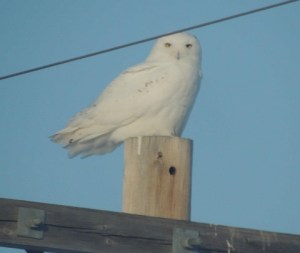
Snowy Owls are rare in some years and more common in others. I went searching for them near Lethbridge and Vulcan this year but didn’t find any, although others had seen them in those areas, according to ebird. I took the above photo several years ago. Snowy Owls are impressive enough to catch the eye of even non-birders.
I did find a few flocks of Common Redpolls just east of Lethbridge this year, as well as a flock of Snow Buntings to the north. From Indian Battle Park, I also managed to spot a Rough-legged Hawk, as well as a couple of Bald Eagles. Bald Eagles can be found throughout Alberta in the winter, anywhere there’s a food source (especially open water) nearby.

Redpolls can be attracted to bird feeders and will eat either black Niger seeds or sunflower seeds. People who prefer not to be outside much can often bird from their windows if they set up a feeder. Snow Buntings do not typically visit feeders and prefer to feed in open fields.
Pine and Evening Grosbeaks, which are large finch species, will also visit feeders – especially during winter. Evening Grosbeaks are not a common bird overall, but they sometimes show up en masse at feeders in areas where they are rarely seen. They are very striking birds, as are their relatives, Pine Grosbeaks. In both species, the males are much more colorful than females. Both species do breed in Alberta in coniferous forests, but they can be easier to see when they enter towns and cities in winter to visit feeders. Pine Grosbeaks do have a limited breeding range in Alberta (in the mountains) but they spread out of the mountains during winter.

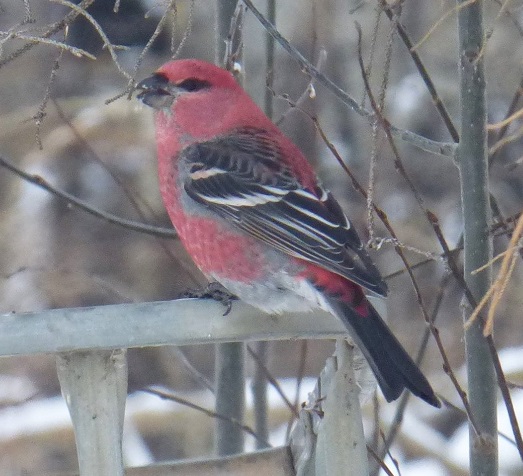
Bohemian Waxwings breed in the forests of northern Alberta, but during winter head into cities and towns throughout the province where they feed on berries. They occur in flocks that can be hundreds of birds strong.
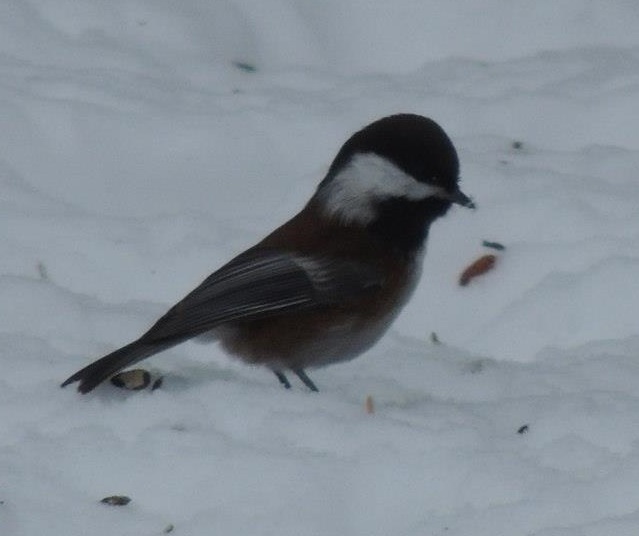
I’ll end with a surprise bird I found in Waterton once, several years ago. It’s a Chestnut-backed Chickadee. I expected to find chickadees there, but not necessarily this species.
 Peace Country Naturalist