The North American Breeding Bird Survey (BBS) is a long-term, large-scale ‘citizen science’ project that is used to monitor populations of breeding birds in North America (including Mexico). A ‘citizen’ science project is one where non-professional scientists are involved in data collection. Bird monitoring projects often benefit greatly from the efforts of citizen scientists, as there are many people who enjoy birding as a hobby and end up becoming quite skilled at identifying birds by sight and sound.
Volunteers with the BBS can survey one (or more) 40 km routes. Each route is divided into fifty evenly-spaced stops. At each stop, the surveyor pulls over and looks and listens for birds for three minutes. All birds seen or heard within the three-minute period are recorded on a data sheet. One route takes about five hours to complete and surveys start one half-hour before local sunrise. In northern Canada, that means surveys start before 5 AM.
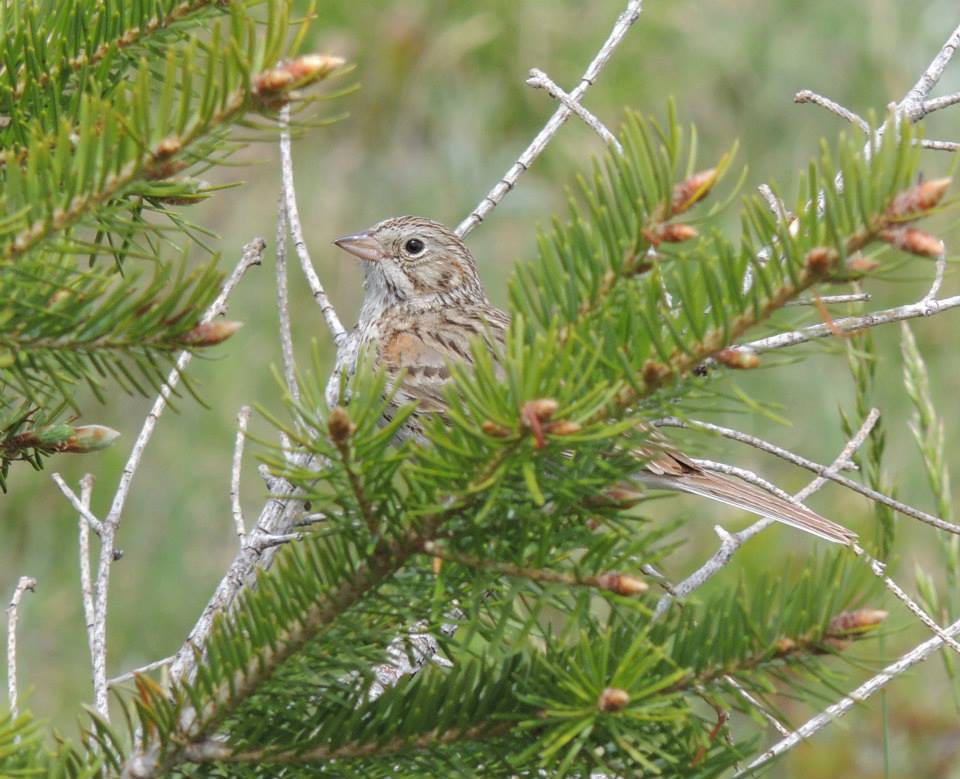
I started volunteering with the BBS when I lived in Fort McMurray, although I had to give up my route there when I had to travel for summer work and then finally moved permanently to Grande Prairie. However, I signed up for a new route close to Grande Prairie during 2021. The whole BBS project was put on hold during the first summer of covid-related restrictions, but it’s now back in operation. I surveyed the same route during 2021 and 2022, and it’s one located about 10 km north of Rycroft, Alberta. There are a few patches of forest on the route, but it largely runs through farmland. As such, I get a lot of sparrows. This year, the Savannah Sparrow was the most numerous bird on my route (n = 39), followed by the Red-winged Blackbird (n = 36), which were common around dugouts, wetlands, and damp ditches. There were also a lot of Vesper, Clay-colored, Song, and Lincoln’s Sparrows around crop fields and shrubby areas. Most patches of trees also had White-throated Sparrows and Red-eyed Vireos present.
The highlight of the survey was a Marbled Godwit, a large shorebird that breeds in shortgrass habitat. I saw a pair of them last year, and they were quite upset at my presence, suggesting they had a nest nearby. I saw a single godwit this year at the same place, and it (again) alarm called quite loudly when I got out of the vehicle. I assume it was the same godwit seen both years, as they are uncommon in my area, and also frequently return to the same breeding areas year after year. I’ll never stop being amazed by the fact that so many birds can breed at a location, migrate thousands of kilometers away for the winter, and then return back to the exact same breeding location the next year.
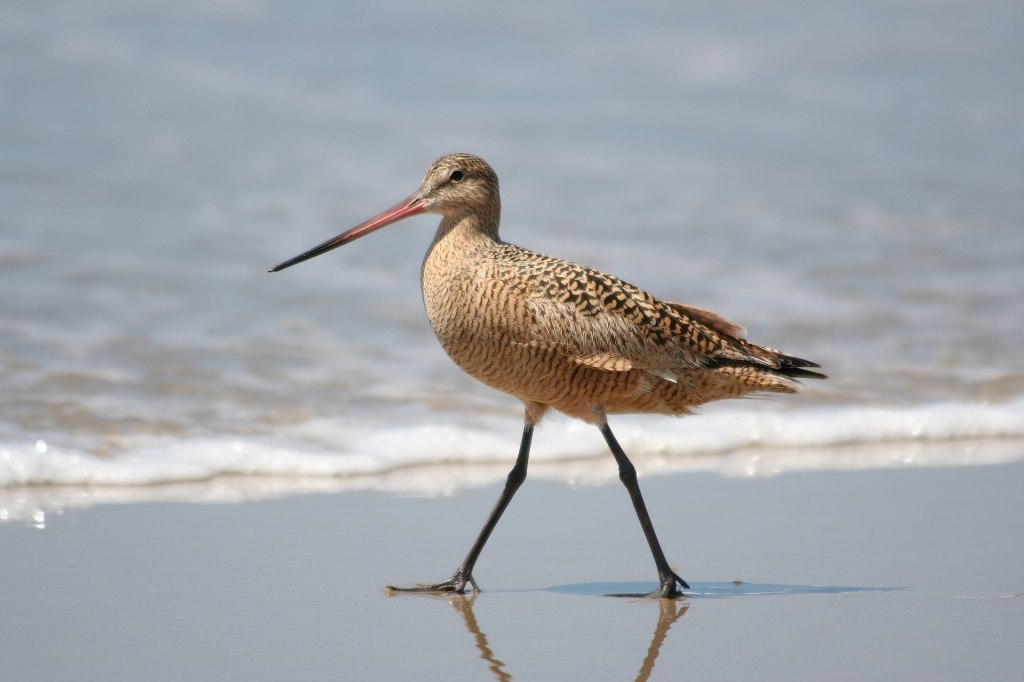
(Not my photo – I don’t have time during the survey to get good photos of the birds)
If you know the birds of your area by sight and sound, and want to participate in the BBS, you can go to this link for more information: https://www.pwrc.usgs.gov/bbs/participate/
There are other ‘citizen’ science bird monitoring programs out there as well. In Canada, Birds Canada maintains a list of them at this link: https://www.birdscanada.org/you-can-help/citizen-science/
Some of these, like the Canadian Nightjar Survey, focus on one or a few species, and these can be very suitable for birders who don’t know all of their local species by sight and sound. This is one I want to get involved with next year. There’s a lot of good habitat for Common Nighthawks where I live and I’ve seen and heard them in the Wapiti Dunes area (where there’s a lot of open coniferous forest and many clearings).
My next post will be about some very rare and special birds I got to see in Puerto Rico!
 Peace Country Naturalist