For as long as I can remember, I’ve wanted to visit southwestern Africa, and I was finally able to make that particular trip happen this summer. I spent about a month there, primarily in Namibia, but I also visited the Okavango Panhandle and Chobe National Park in Botswana, and Victoria Falls in Zimbabwe.
So, why Namibia? Well, it has a lot of interesting and varied landscapes that are very different from what I’m used to in Canada, and there’s a lot of wildlife to see. All of the classic “big five” safari animals (lions, leopards, rhinoceros, buffalo, and elephants) can be seen in the north of the country. The bird life is also abundant and spectacular – one may see a couple hundred species in a single trip. In addition, Namibia is generally a safe and easy country to travel in, provided that normal, common-sense precautions are taken (i.e. don’t drive around at night, plan ahead, and take a lot of extra supplies if venturing into the desert). I noticed that a lot of tourists would rent vehicles and do self-driving tours of the country. I didn’t want to drive around alone though (my husband didn’t want to come on the trip with me), so I was with a small tour group for most of the trip. However, I was on my own for a few days at the start and the end of the trip.
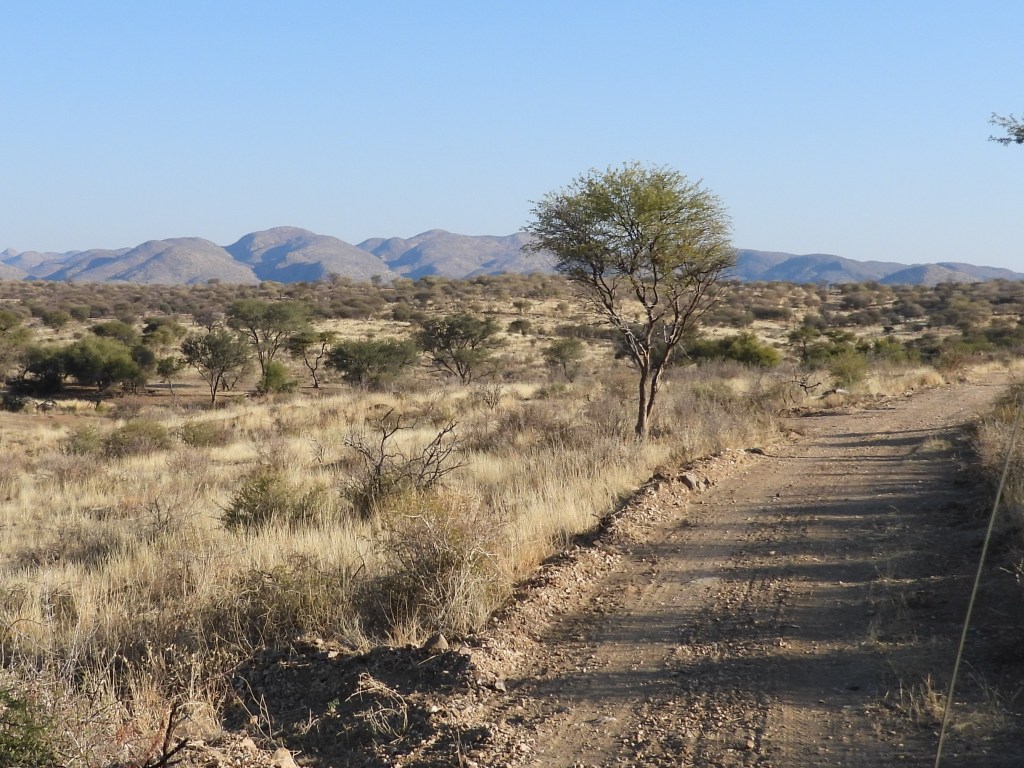
I started the trip in the Windhoek area, which is the capital and the largest city in the country. There are a lot of guest ranches around Windhoek and I chose one that was about a 45 minute drive away. The terrain in this area of Namibia is very hilly and covered in open woodland. I arrived in July, which is is the middle of the dry season, so most of the herbaceous vegetation was brown and dry and a lot of the river beds were empty – although a few still had water.
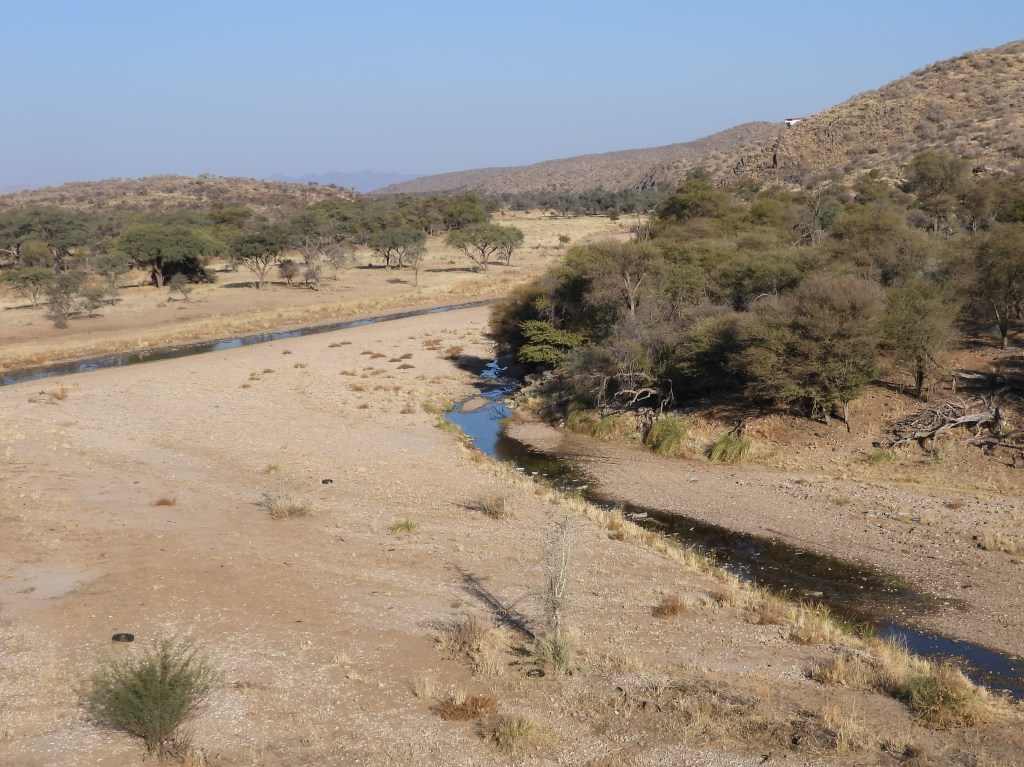
When there’s so little water available, it’s not difficult to find wildlife – a lot of it will be concentrated around any water that is still around. At the guest ranch, I stayed in a little ‘safari tent’ that was right in front of a river bed. A large assortment of birds and other animals would come to drink the water, and I could watch them from a chair and table I set up right in front of my tent.
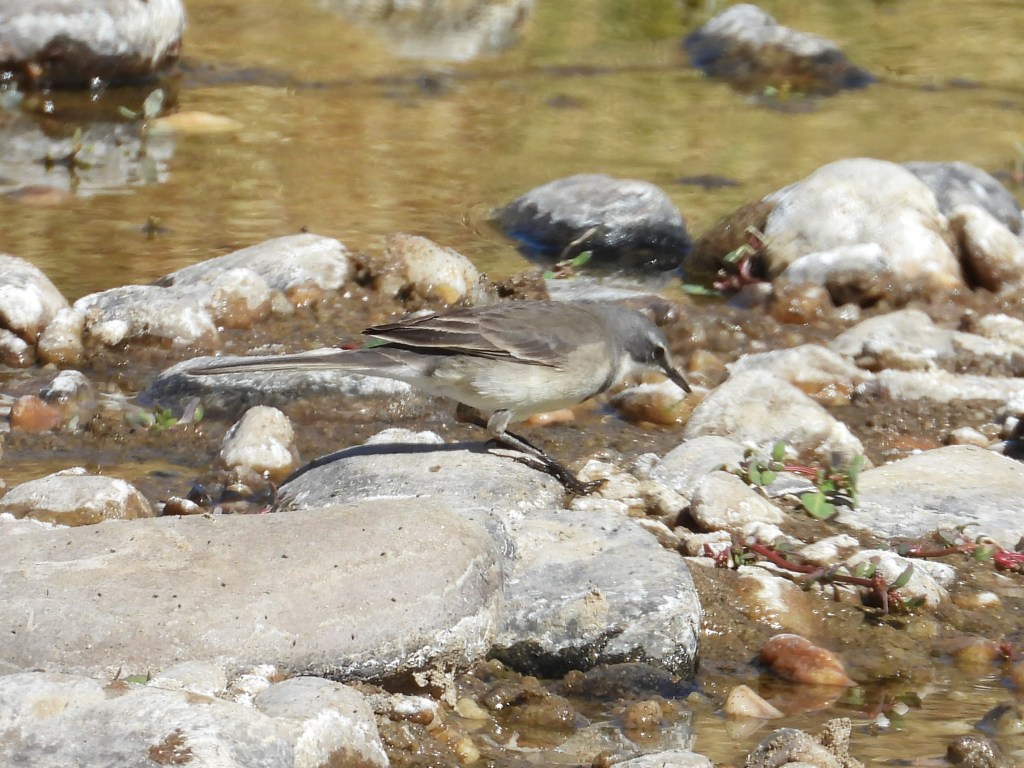
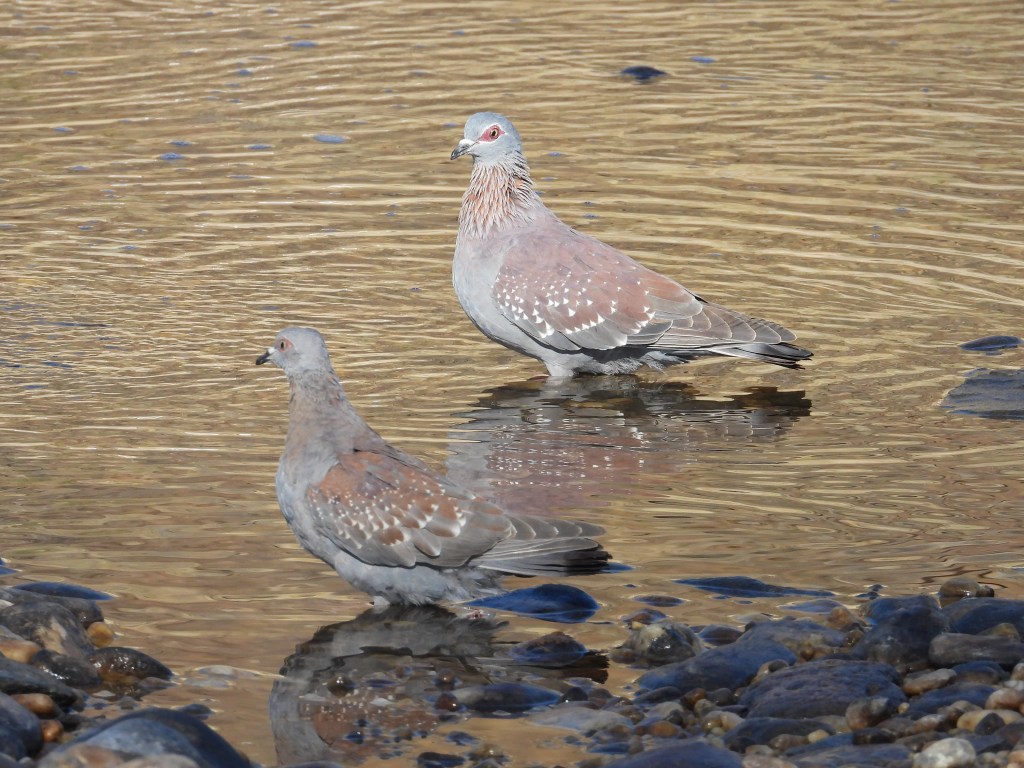
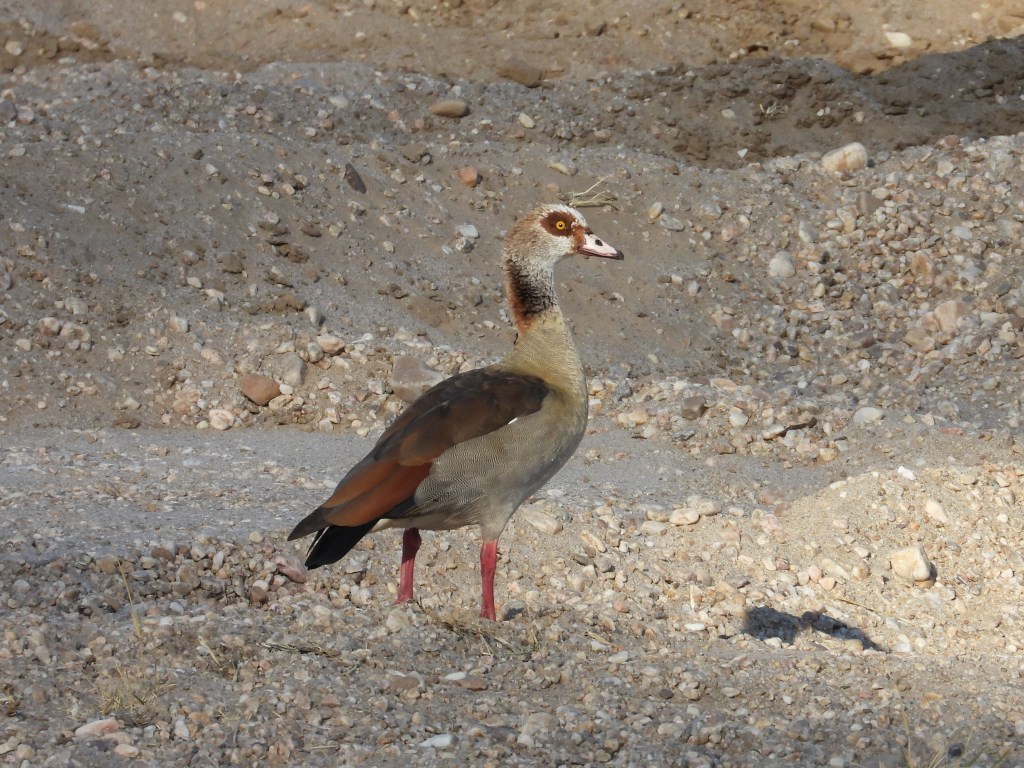
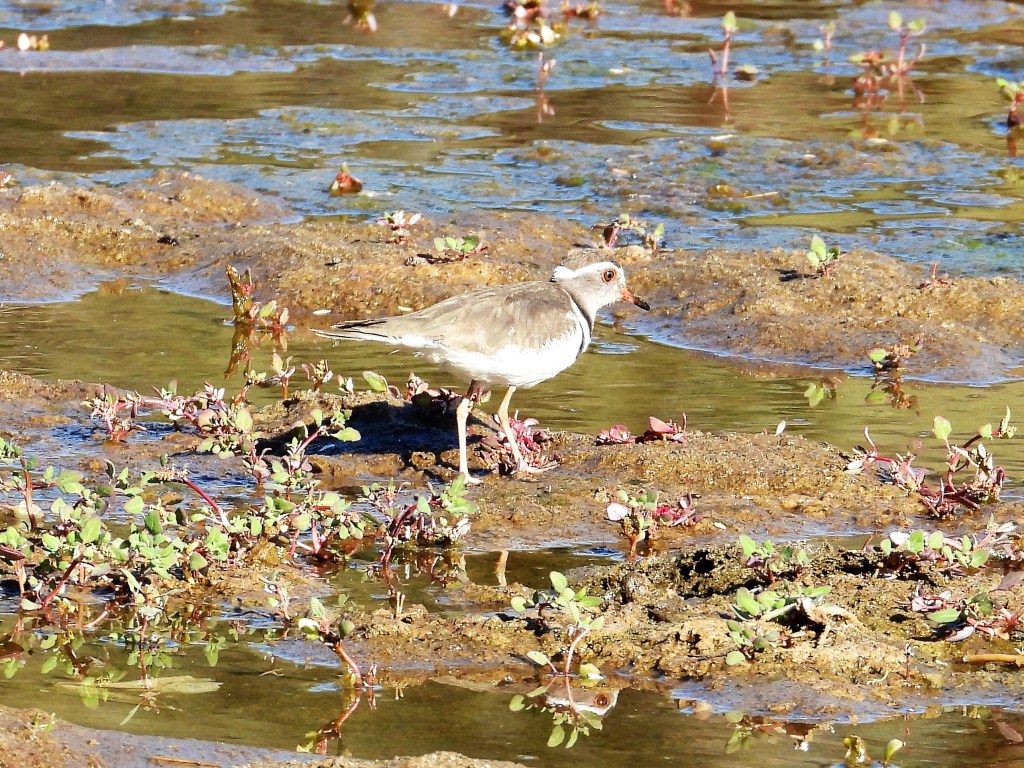
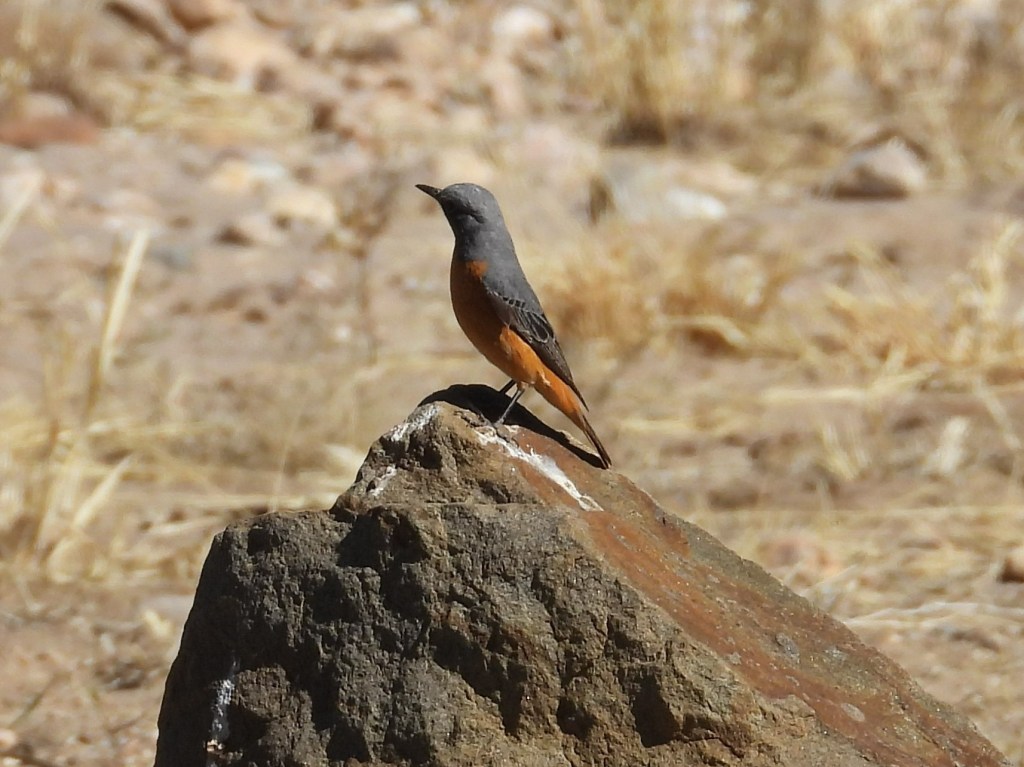
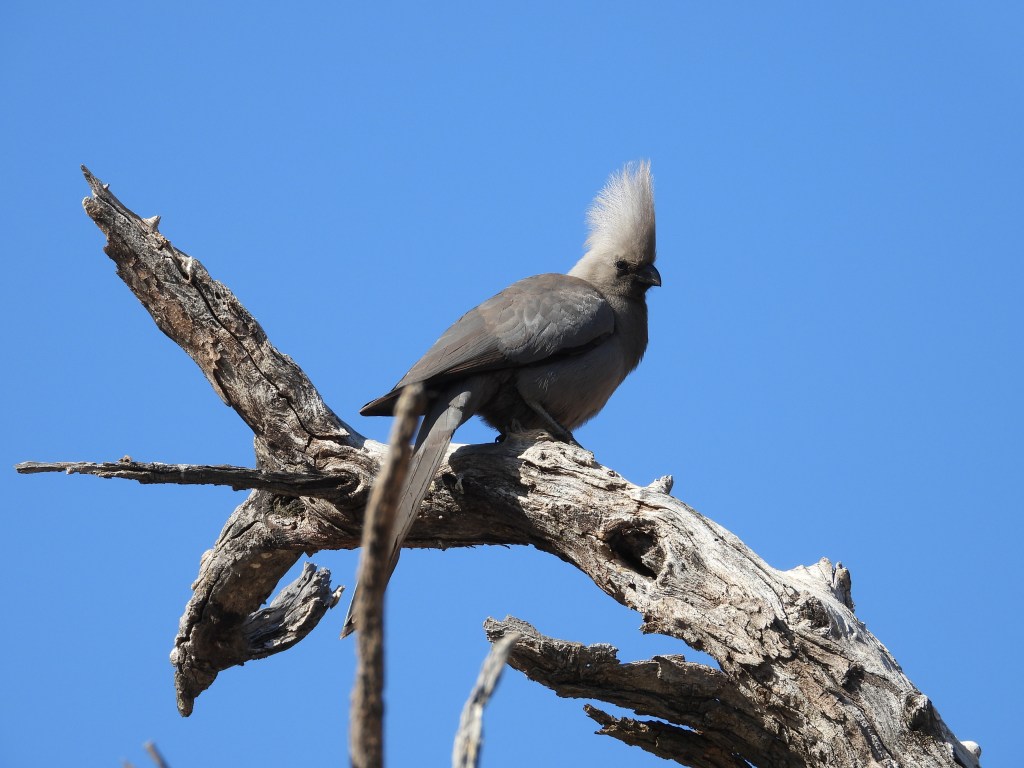
The woodland around the streams was home to a lot of birds too. The so-called “Go-Away” Birds were particularly common. These birds are named for their loud vocalizations which make it sound they are telling you to go away. They are in the turaco family (Musophagidae) but unlike other turacos, they are not particularly colorful. Go away birds are solid gray. They are still a rather attractive bird and are not hard to spot due to their loud, distinctive voices.
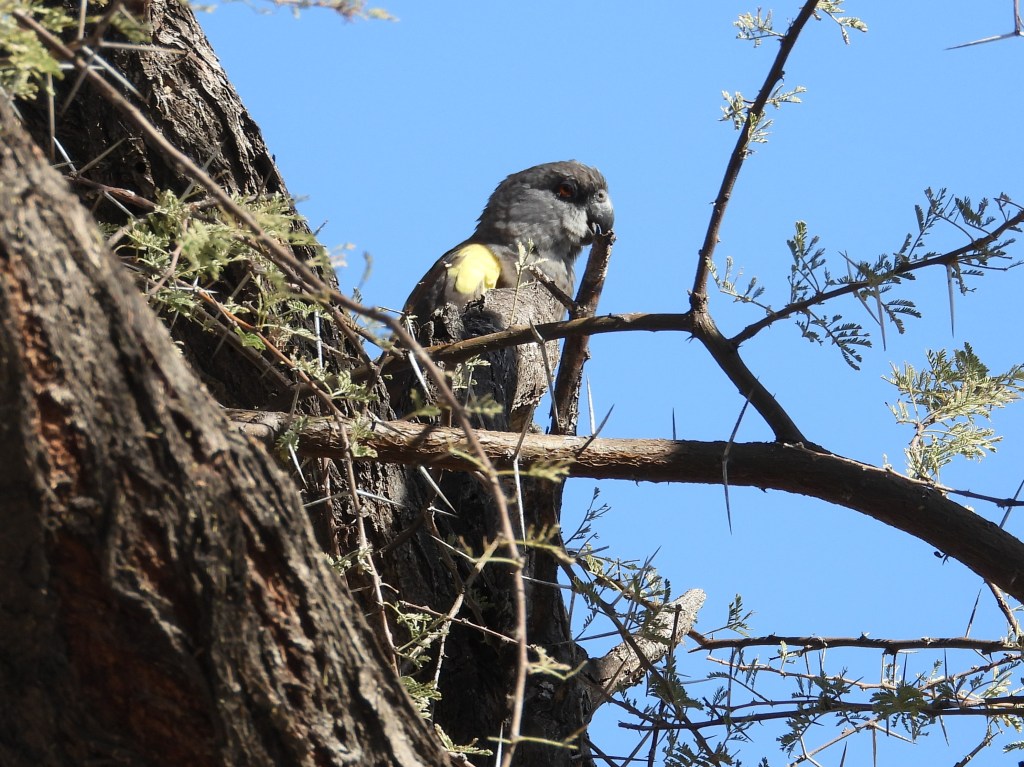
I also saw some Ruppell’s Parrots, which are a near-endemic to Namibia (their range does extend a bit into Angola). They are a handsome but somewhat plain species of parrot, being primarily grey with a bit of blue on the vent and rump and some yellow on the bend of the wings. They have the typical loud, squawky voices parrots have, which made it easier for me to locate them.
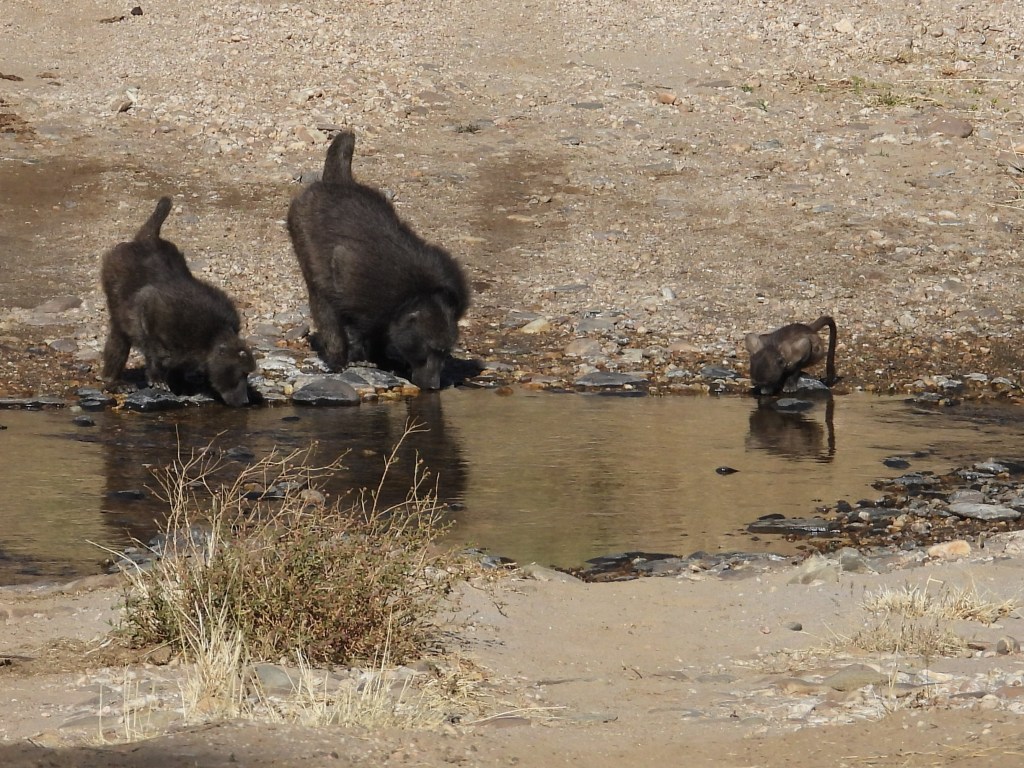
A group of Chacma Baboons would frequently spend time around my tent. The males in particular seemed kind of intimidating as they are loud and have large canine teeth, but they left me alone. These baboons are the only type of primate that occur in this part of Namibia and they are rather common. They usually move around on the ground, but as I saw, they can and do climb trees. At night, they either sleep on clifftops or up trees to keep safe from their predators – primarily leopards, although eagles can take young ones.
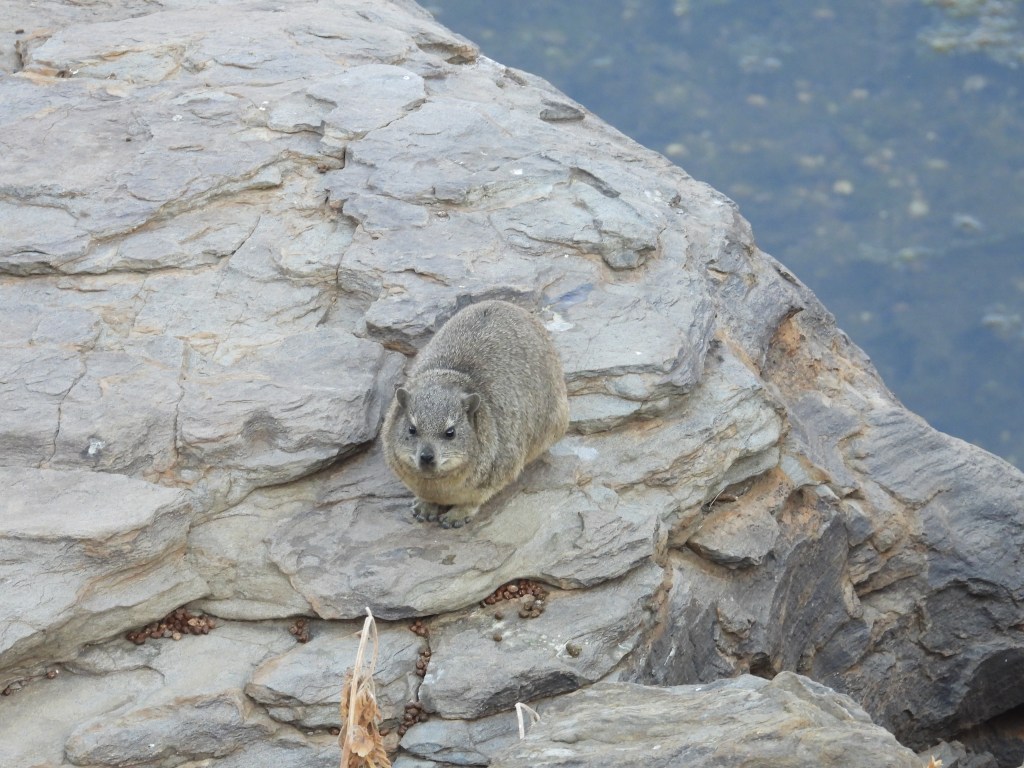
A colony of Rock Hyrax (pictured below) lived in the cliffs along the river. In terms of their ecology, they kind of reminded me of North American Hoary Marmots: they are mid-sized, social, and live in rocky, mountainous areas. However, although hyrax very superficially resemble large rodents, they are not rodents and are actually more closely related to elephants. I’ll write more about that in a future blog post.
I saw Rock Hyrax elsewhere in Namibia too, particularly in the Erongo Mountains. They are easy to find because they leave signs of their presence in the form of large, white streaks on the rocks. The streaks occur in the hyrax’s latrine areas because after the animals urinate, the water evaporates, which leaves behind the white salts.
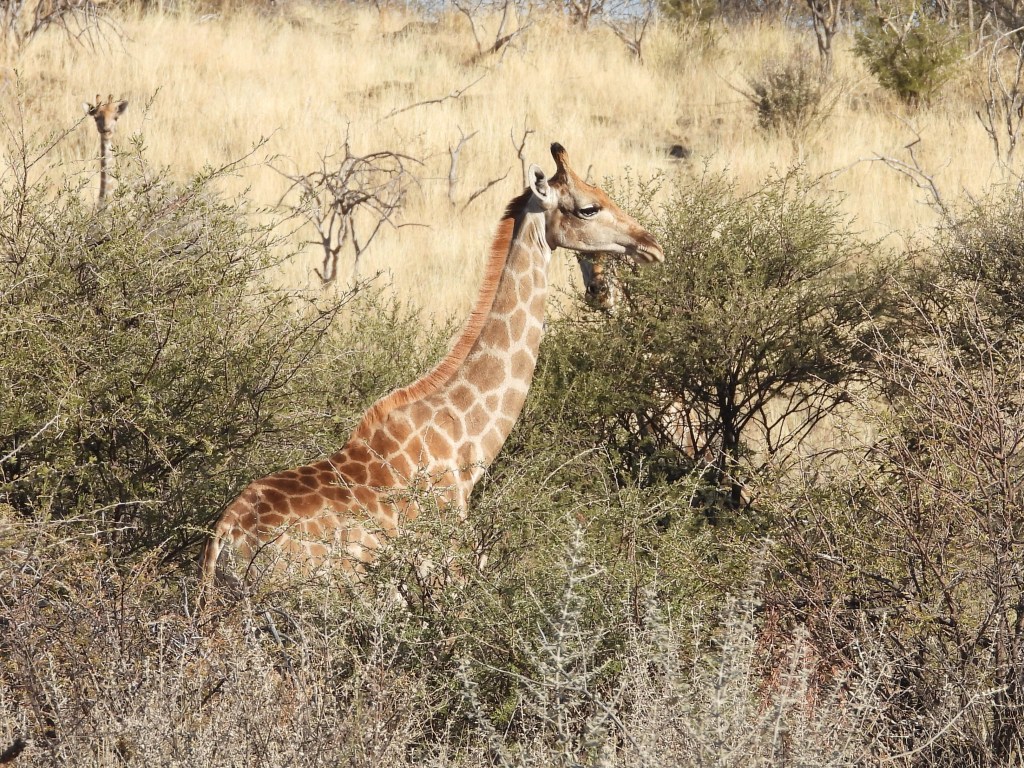
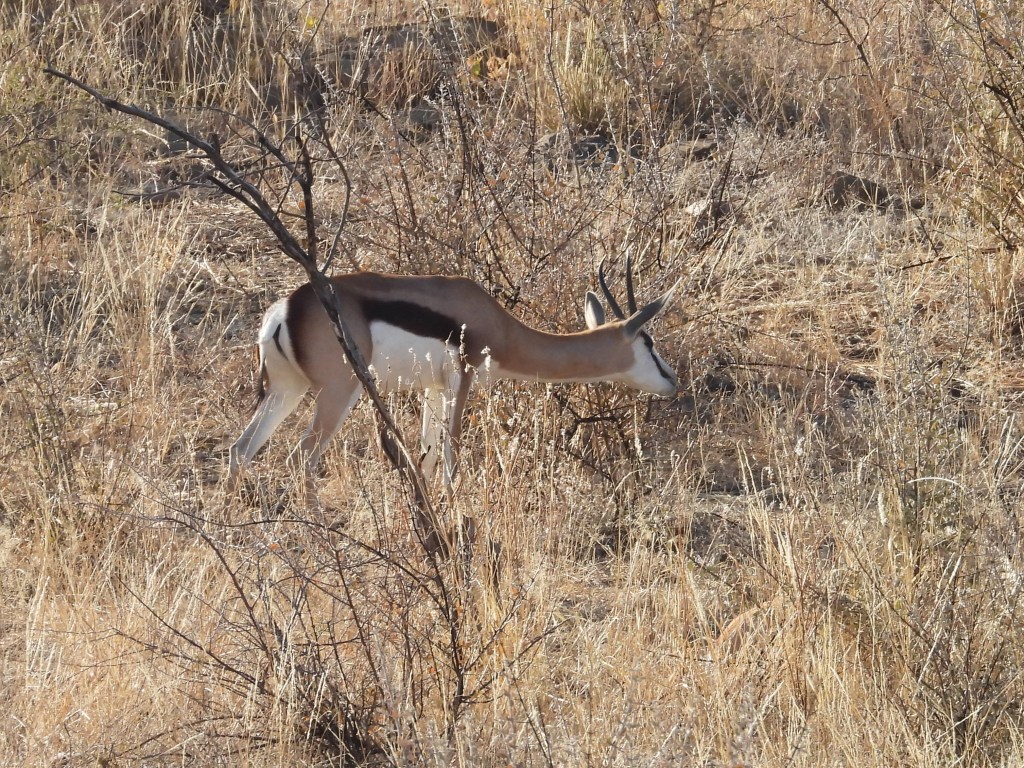
A lot of the guest ranches around Windhoek have a variety of wildlife but some of the big species (elephants and lions) are absent from the region. I went on a game drive, and we spotted giraffes, warthogs, oryx, impala, springbok, and kudu.
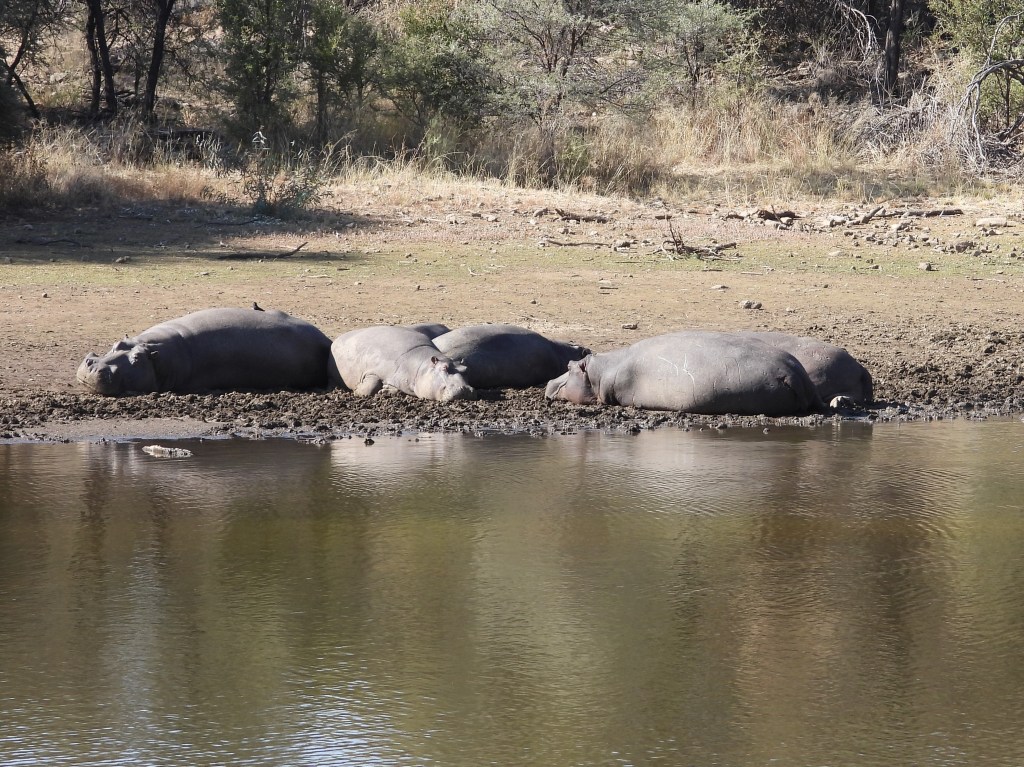
This particular place also had some hippos at a dam, which I believe were introduced from South Africa. Hippos are not typical for this region of Namibia, as it’s generally too dry for them unless humans set up dams and make some suitable habitat for them. Hippos do occur naturally in the Zambezi region of Namibia, up in the north.
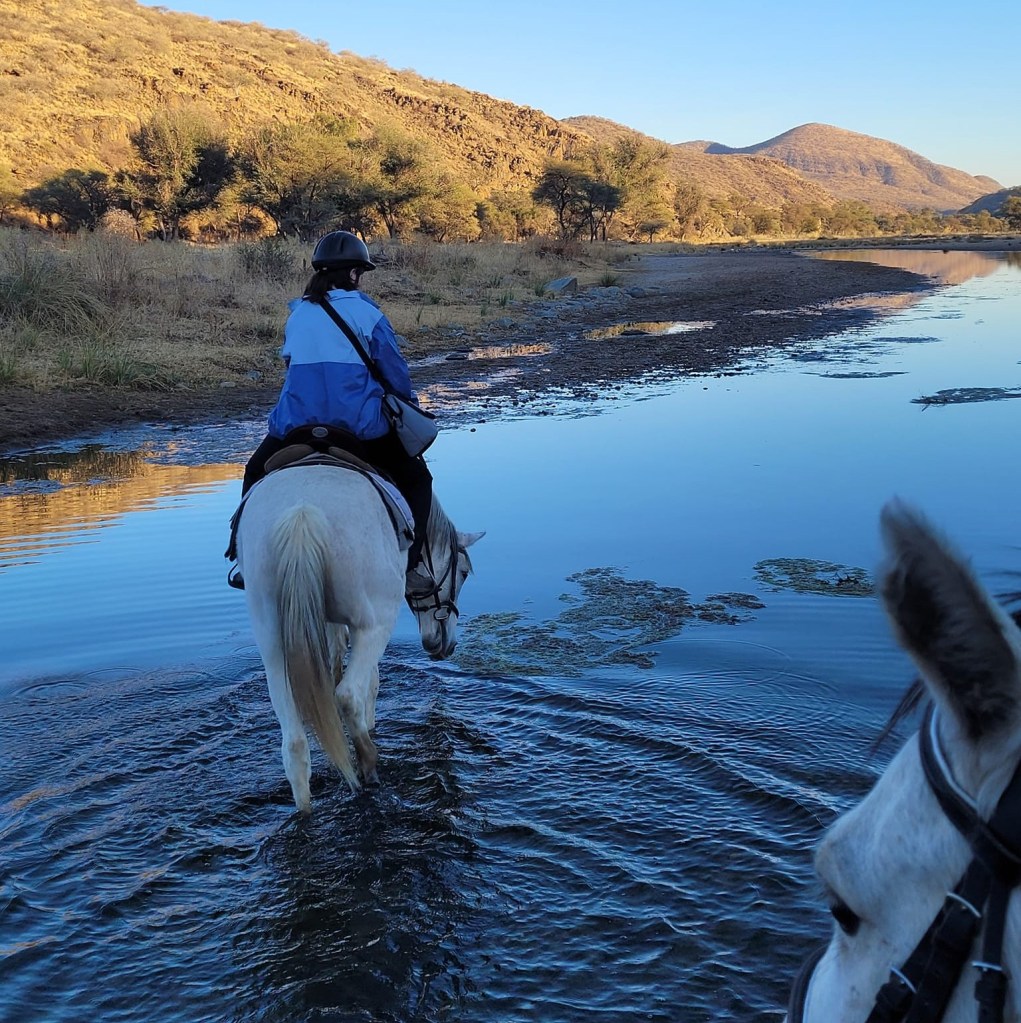
Horses do not seem to be super common in Namibia – I assume they’d be expensive to keep in such a dry place – but a few guest ranches have them and offer horse rides. I rode a rather nice gray horse who reminded me of my own horse who I unfortunately had to have put down when his arthritis got very bad.
I did see a lot of donkeys on the trip. People rode them or used them to pull carts. Donkeys were actually domesticated in Africa (likely Kenya or the Horn of Africa), so it makes sense that they’d be well-adapted to living in a hot, dry country like Namibia. There are, however, some feral desert-adapted horses living wild in the southwestern Namib desert. These are the descendants of horses that were brought to the country by Germans.
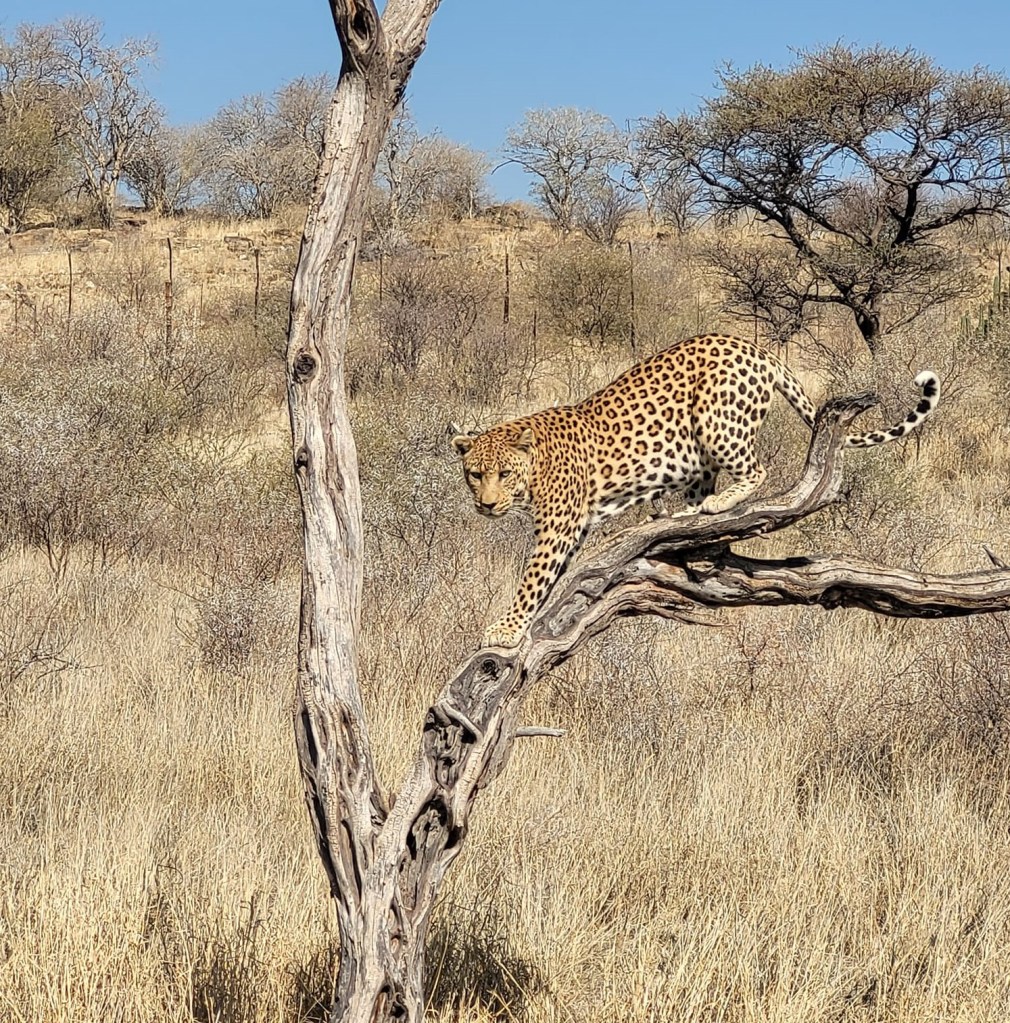
I got a nice photo of a leopard too, but this was of a captive animal that lived in a very large enclosure. I did not see any wild leopards on the trip, which wasn’t too surprising based on what various safari guides told me. Leopards are apparently very difficult to find in the wild.
After my stay at the guest ranch, I headed back to Windhoek to join the tour group. It was a birding tour, so I have a lot of bird pictures but we saw a lot of mammals as well (and a few reptiles). More on that in the coming days!
 Peace Country Naturalist