Note: The first blog post about my trip to Namibia can be found by clicking HERE.
After spending time on my own at a guest ranch, I joined up with a small tour group at a lodge just outside of Windhoek. This was through Rockjumper Tours, which is a birdwatching tour company. From my experience, I would highly recommend this company. The guide we had was extremely knowledgeable about African birds and wildlife and the lodging and food was great.
The first few places we visited were in the Windhoek area. First was the Avis Dam, which seems to be a popular place for hikers, joggers, and dog walkers. It’s also a nice place to see a variety of birds, including waterbirds such as ducks and herons.
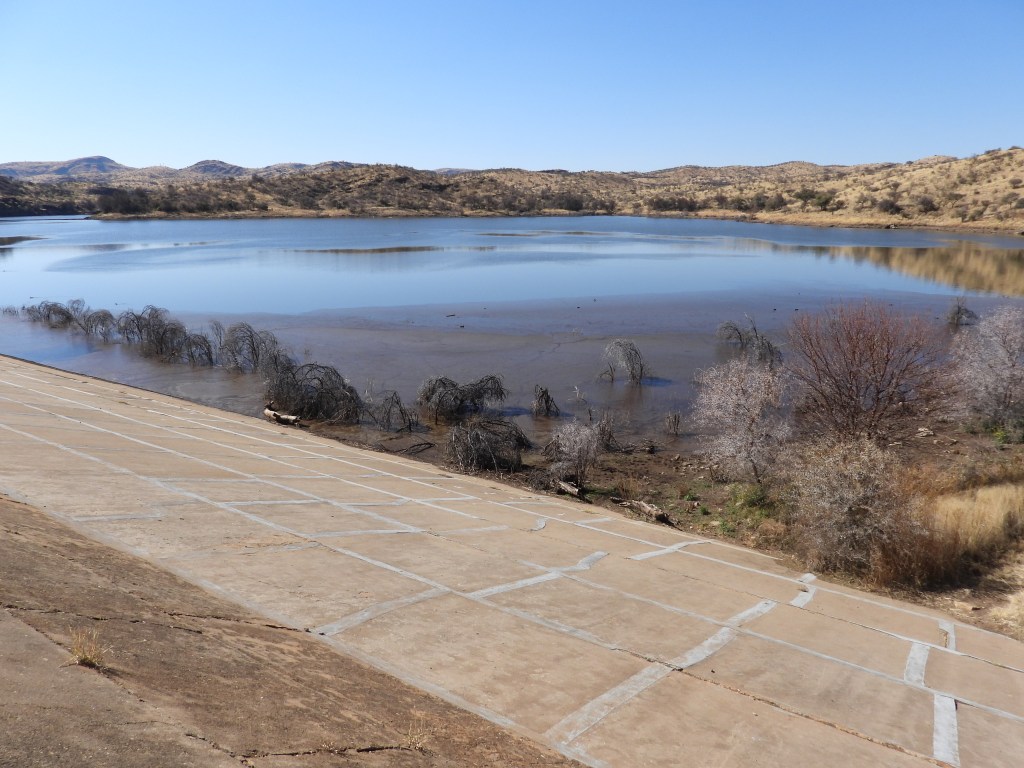
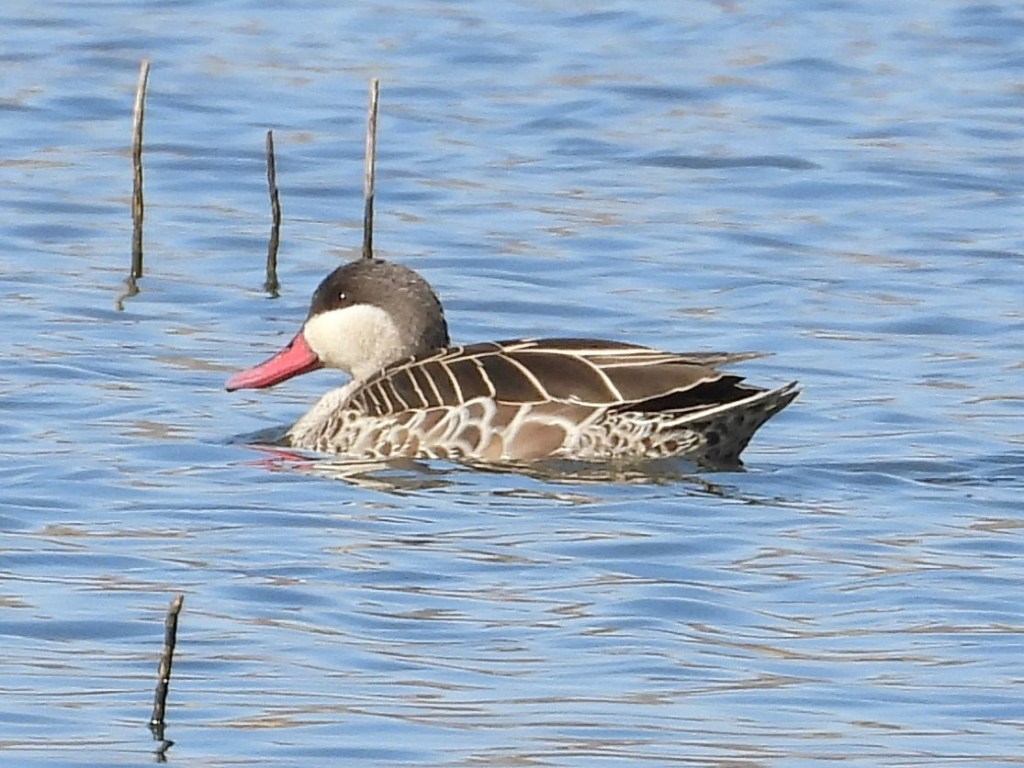

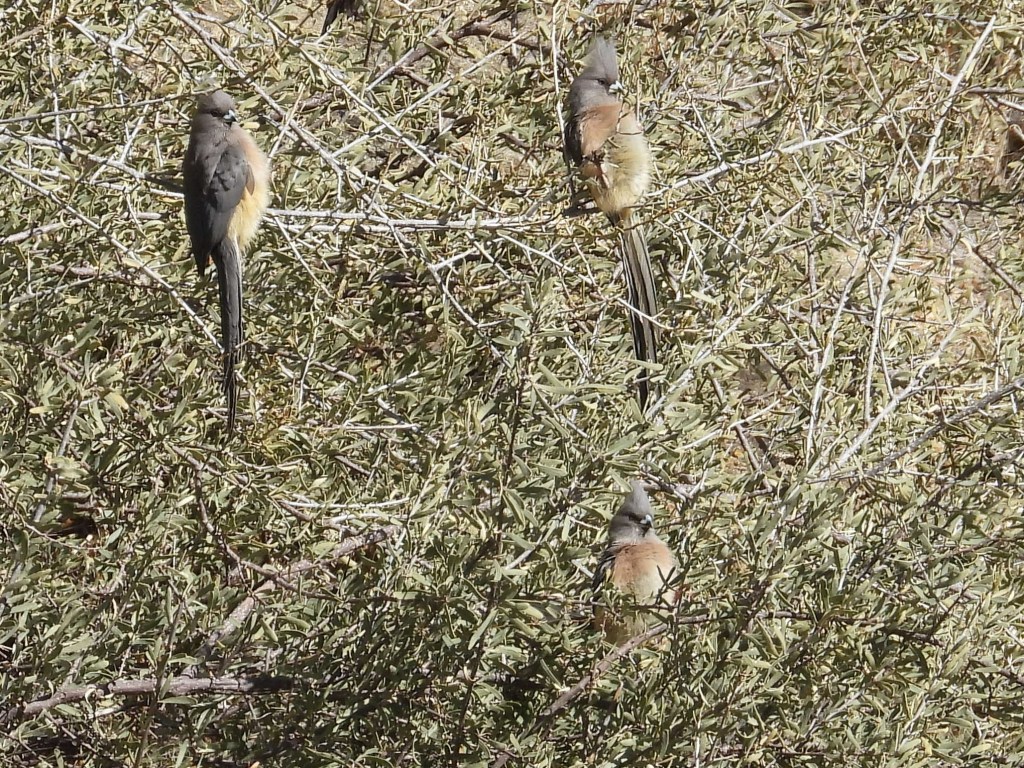
We also went to the Gamman water treatment works, but by that point my camera battery had died so I don’t have many good pictures. We did see a variety of waterbirds, including pelicans.
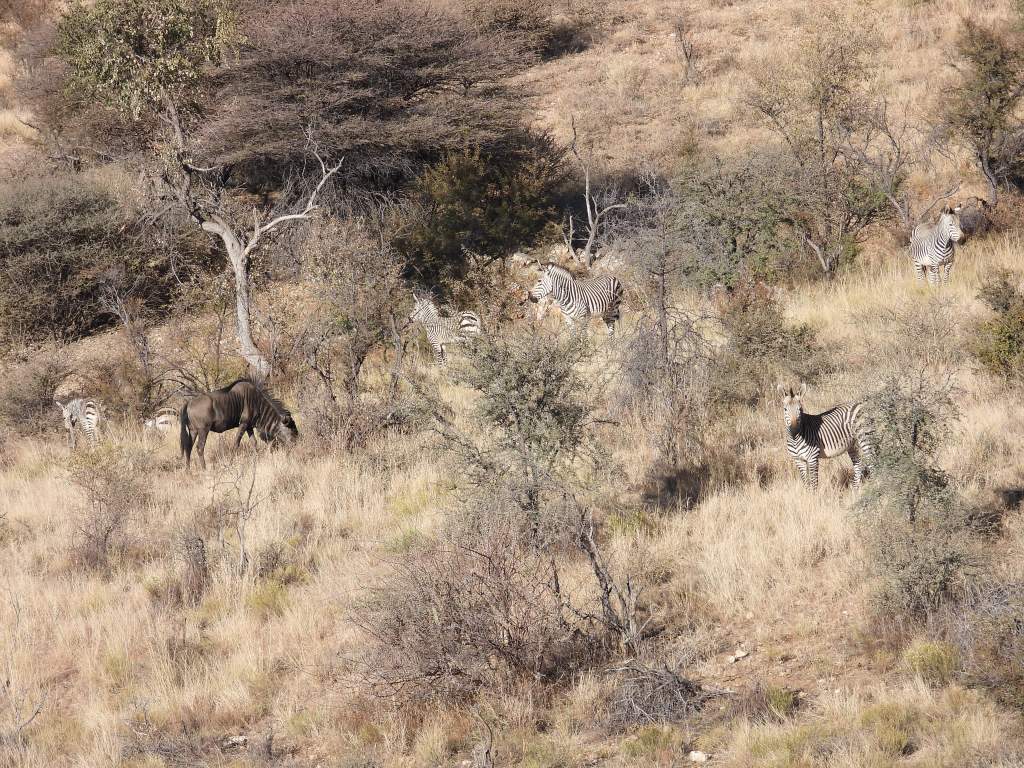
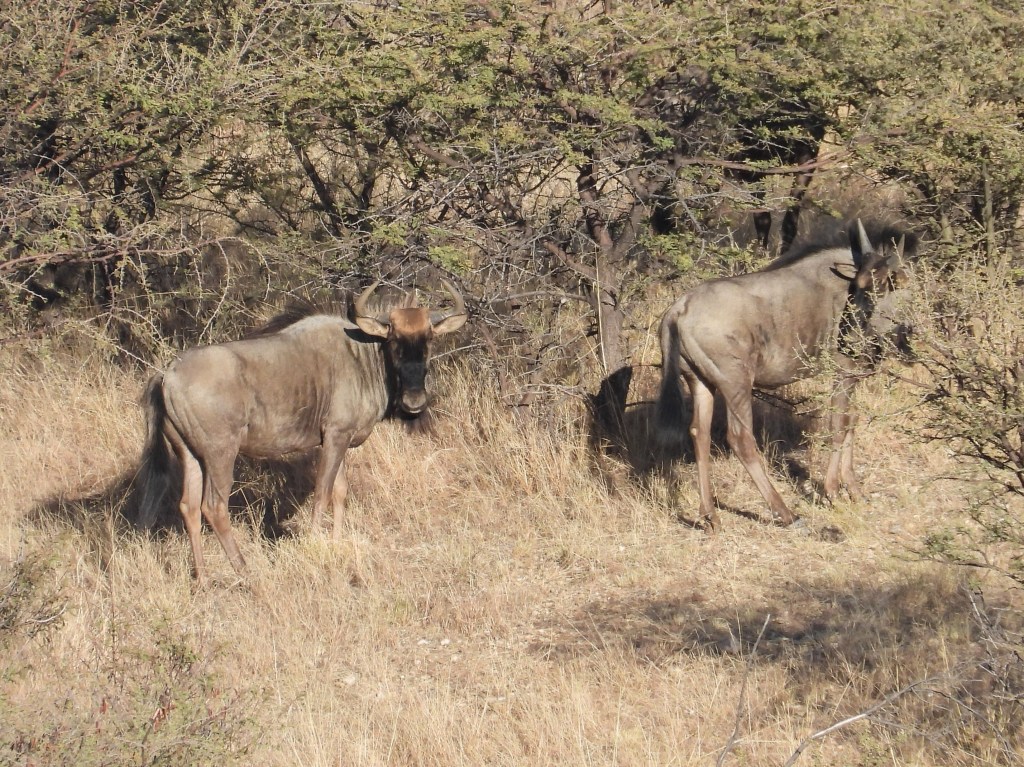
The next day we visited the Daan Viljoen Nature Reserve, which is home to a lot of the classic African “big game” species, such as giraffe, wildebeest, mountain zebra, kudu, and more.

There are actually two species of zebra in Namibia – the Plains Zebra (Equus quagga) and the Mountain Zebra (Equus zebra). The zebras in the hilly/mountainous regions in western Namibia are Mountain Zebra (specifically the Hartmann’s subspecies – Equus zebra hartmannae). The zebras in the plains of northern Namibia are Plains Zebras. Mountain Zebras tend to occur in smaller groups than do Plains Zebras, which sometimes form very large herds.
How do you tell the two species apart? Well, the stripes on the Mountain Zebras (see above picture) don’t extend as far down onto the belly as do the stripes on Plains Zebras (see below picture). The Plains Zebras also lack striping on the lower legs. I also noticed that the Plains Zebras have pale, thinner “shadow stripes” between their thicker black stripes.

There are two species of wildebeest in Africa, and the one that occurs in Namibia is the Blue Wildebeest (Connochaetes taurinus). That is the more widespread species and it is common in the popular safari parks like Etosha, the Masai Mara in Kenya, and the Serengeti in Tanzania. The other species, the Black Wildebeest (Connochaetes gnou), occurs in South Africa.
The giraffe is the biggest animal that naturally occurs around Windhoek. As for how many species of giraffe there are… well, their taxonomy is a bit up in the air at the moment. Traditionally, giraffes have been grouped into one species (Giraffa camelopardalis) with many subspecies. Namibian giraffes are the Angolan subspecies (Giraffa camelopardalis angolensis). However, some biologists have proposed dividing giraffes into multiple species (up to seven).

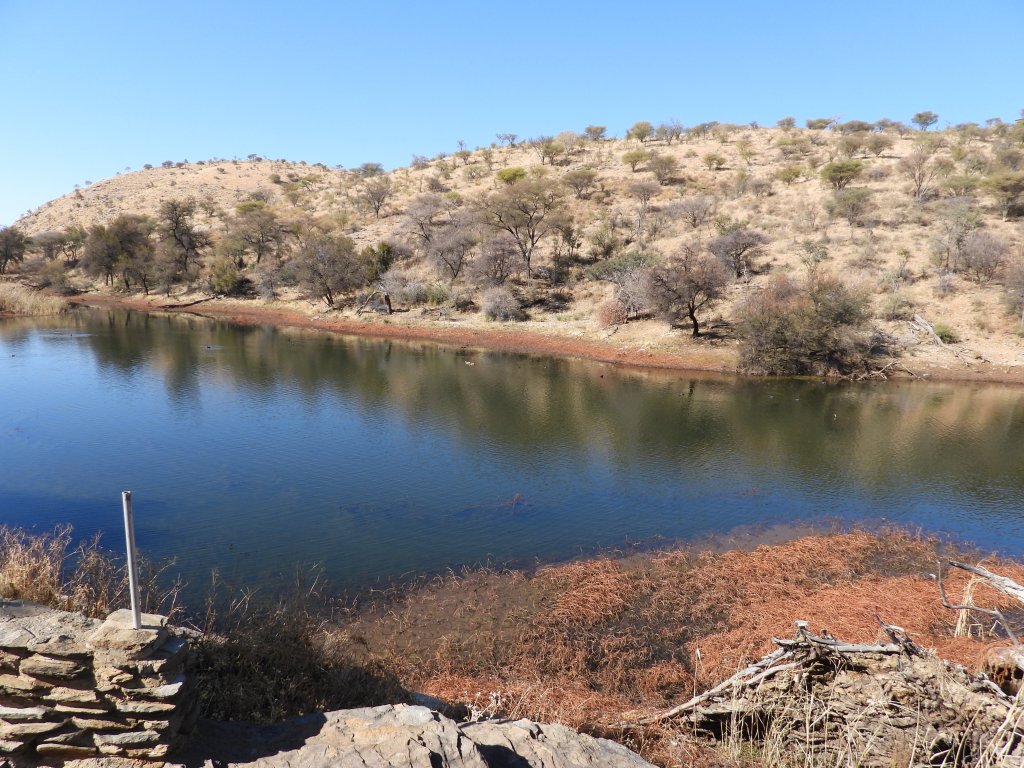
There are a lot of birds at the Daan Viljoen Nature Reserve, and we were able to get out to go for a walk at the lodge, which has a dam nearby that attracts animals in search of a drink of water.
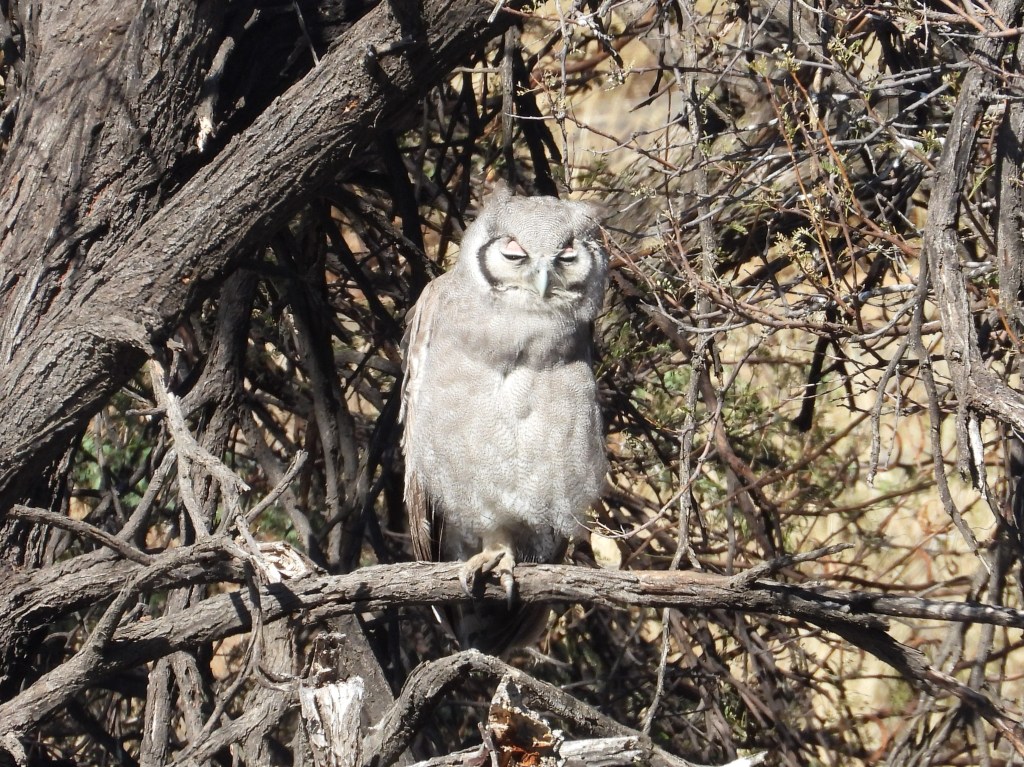
Aside from a lot of waterbirds, we managed to find two owl species: A Verreaux Eagle Owl and a Pearl-spotted Owlet.

I saw my first African bustard at Daan Viljoen as well. Bustards (family Otididae) are restricted to the Old World and they tend to occur in open desert or grassland habitats. They are largely ground-dwelling birds, but they are capable of flight. They are omnivores and eat whatever they can find, including small vertebrates, insects, seeds, or fruit.
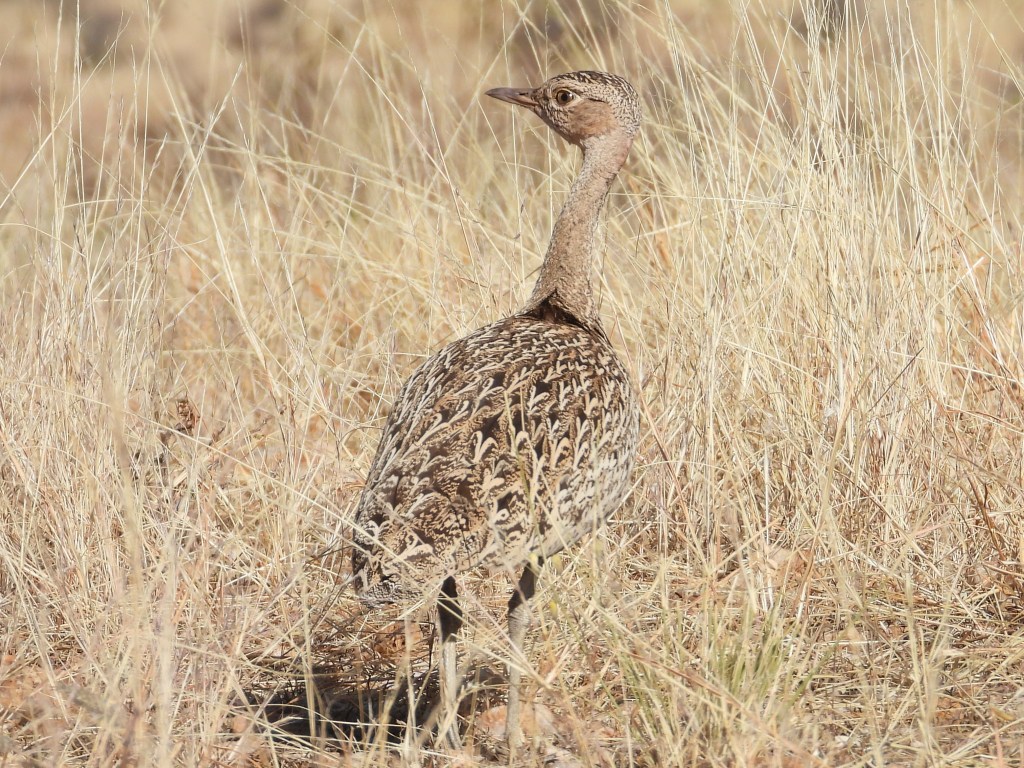
Bustards are generally fairly large birds, and the Kori Bustard (which I saw later on in the trip) is the world’s largest flying bird. The world’s largest bird, however, does not fly, and also occurs in Namibia. There were a few of them (ostriches) around the lodge.

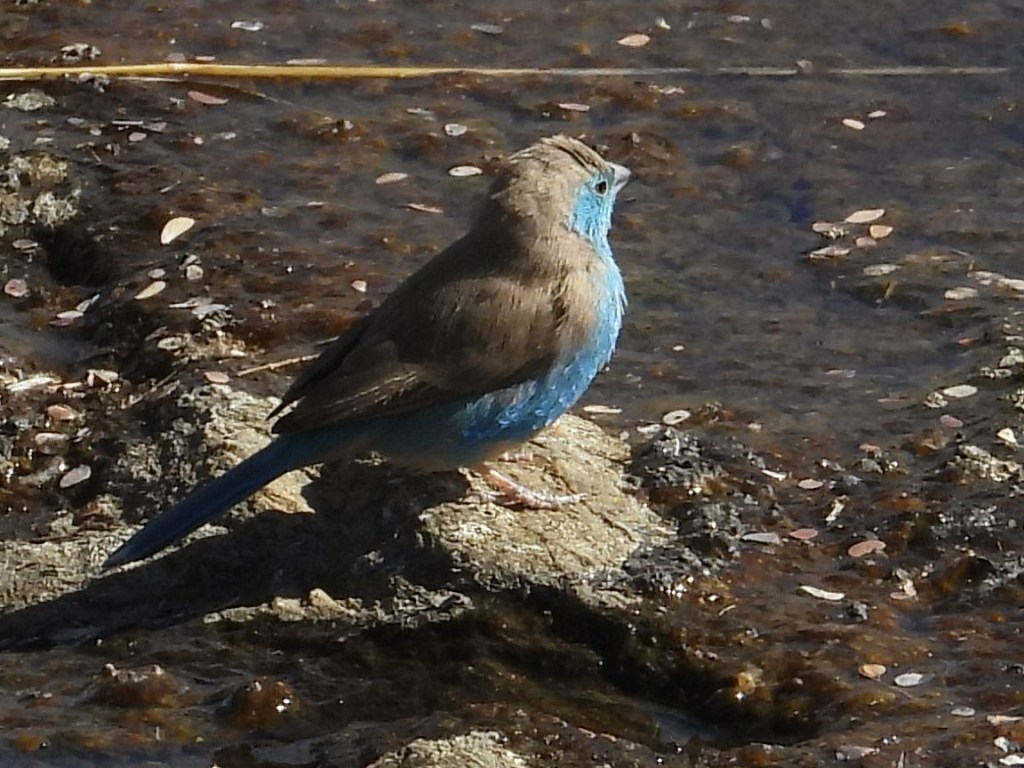
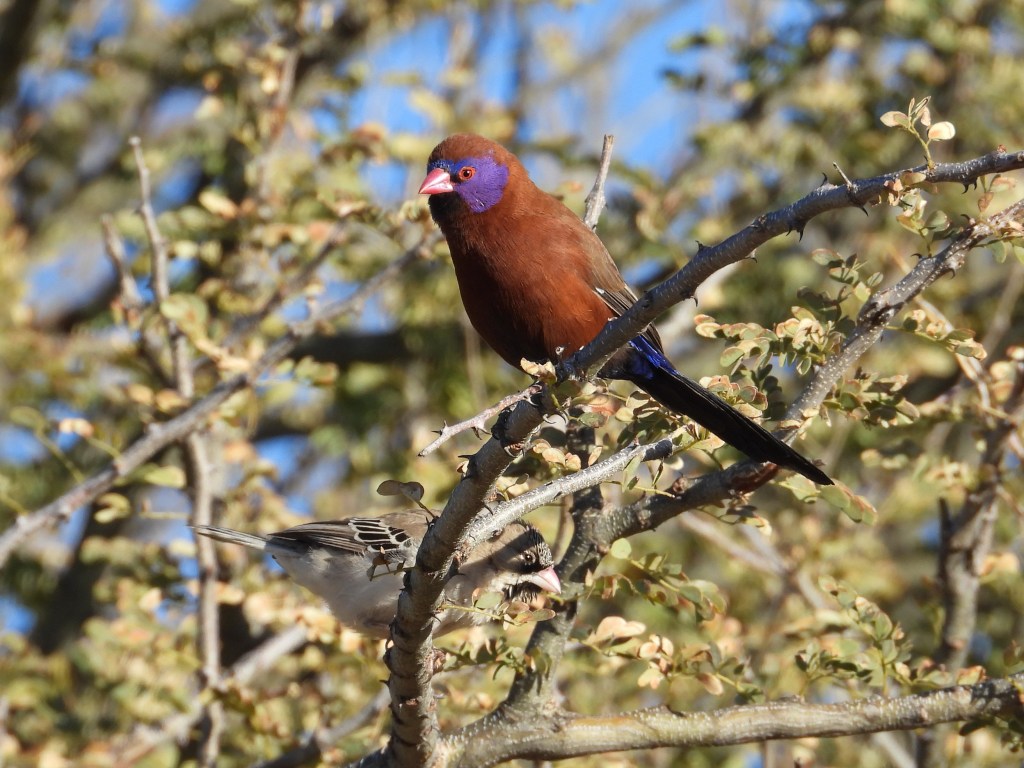
I’ll end this post with a picture of a very striking little finch: a Violet-eared Waxbill. Note also the Scaly Weaver perched below it:
Namibia has a lot of very beautiful landscapes, which I will feature in the next post!
 Peace Country Naturalist