Note: My first post about my trip to Namibia is HERE .
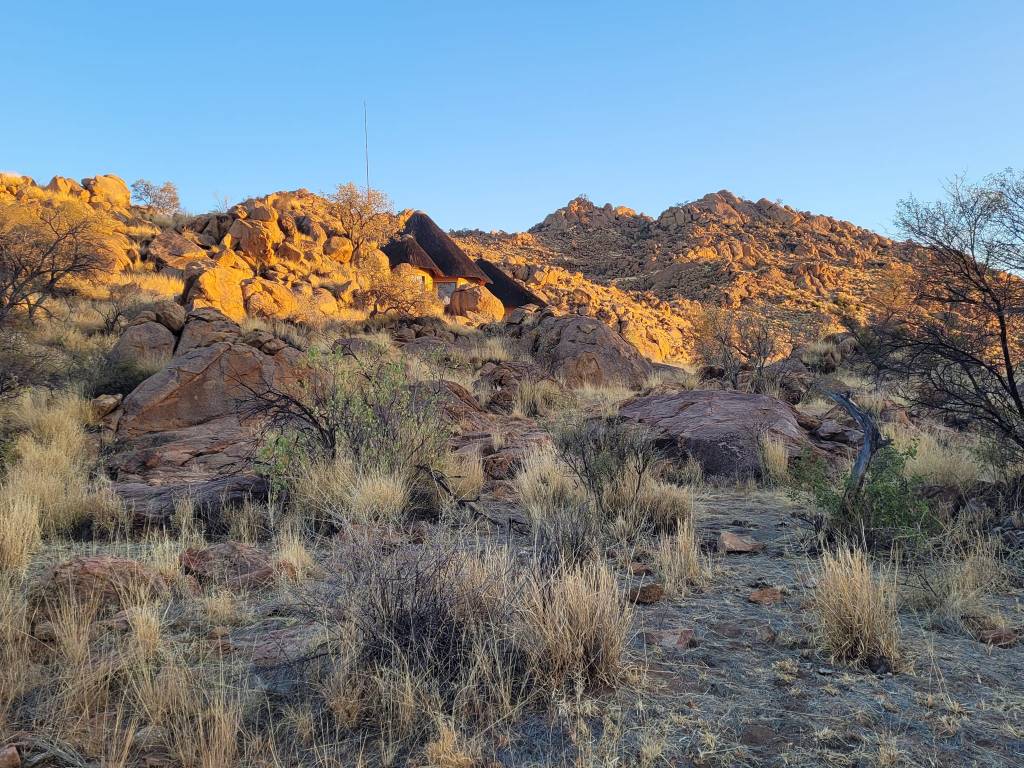
After the trip to Daan Viljoen, we headed towards the Namibgrens Guest Farm, which was in a picturesque area of the Khomas Highlands. I took a photo of the villas, which are built right among the hills and rocks.
The next day, we headed out into the Namib Desert via the Spreetshoogte Pass. There’s an absolutely incredible view of the desert from the top of the pass, which has an elevation of 1 822 m. The road is so steep that vehicles with trailers are not allowed on it.

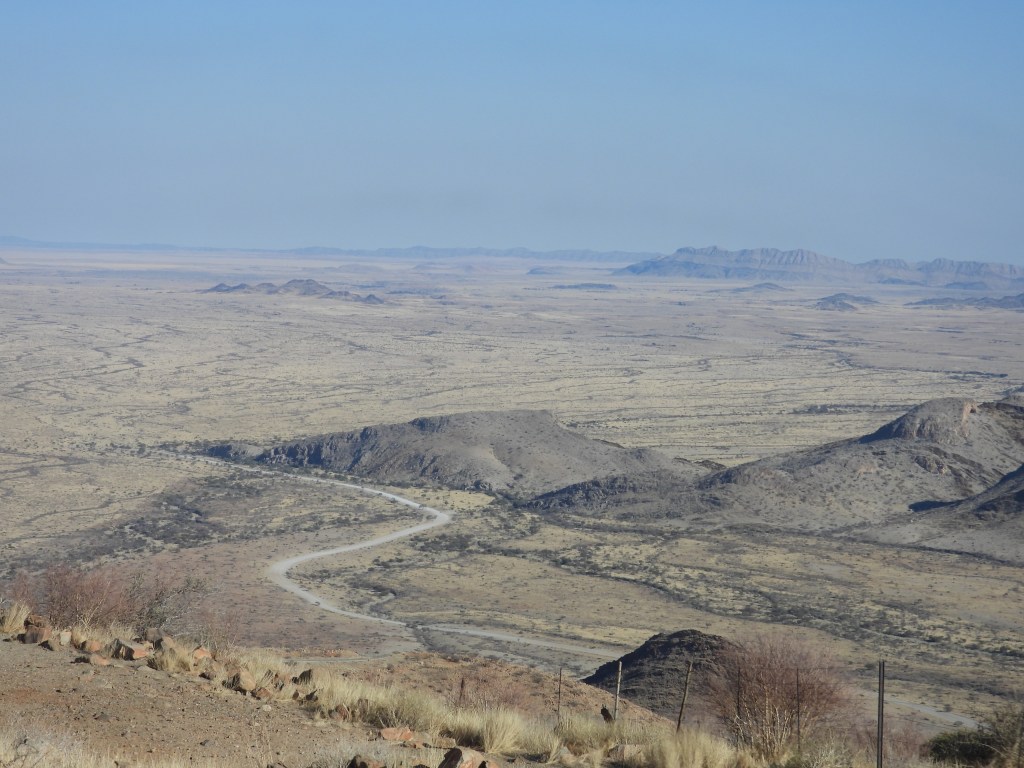
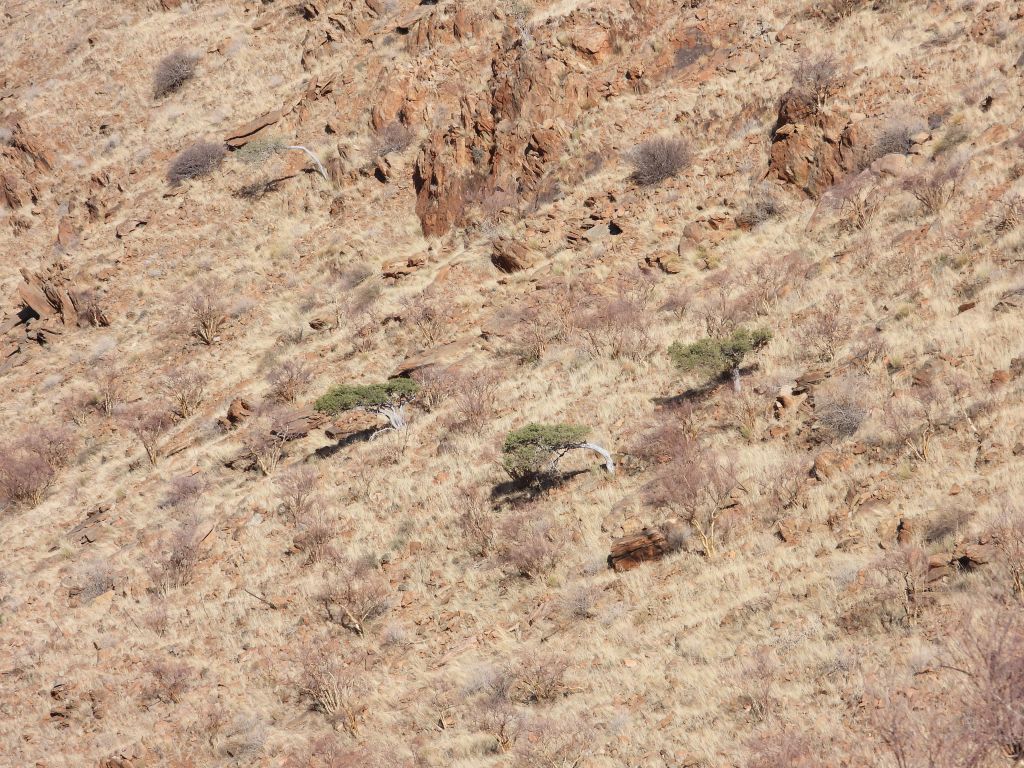


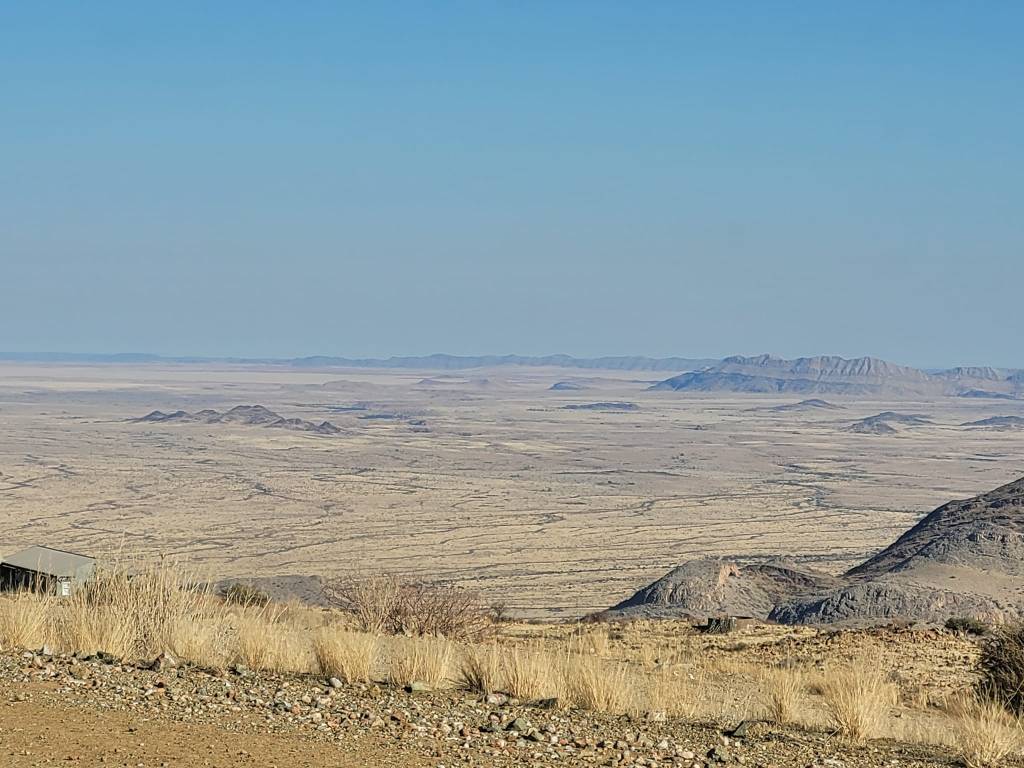
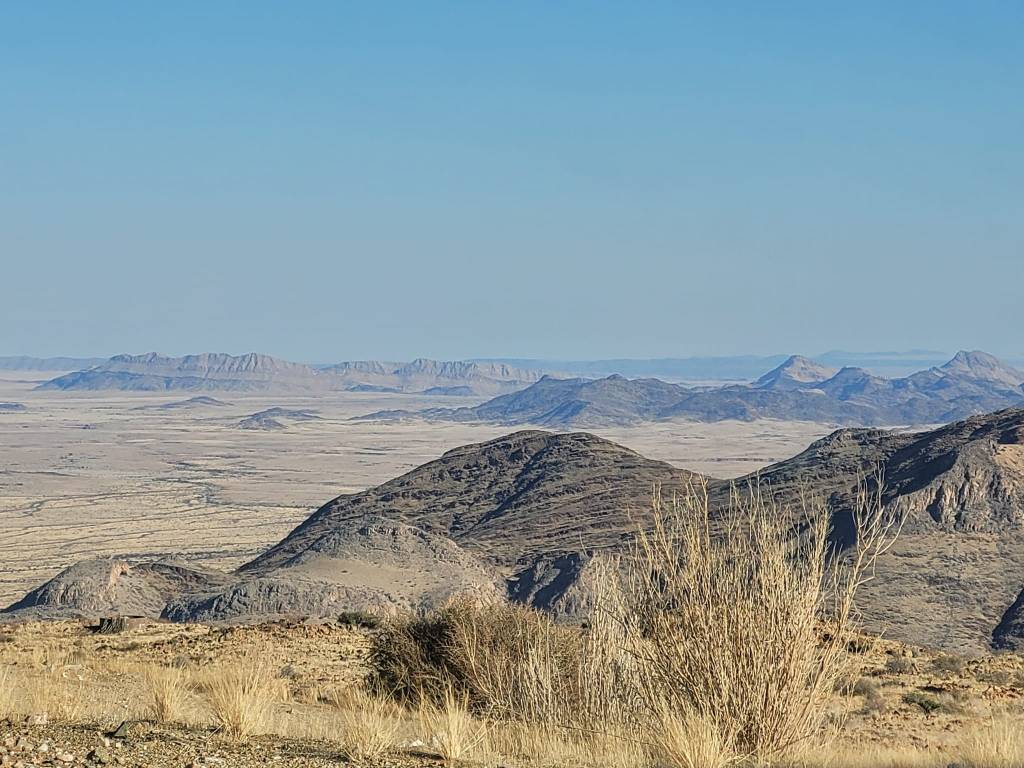

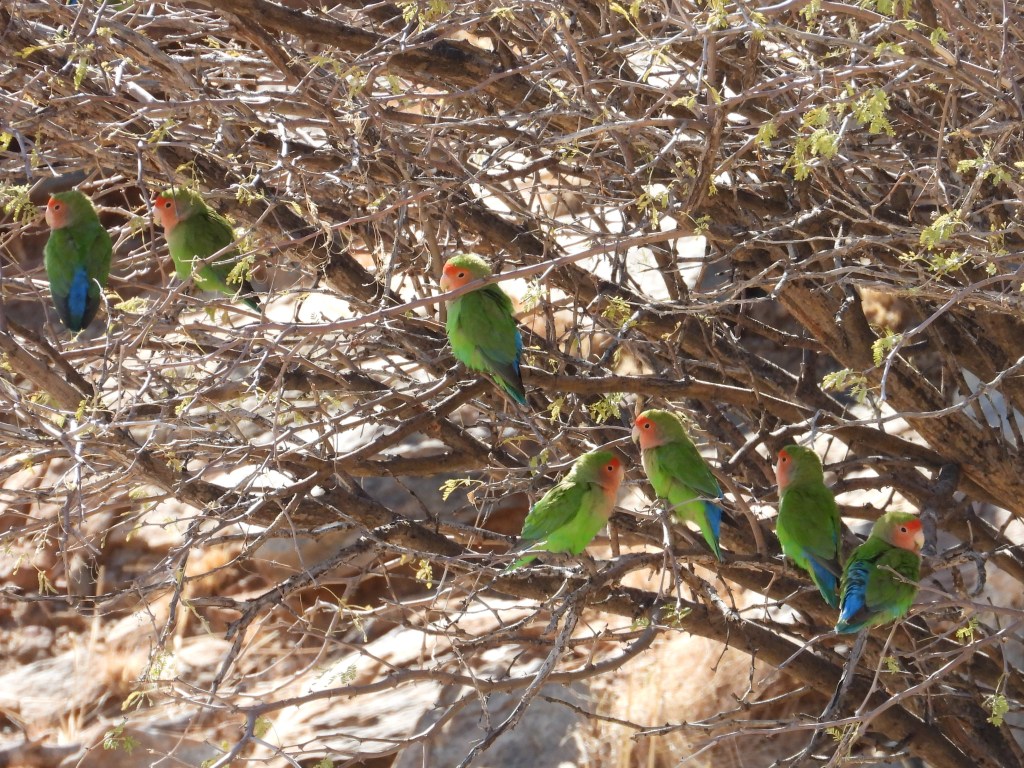
As can be seen from the above photos, this region was incredibly dry when I was there. Most of the stream beds were completely empty and the grass was dead. However, even during the dry season, there is wildlife to see. I noticed the below Peach-faced Lovebirds perched in an acacia shrub. Their brilliant greens, blues, and pinks added some bold color to the largely brown landscape. We also found a Herero Chat (which I didn’t get a good picture of) and Southern Fiscal (below)

The Southern Fiscal is in the shrike family, making it a relative of the North American Northern and Loggerhead Shrikes. Shrikes are songbirds but unlike most songbirds, they prey on other vertebrates. As a result, they have sharp, slightly hooked beaks, a feature can be seen on the bird above. They will eat insects, but they also hunt and eat small vertebrates such as lizards or rodents.
Shrikes have an interesting way of eating due to the fact that they have weak legs compared to other predatory birds, like hawks or eagles. Most predatory birds will hold their prey down with their feet while they eat it. Shrike legs are too weak for that, so have another way of stabilizing their prey while they eat it: they impale it on thorns, twigs, or barbed wire. Additionally, a shrike that catches more food than it can eat will impale the leftovers somewhere and use that as a larder. This behavior also plays a part in courtship: in some species, the male will create large larders of prey on his territory, which can help him attract a female. It sounds gory, but if you’re a female shrike, it’s best to have a mate who is a good hunter.
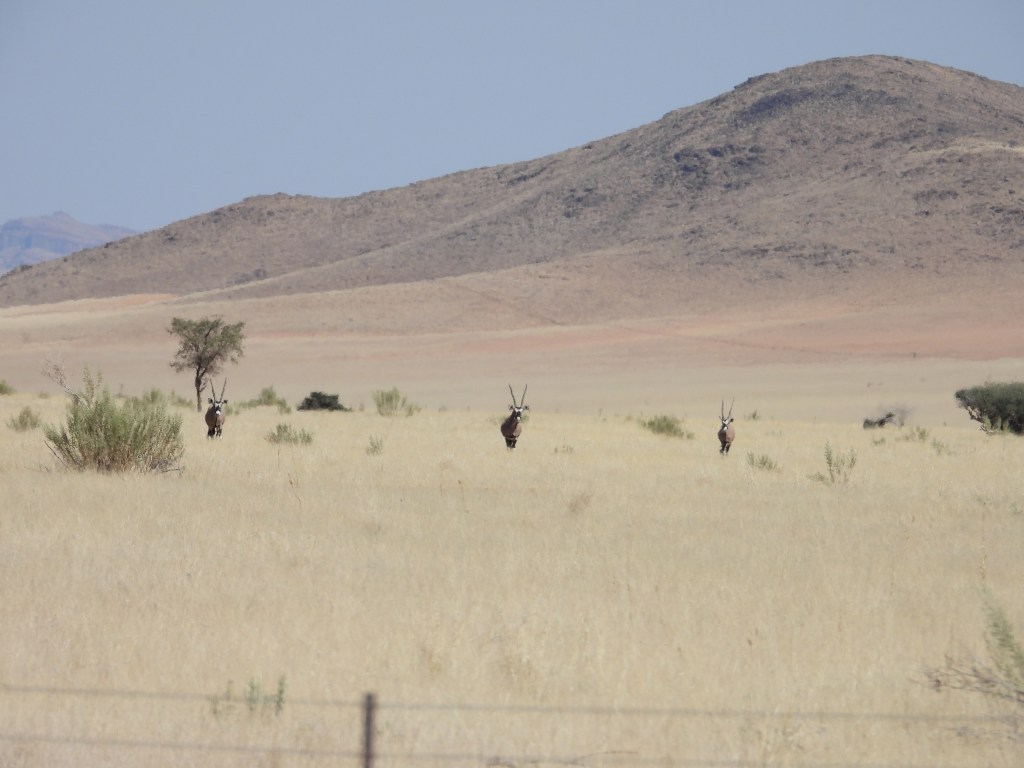
The desert itself was stark, with nothing but dead, dry grass and a few shrubs. It was nonetheless a good place to see Namibia’s national animal, the Oryx (AKA Gemsbok). Oryx are very well adapted to deserts and they can survive for long periods off of the water in the plants they eat.
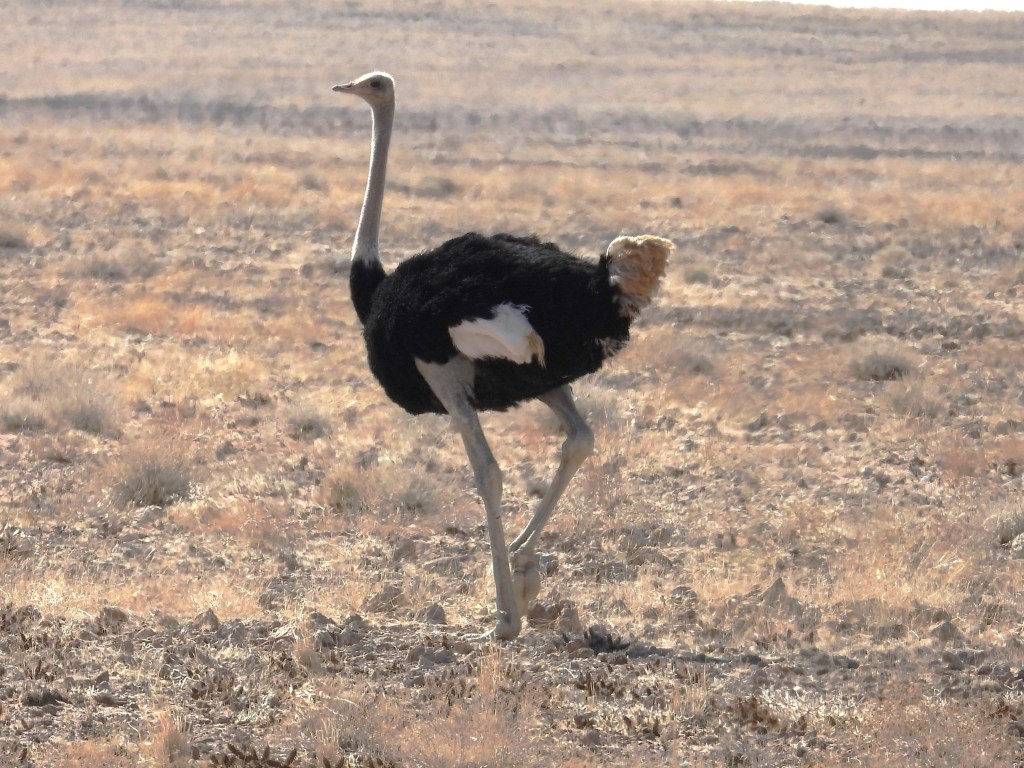
Birdwise, bustards, larks, and ostrich seem to do quite well in the deserts of Namibia. We also saw some Bat-eared Foxes in the desert, but my photos of them aren’t very good. Like a lot of desert foxes, Bat-eared Foxes have large ears, which help them dissipate heat.


The Namib desert is very sparsely populated, but there are a few outposts here and there. The little town of Solitaire makes a nice break stop for people driving from the Spreetshoogte Pass to Walvis Bay.

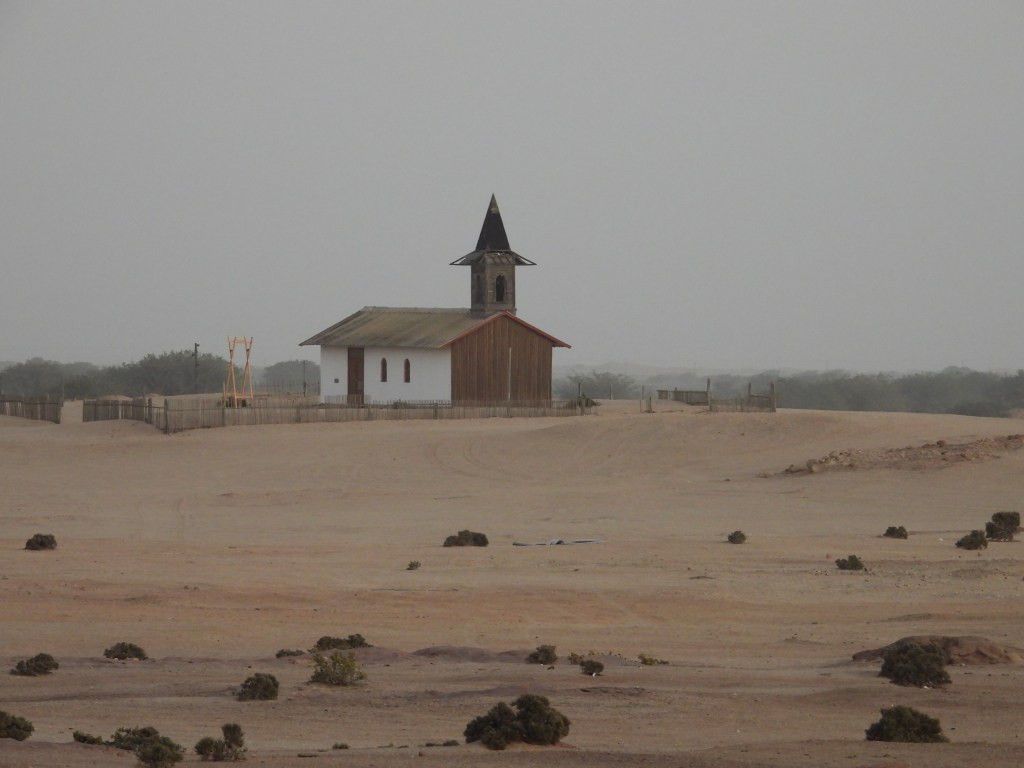
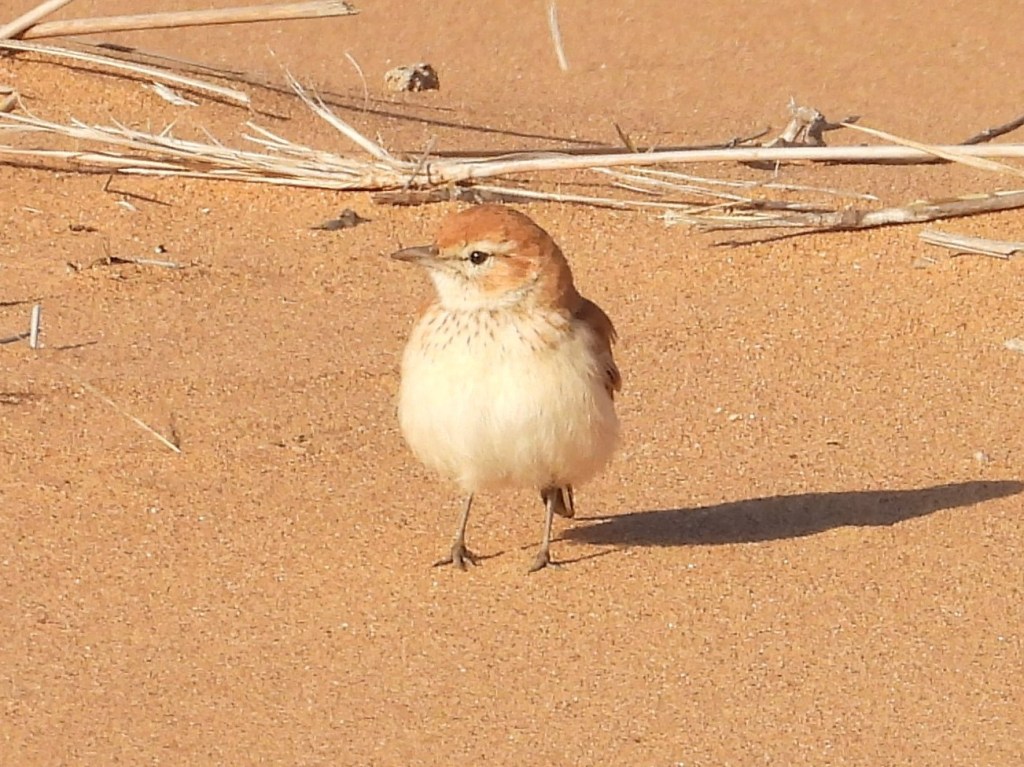
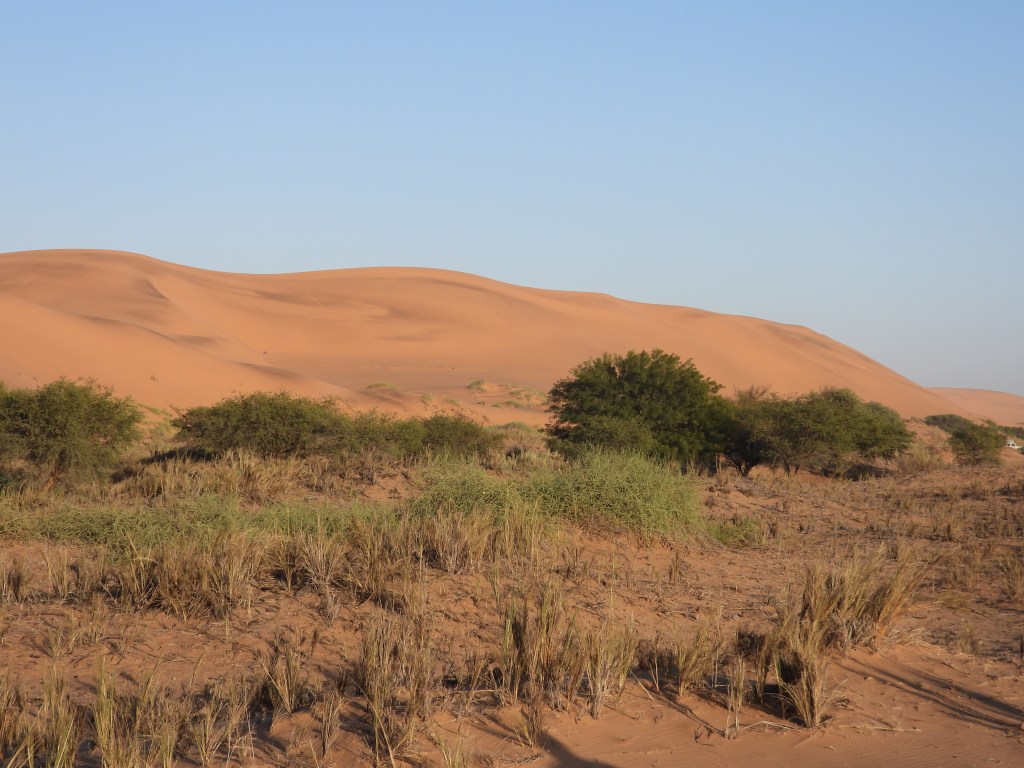
Namibia’s only strictly endemic bird is a lark called the Dune Lark. We later went searching for it by Rooibank, which is close to Walvis Bay. The first place we checked out was a bust as far as finding the lark went, but the area was quite photogenic due to a lone church out in the desert and a farm with a rather impressive sand dune backdrop.

We found the larks at our second stop, right in some perfect habitat: a shrubby plain next to a sand dune.


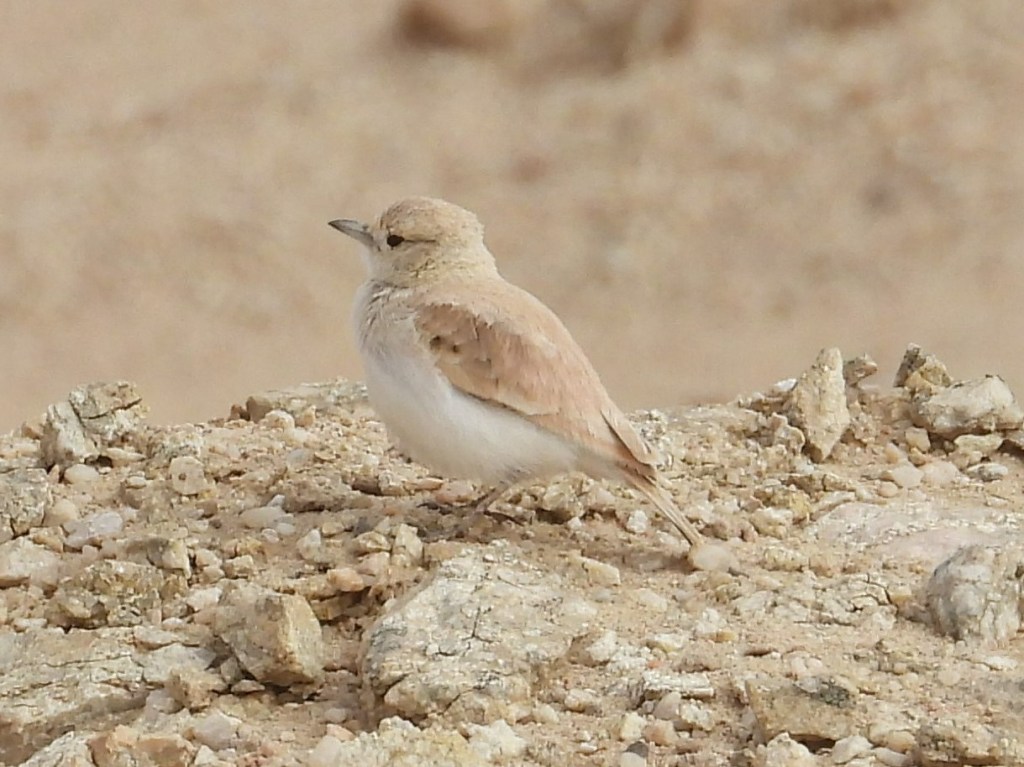
We also checked a few sites for the Gray’s Lark, which prefers very desolate areas. We found a few in a gravel plain that had a few shrubs on it.
My next post will be on the sea birds and other wildlife that can be seen around Walvis Bay!
 Peace Country Naturalist