Note: My first post about my trip to Namibia is HERE .
After driving through the desert, we arrived in the coastal city of Walvis Bay. It’s a great spot for people interested in birds and nature, as many sea birds can be seen along the shore, especially in the Walvis Bay lagoon. There are also large sand dunes a short drive from the city, as well as the Welwitschia plains, which are home to a very interesting and unique plant species.
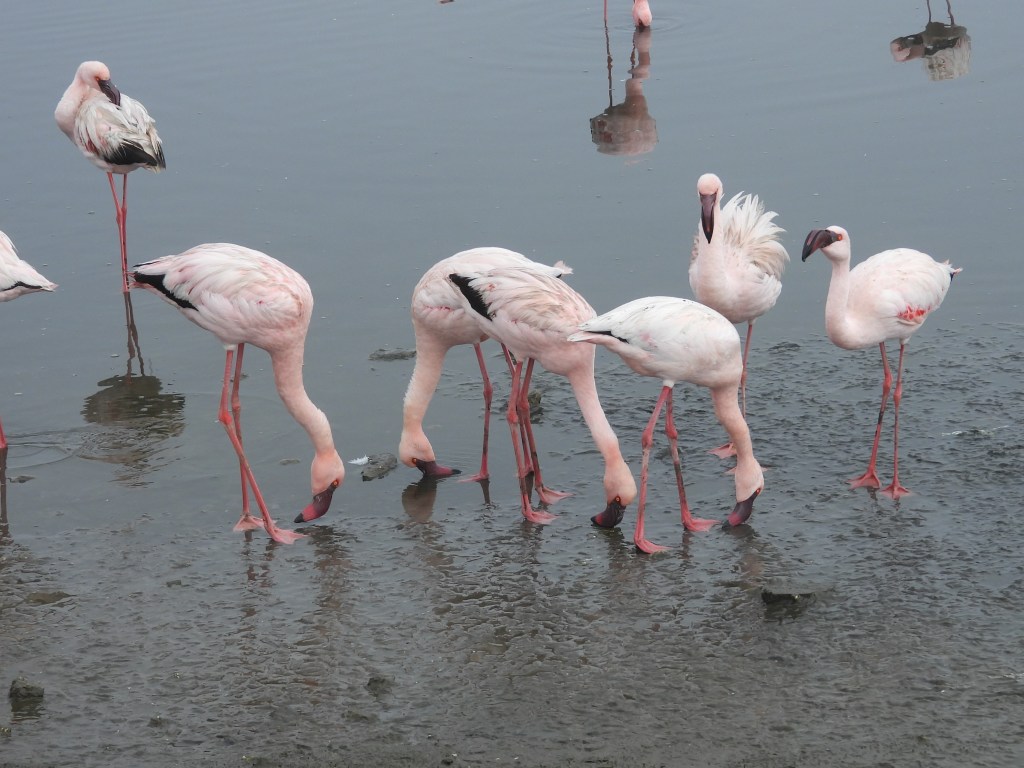
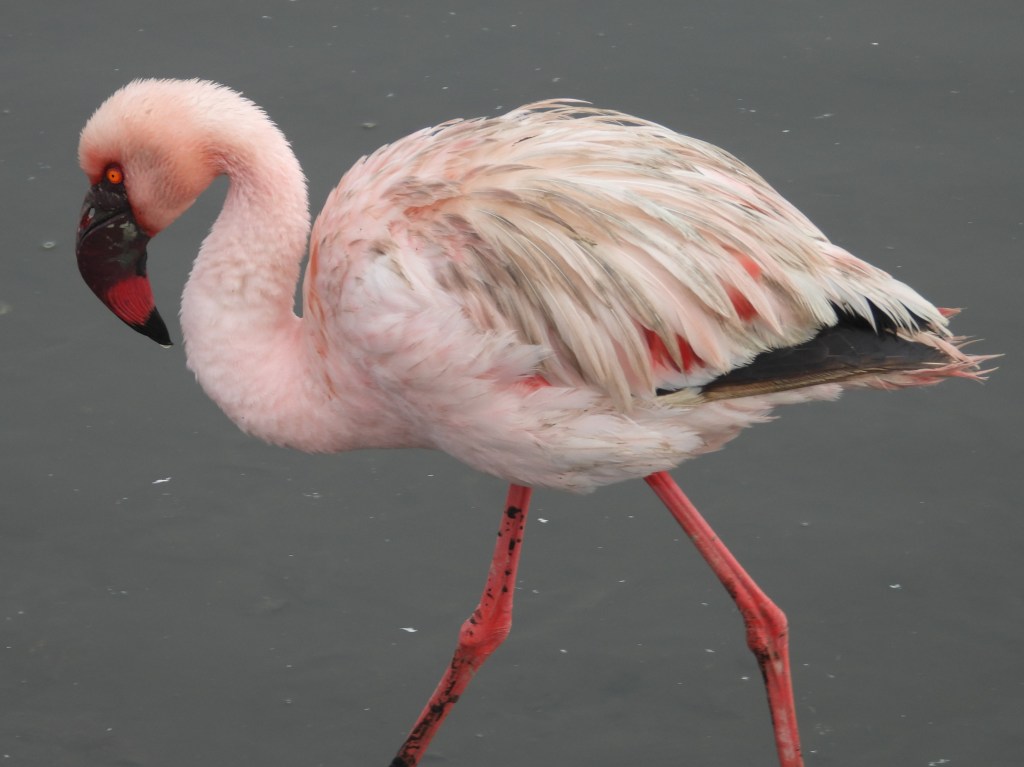
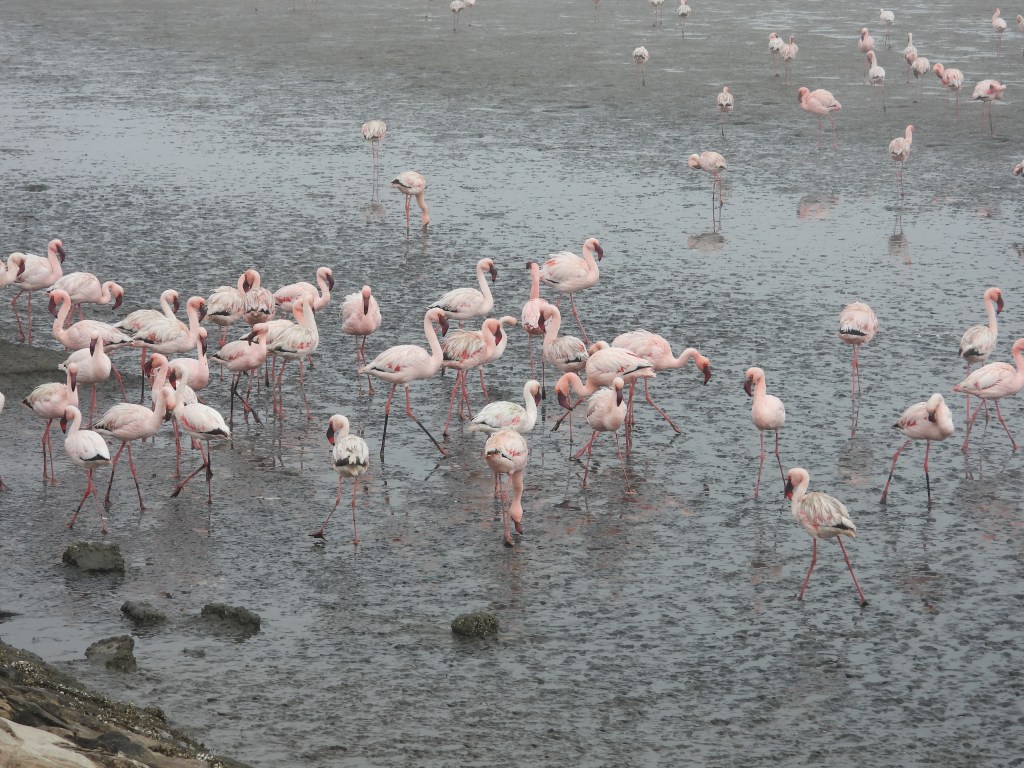
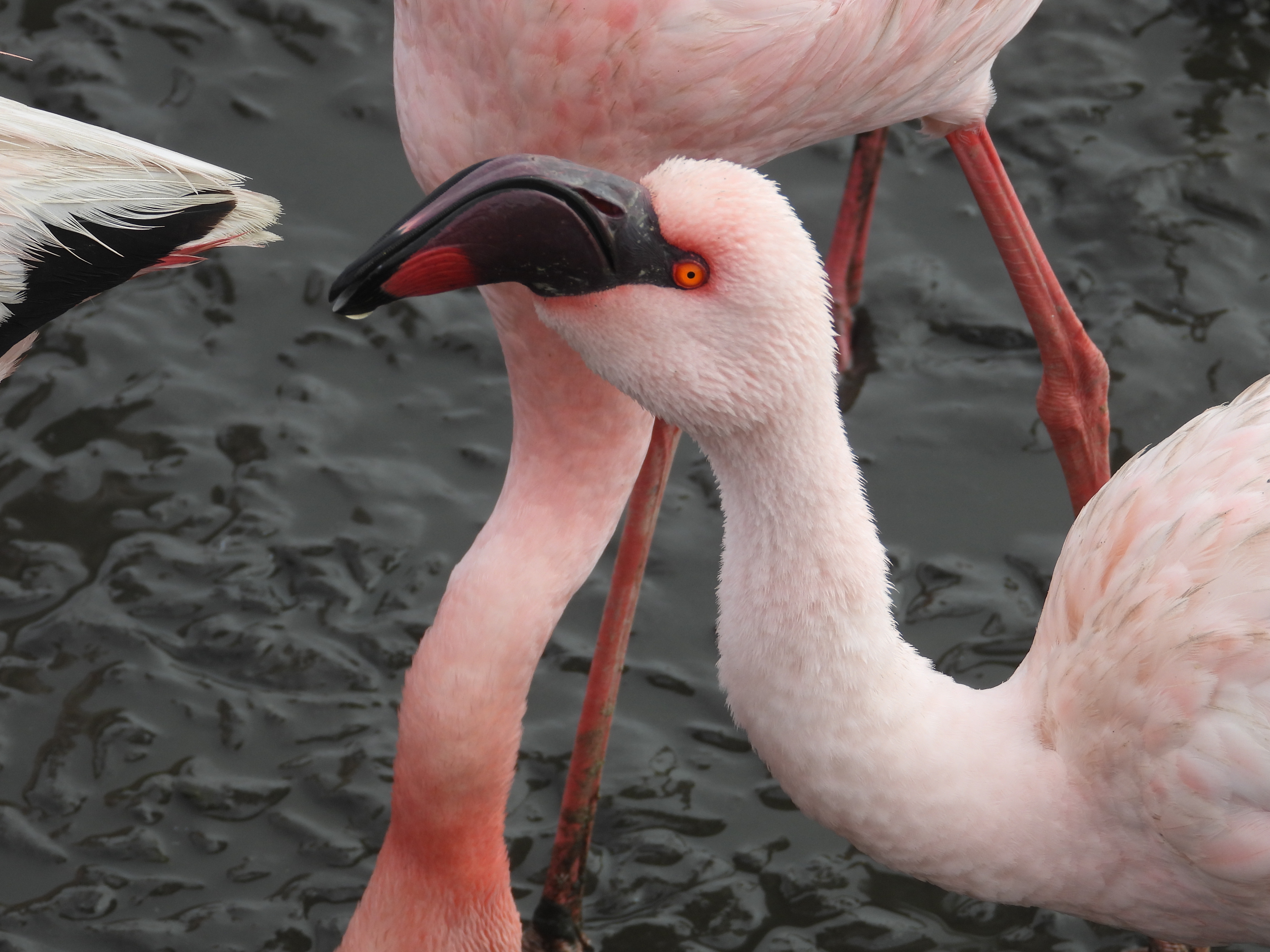
One of the big bird highlights of the area would be the large groups of flamingos that can be viewed right from town. They tend to come quite close to the shore, so they aren’t difficult to view and photograph. If you stay at the “Flamingo Villas,” you just have to walk across the street to see them. Both lesser and greater flamingos can be seen in the area, but most of the birds in the pictures below would be the lesser variety. They are just fascinating birds to watch and photograph. They spend a lot of their time sifting through the mud with their beaks and honking to one another. Flamingo beaks are quite odd-looking but they allow the flamingos to efficiently extract plankton and small crustaceans from the water. This is due to the tiny ‘combs’ along the edges of the mandibles that create a filter that can trap food.


Flamingos are pink, and the intensity of the ‘pink’ color will depend on the bird’s diet. This is because flamingos cannot actually synthesize pink pigments themselves – they have to ingest foods containing carotenoids to make them. Carotenoids are yellow, reddish, or orange pigments produced by many plants, bacteria, algae, or fungi, but almost no animals. Flamingos can incorporate ingested carotenoids into their feathers. Many other birds with pink feathers, such as House Finches, can do that too. A bright pink bird is one that has managed to ingest plenty of food containing carotenoids.




In Walvis Bay, it may be a little harder to see the flamingos early in the morning, when the area is covered in fog. However, the fog will dissipate as the sun rises.
Flamingos can be seen around Walvis Bay year round, but they don’t actually breed in the area. Many will migrate north, to Etosha National Park, to breed there during the wet season. Etosha is home to a very large salt pan that is dry most of the year. However, it does contain a shallow layer of water during the rainy season. When it has water, flamingos – up to one million of them in a very wet year – flock there to breed.
In Africa, flamingos tend to breed in very salty, caustic water bodies. Besides Walvis Bay, another excellent spot to see African flamingos would be the highly alkaline soda lakes in Kenya’s rift valley, such as Lake Nakuru. The water in these lakes can damage and irritate human skin, and most animals cannot drink it, but it does not bother flamingos. A thick layer of scales protects their spindly legs, and salt glands by their nostrils let them excrete the excess salt they consume as they forage.
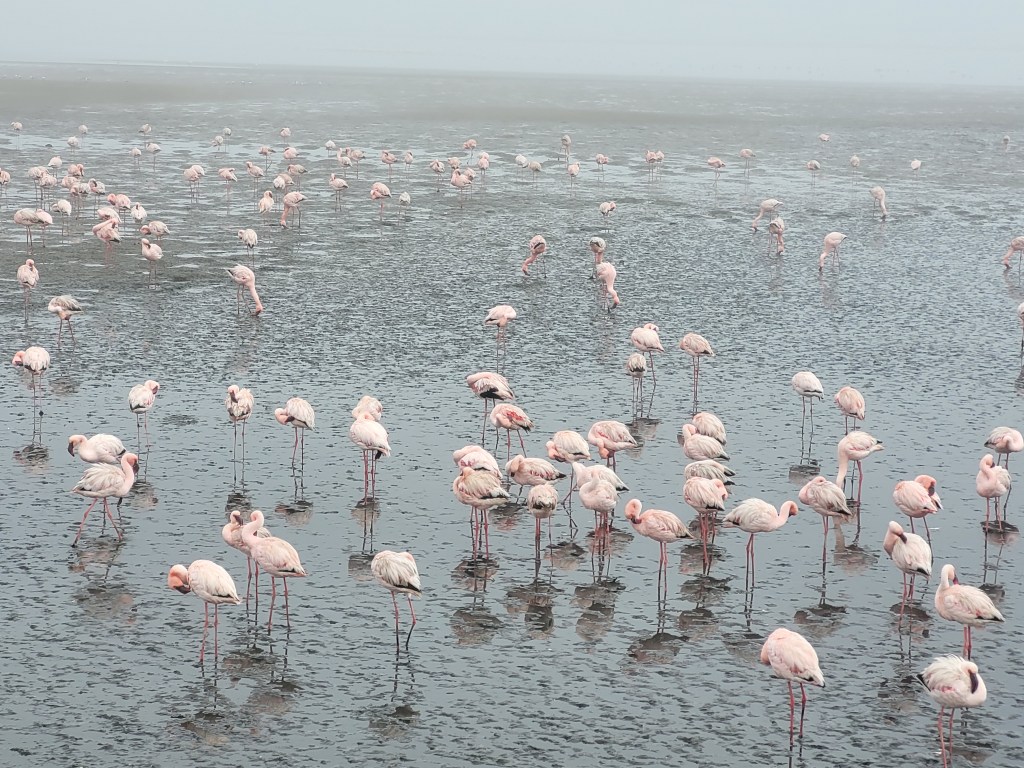
Here are a couple of short videos I took of the Lesser Flamingos:
There are many other bird species to see in the Walvis Bay area, especially along the shoreline by the salt works. These include a variety of gulls, cormorants, pelicans, terns, spoonbills, herons, gannets, and sandpipers. The exact species present will depend on the time of year, as many long-distance migratory shorebirds make stopovers around Walvis Bay.
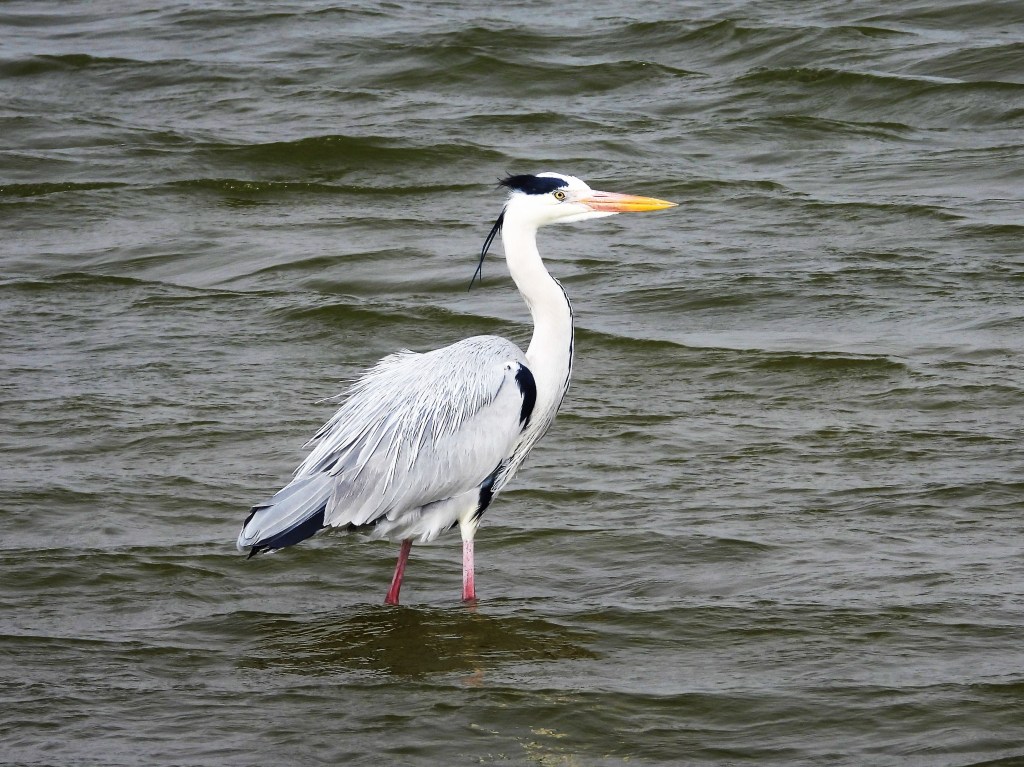

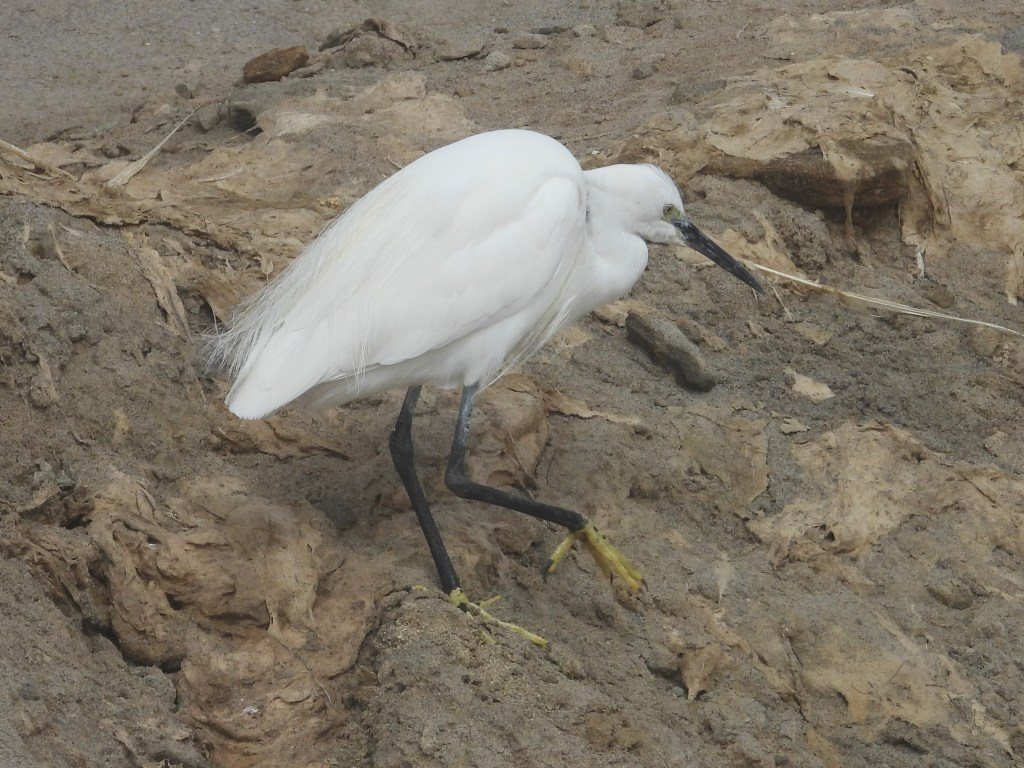
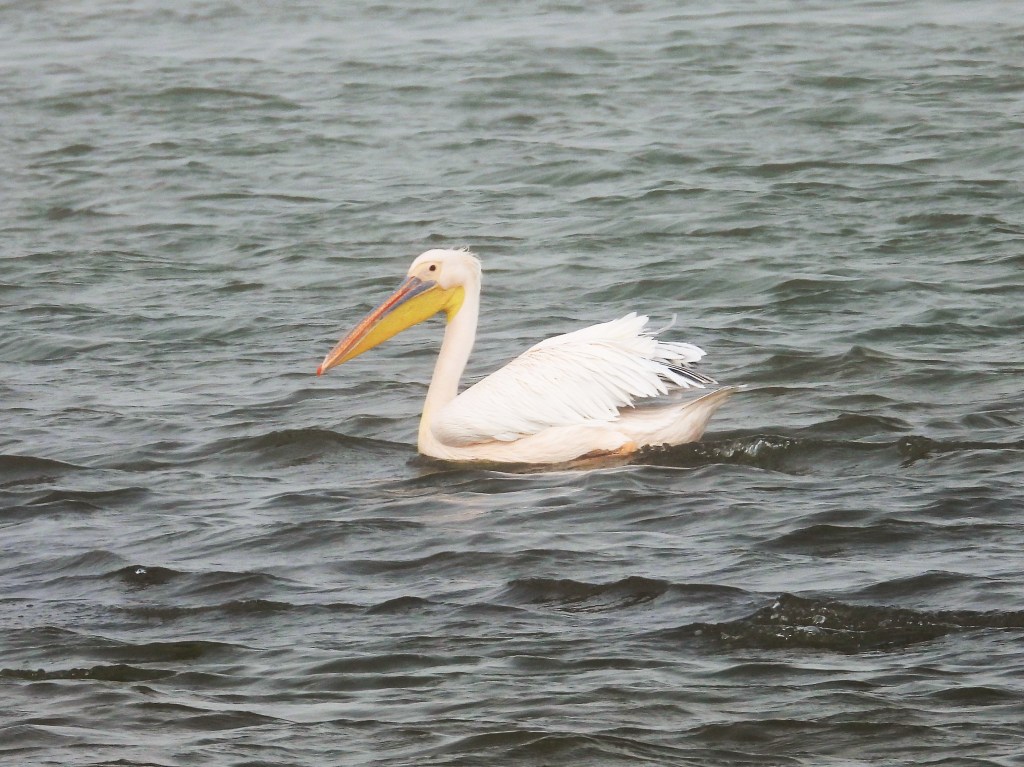
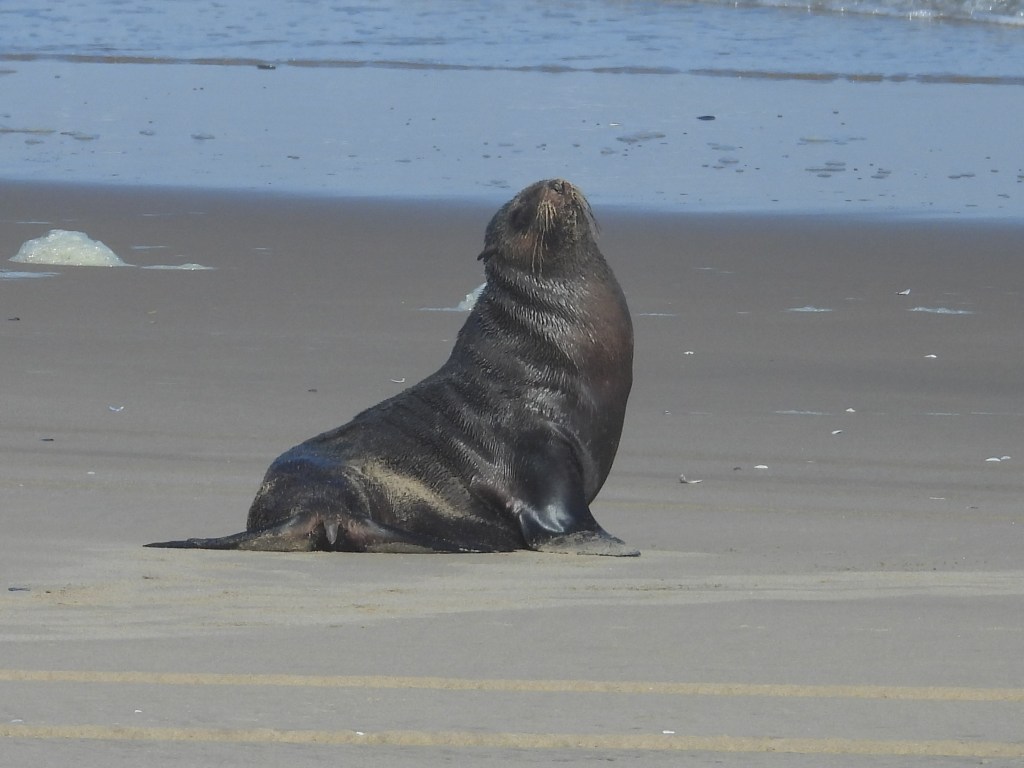
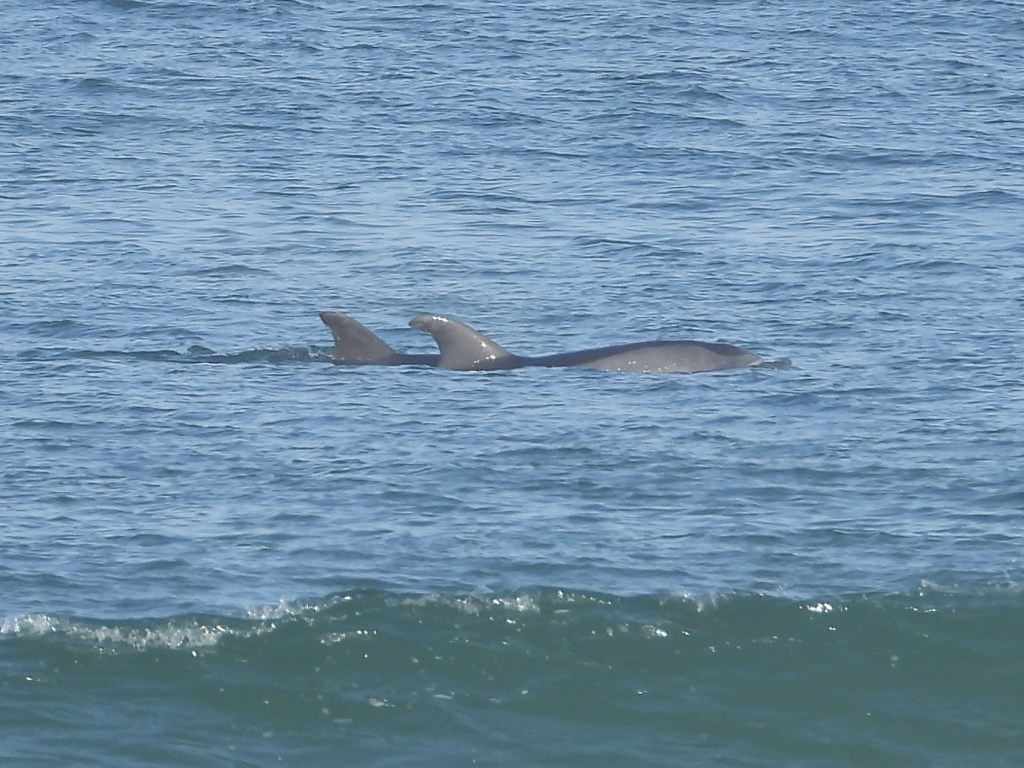
There can be more wildlife to see along the coast north towards Swakopmund. Aside from more birds, we found a Cape Fur Seal and some dolphins.

Walvis Bay should be a stop on the itinerary of any bird watcher who visits Namibia. Besides the sea birds, some desert specialties can be seen in the area, including the Dune and Gray’s Larks I described in the last post. I’ll also describe the nearby Welwitschia plains in my next post.
 Peace Country Naturalist