The semester’s over and I finally have time to write again!
Note: The first blog post about my trip to Namibia can be found by clicking HERE.
The next stops on the itinerary included Spitzkoppe and various sites in the Erongo Mountains. “Spitzkoppe,” which is derived from the German words for ‘pointed dome,’ is a group of 120-million-year-old granite peaks located in the Namib desert. It’s a popular spot for tourists interested in wildlife, camping, hiking, and/or rock climbing. Because so many tourists visit the area, the road to Spitzkoppe is lined with informal vendors who sell rocks and various handicrafts, and there is a little gift shop at the entrance gate.
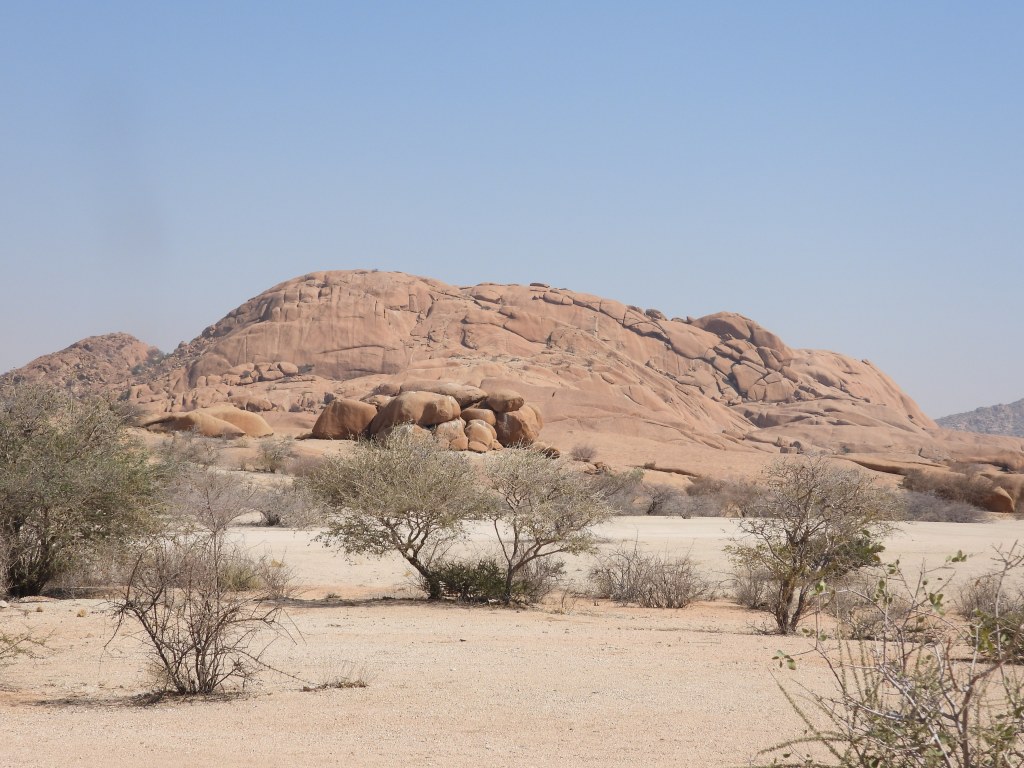
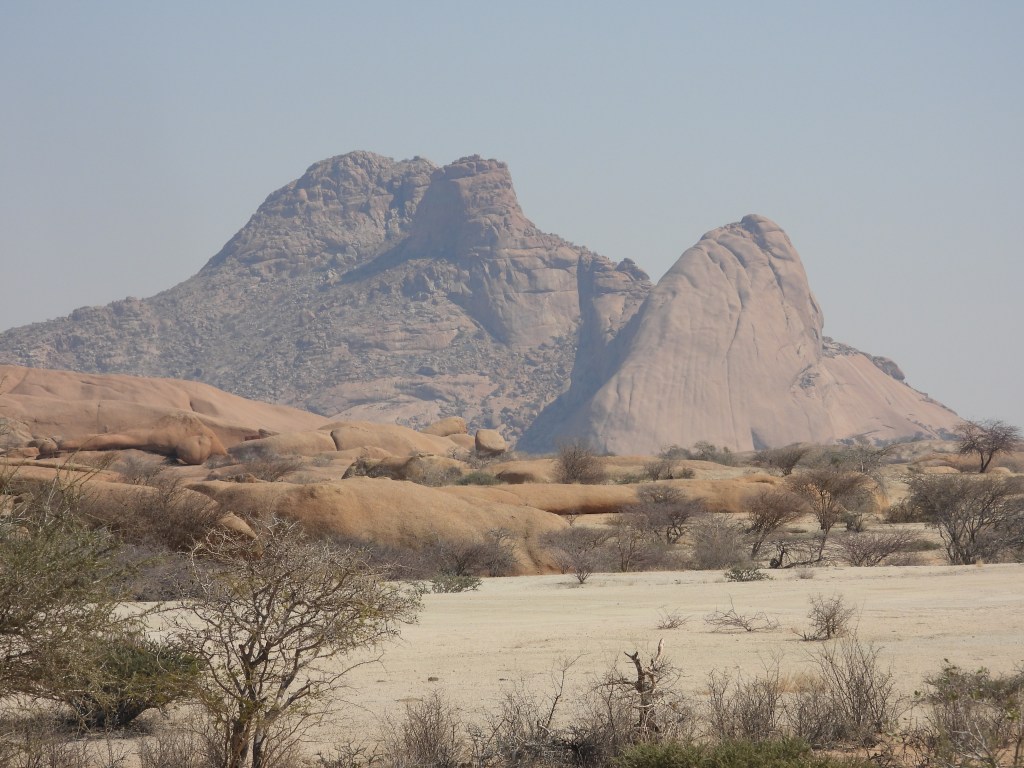
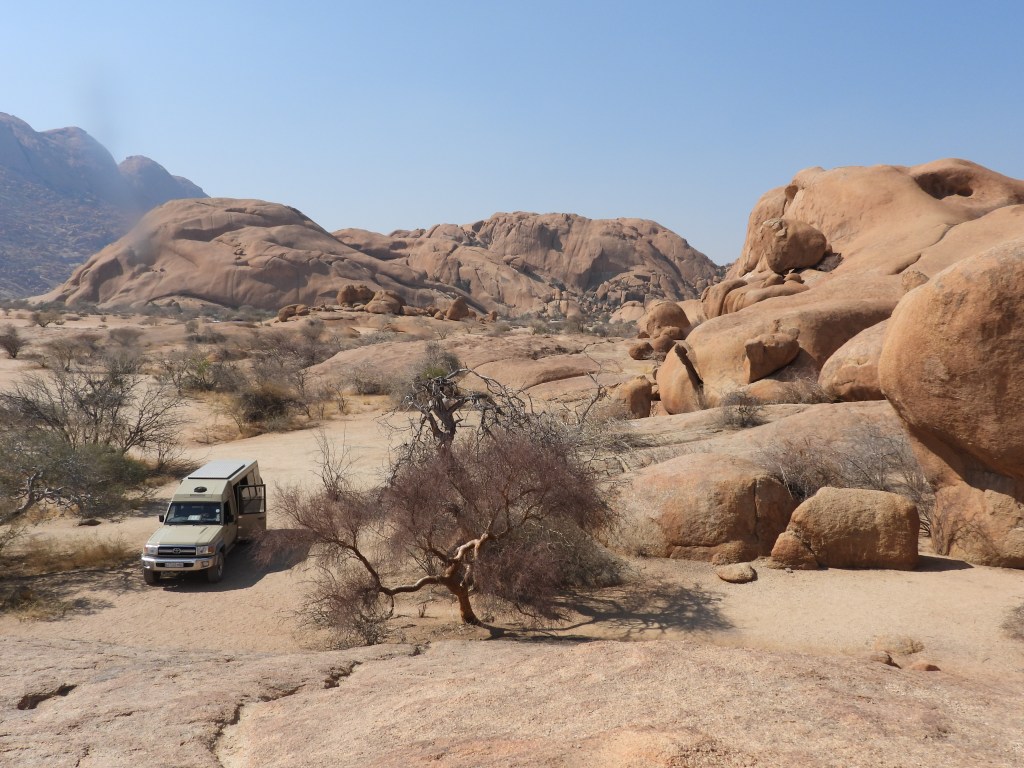
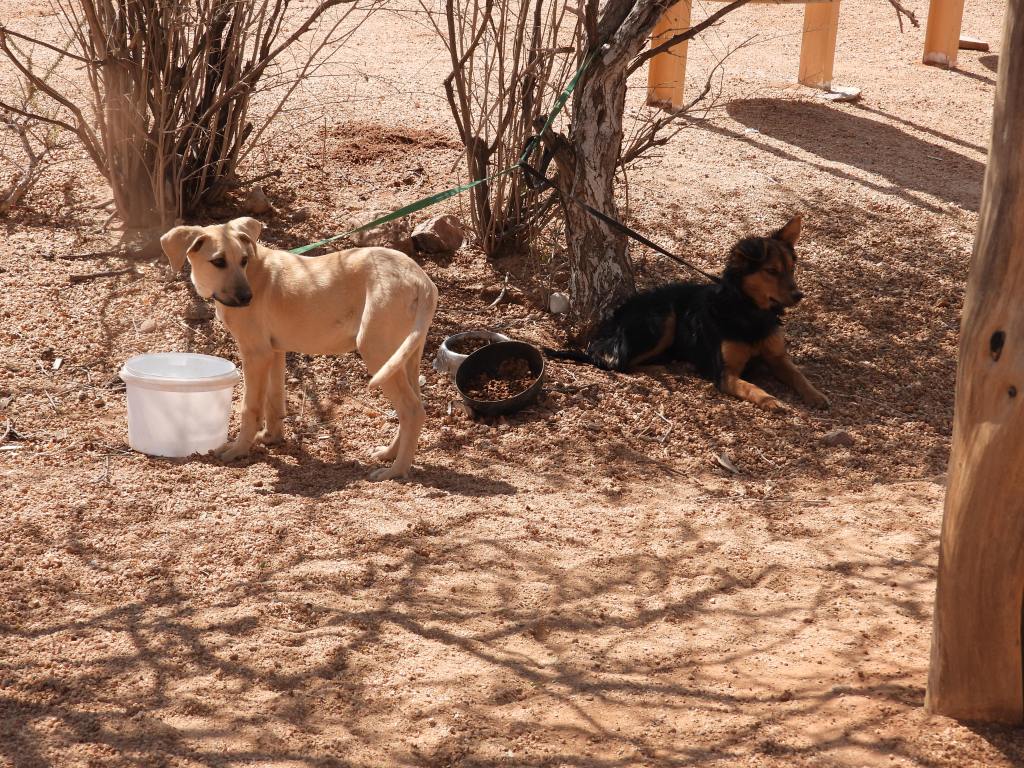
There are some basic camping sites and hiking trails around Spitzkoppe, as well as a little café. I couldn’t help but notice a couple of nice dogs near the café. They seemed well-fed but I gave then some ham from my sandwich.
The camp sites at Spitzkoppe are well-spread out, making it a great spot for campers looking for a wilderness experience and some peace and quiet. The area is rustic and there are no water taps, so campers would need to bring plenty of water.
Despite the sparse vegetation and lack of standing water, there is wildlife to see around Spitzkoppe. The area provides excellent habitat for both Rock Hyrax and Damara (Mountain) Ground Squirrels. Various small lizards can also be seen sunning themselves on the rocks.
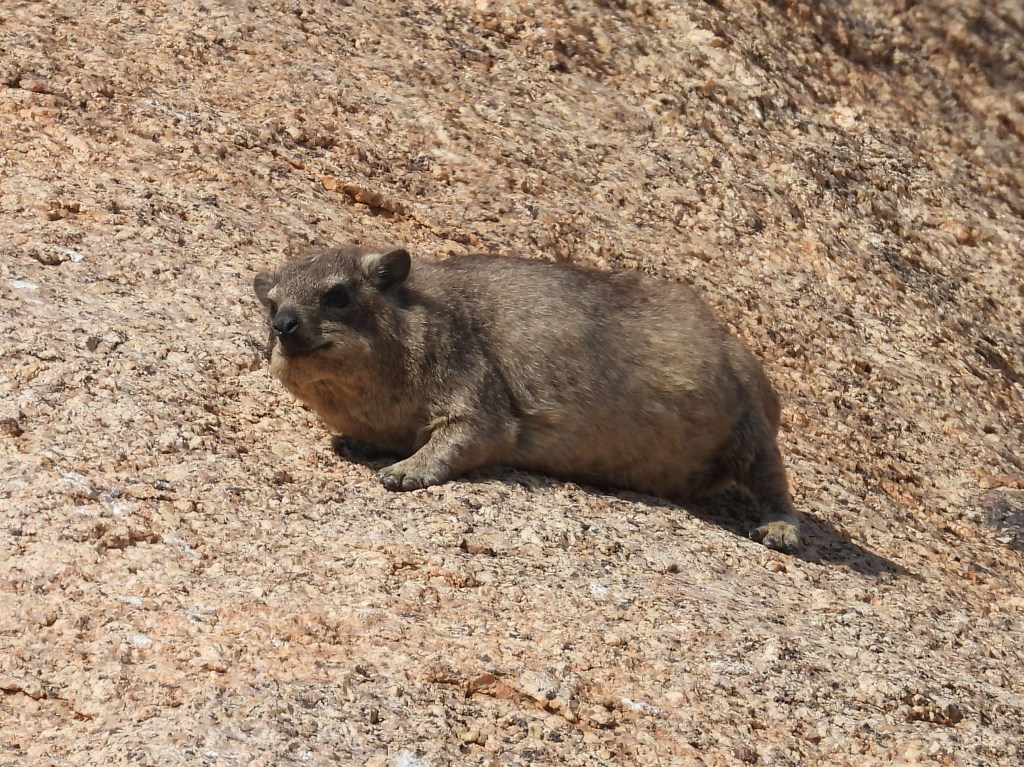
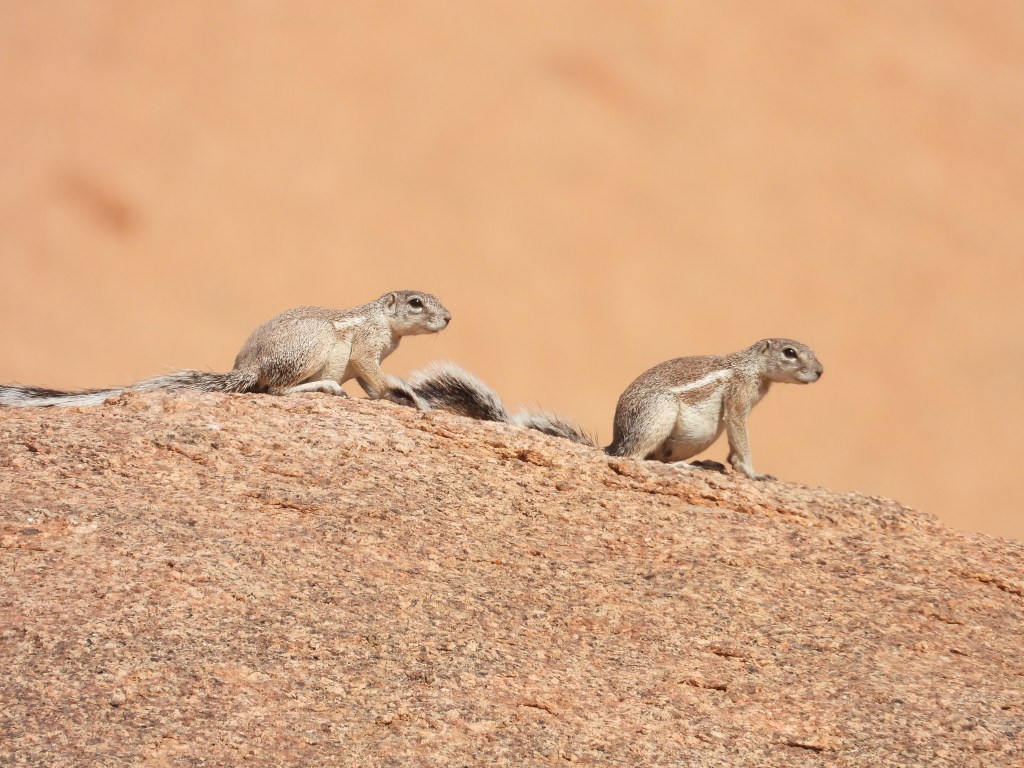
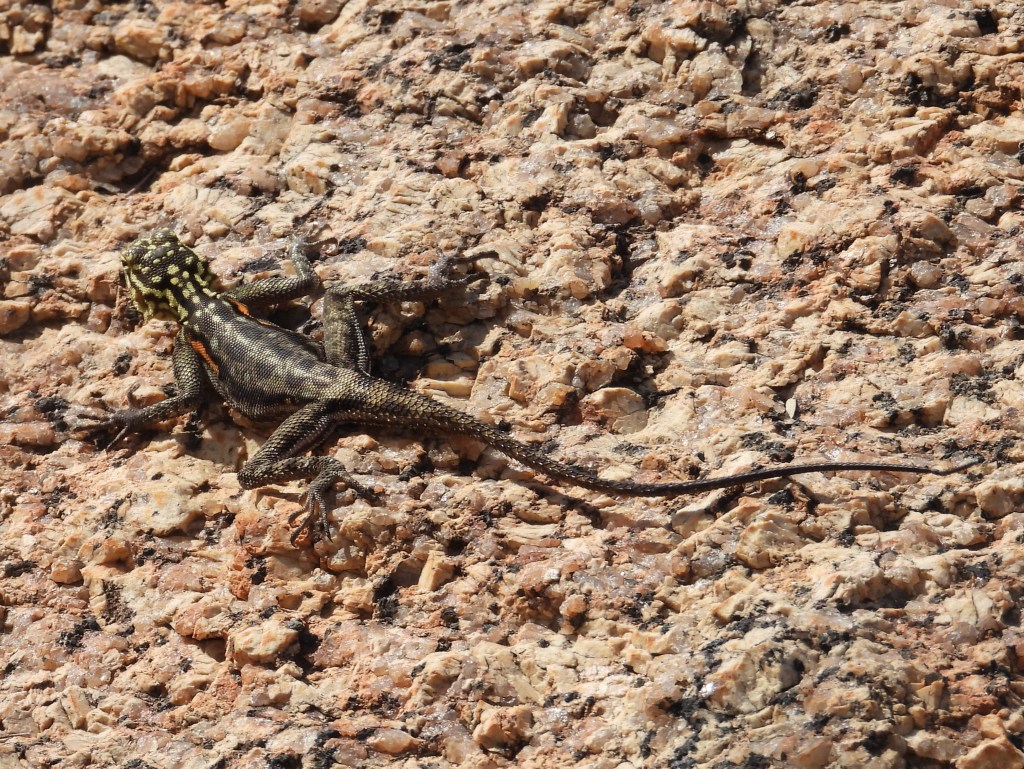
A variety of birds manage to make a living in the area too, including the Monteiro’s Hornbill (see below), which is a near-endemic to Namibia. They are very well-adapted to arid environments and can survive well in areas that lack drinking water. They obtain sufficient moisture from their food, which includes small vertebrates and arthropods. Unlike most other hornbills, these ones don’t eat a lot of fruit.
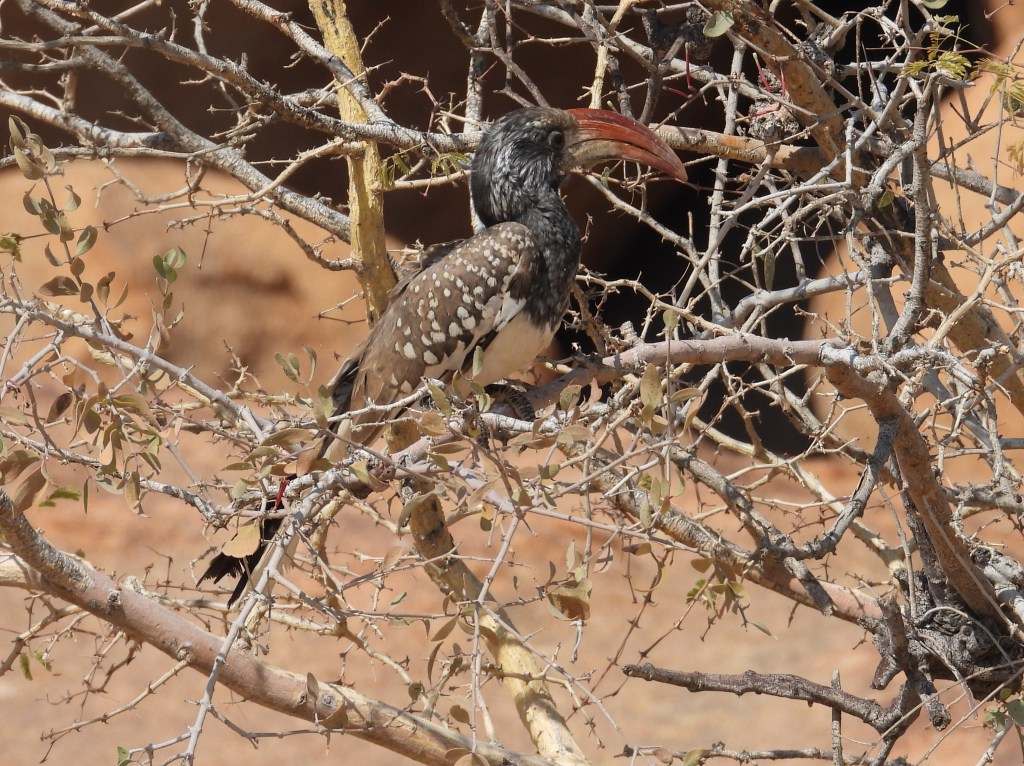
The reproductive biology of hornbills is quite intriguing. Hornbills in general usually nest in tree cavities, but Monteiro’s Hornbills will nest in rock faces as well. That isn’t too unusual, as many other birds, such as parrots and woodpeckers, also nest in cavities. It’s what hornbills do to protect their cavities that makes them unusual.
In some regions of the world, good nesting cavities are rare. Therefore, cavity-nesting birds often have to compete for good nest sites and they may have to guard them from other birds. Hornbills, however, have evolved an extreme method of staking a claim to a good nesting site. A few days before she starts laying eggs, the female hornbill will seal herself right into the nesting cavity. The ‘seal’ (made of mud and feces) will contain a small slit through which the the male will pass food to the female. That does indeed mean that the female is stuck in the nesting cavity for several weeks or months. Because the female is enclosed in the nest, no other animal can ‘steal’ the nesting cavity or prey on the eggs.
Many female hornbills will remain sealed in the nest until their offspring are close to fledging. However, Monteiro’s Hornbill females will typically emerge before the young are ready to fledge. In hornbill species where the female emerges before the young, the female will frequently re-seal the chicks into the hole, leaving a slit so the young can still be fed.
While the female hornbill is stuck in the nest with her offspring, she will molt all of her flight and tail feathers and regrow new ones. So, should she leave the nest prematurely, she won’t be able to fly anyway.
This odd behaviour means that nesting female hornbills and their chicks are completely reliant on the male for sustenance. During the breeding season, the male hornbill will be incredibly busy, finding food for himself, his mate, and later on, his chicks. The breeding season is quite long too – female Monteiro’s Hornbills must incubate the eggs for 45 days. The fact that these hornbills end up stuck in a nest for more than two months makes me wonder how they avoid undergoing severe muscle and bone atrophy. Females of the large Asian hornbill species may be confined in a nest cavity for an even longer period of time than the smaller African species. They can be sealed in the nest for up to three months!
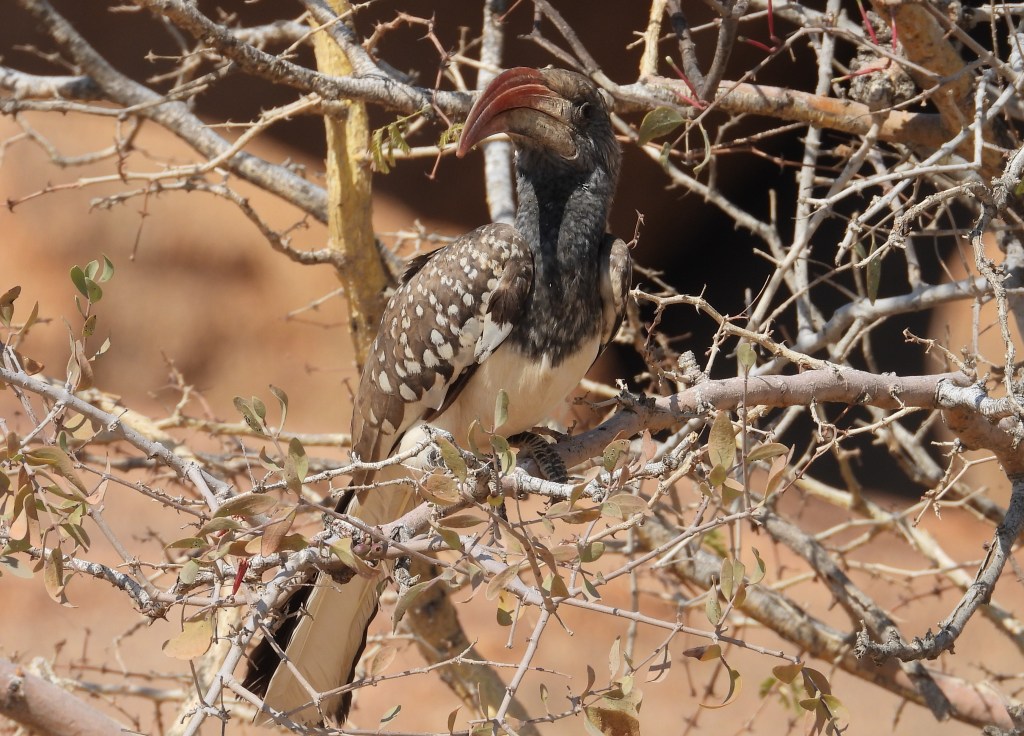
Hornbills in general are quite common in Namibia, and I’ll be posting more pictures of then in the coming days. They do not appear to be shy at all and would often be present around tourist lodges and roadsides. I even saw several at a bird feeder near the international airport by Windhoek.
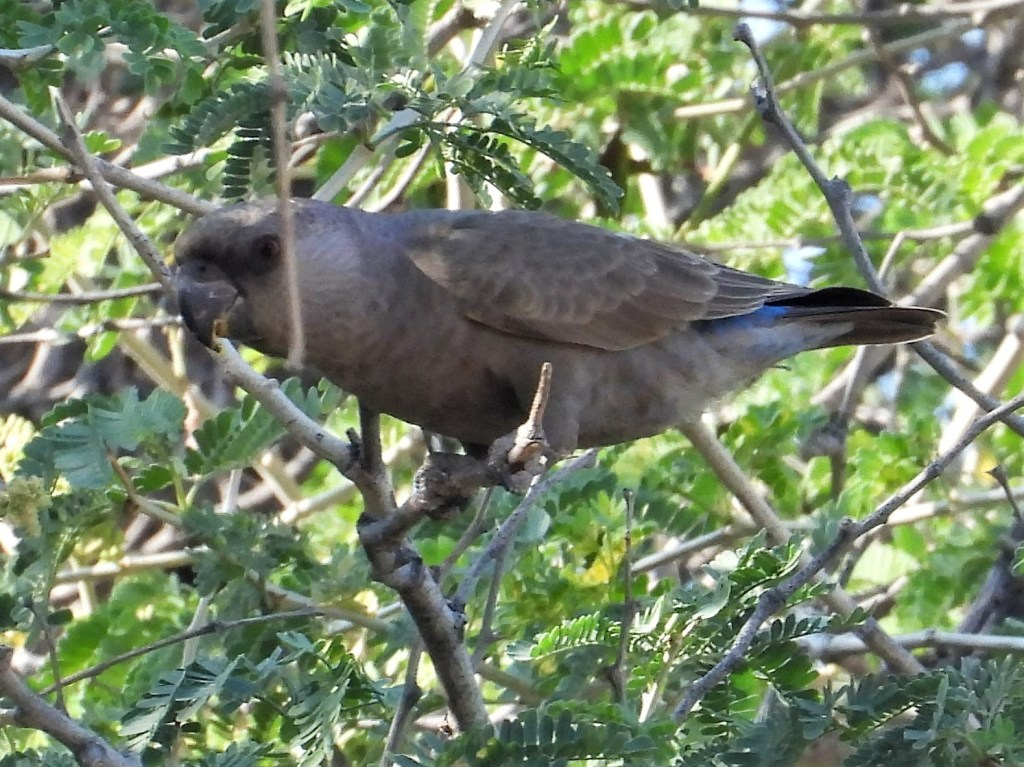
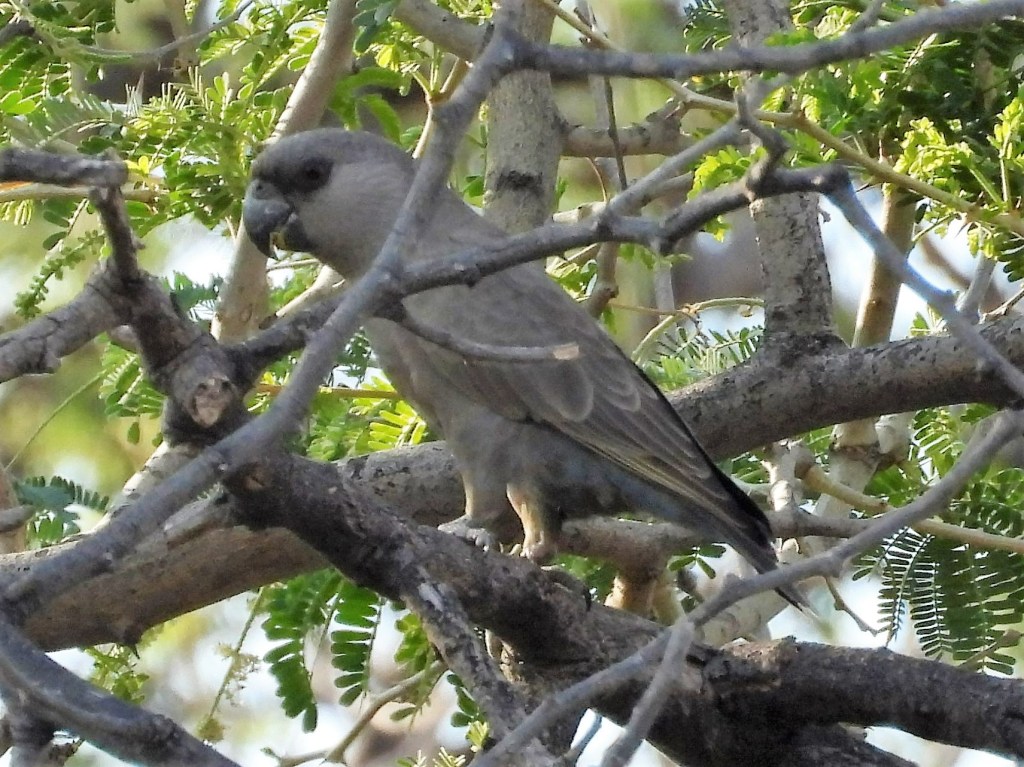
After we visited Spitzkoppe, we headed to a lodge in the Erongo Mountains. We did make a stop en-route to look for Rüppell’s Parrots. We found several living in a forest along a dried-out riverbank. They were quite high up in some acacia trees, feeding on the fruits.
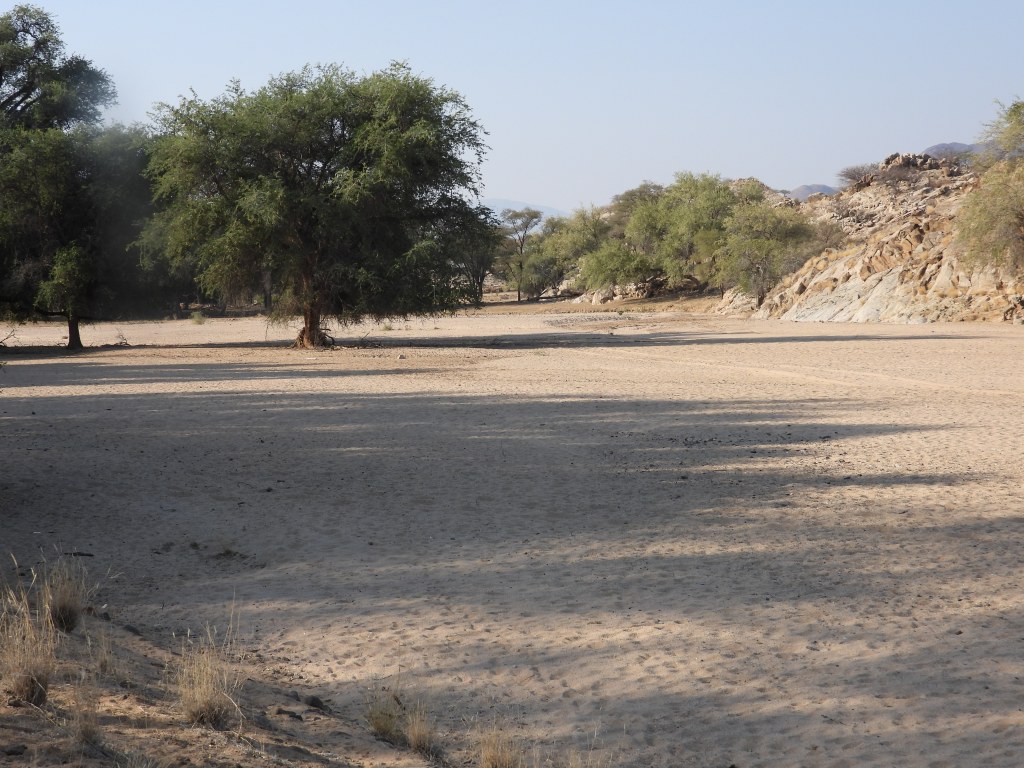
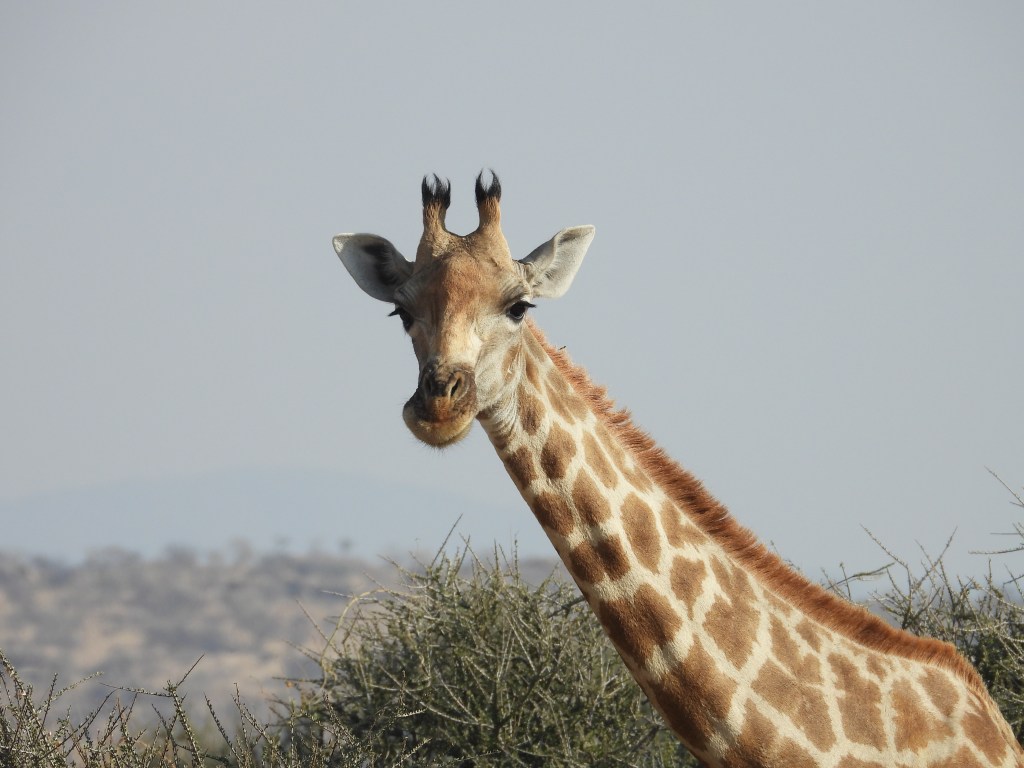
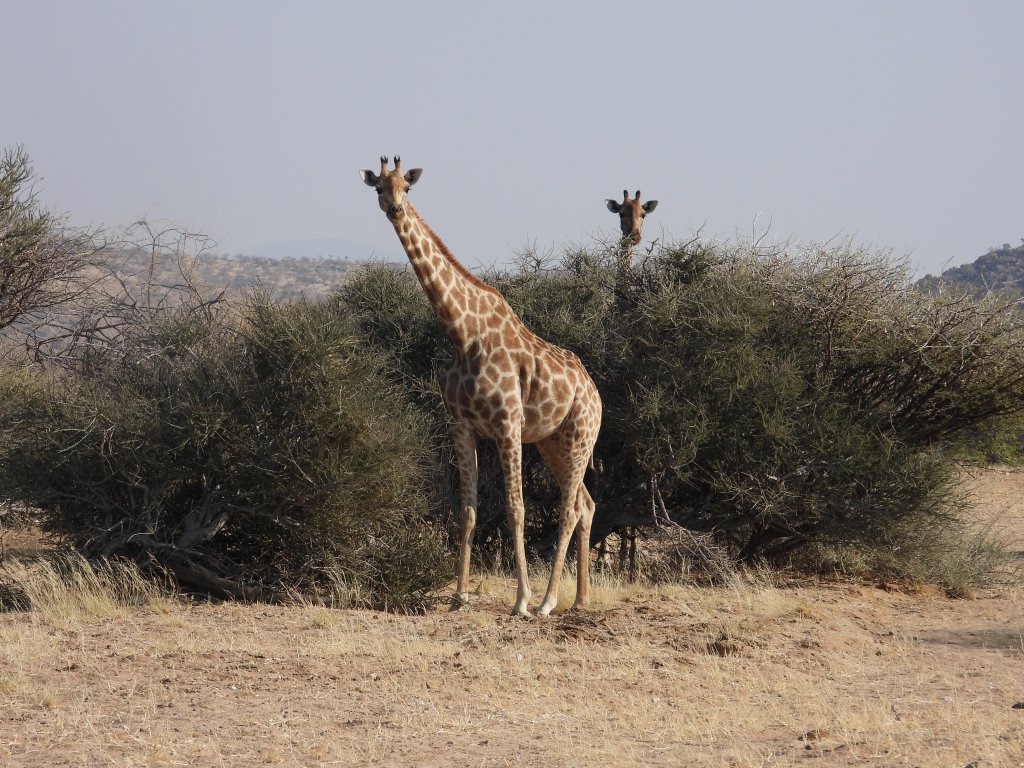
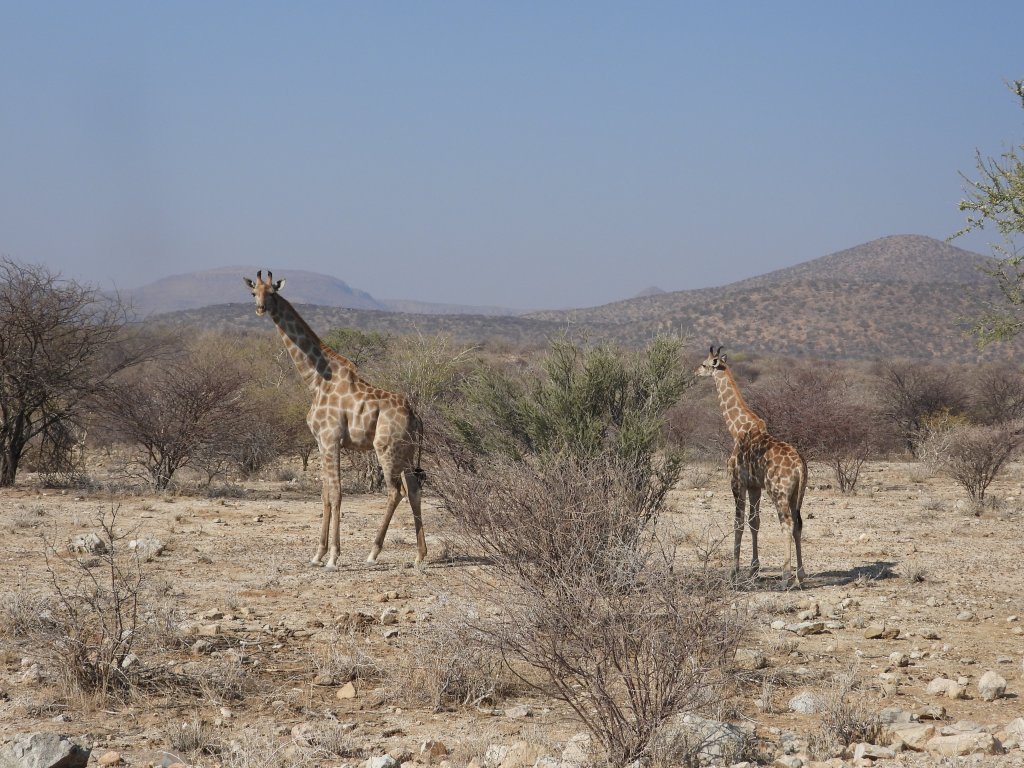
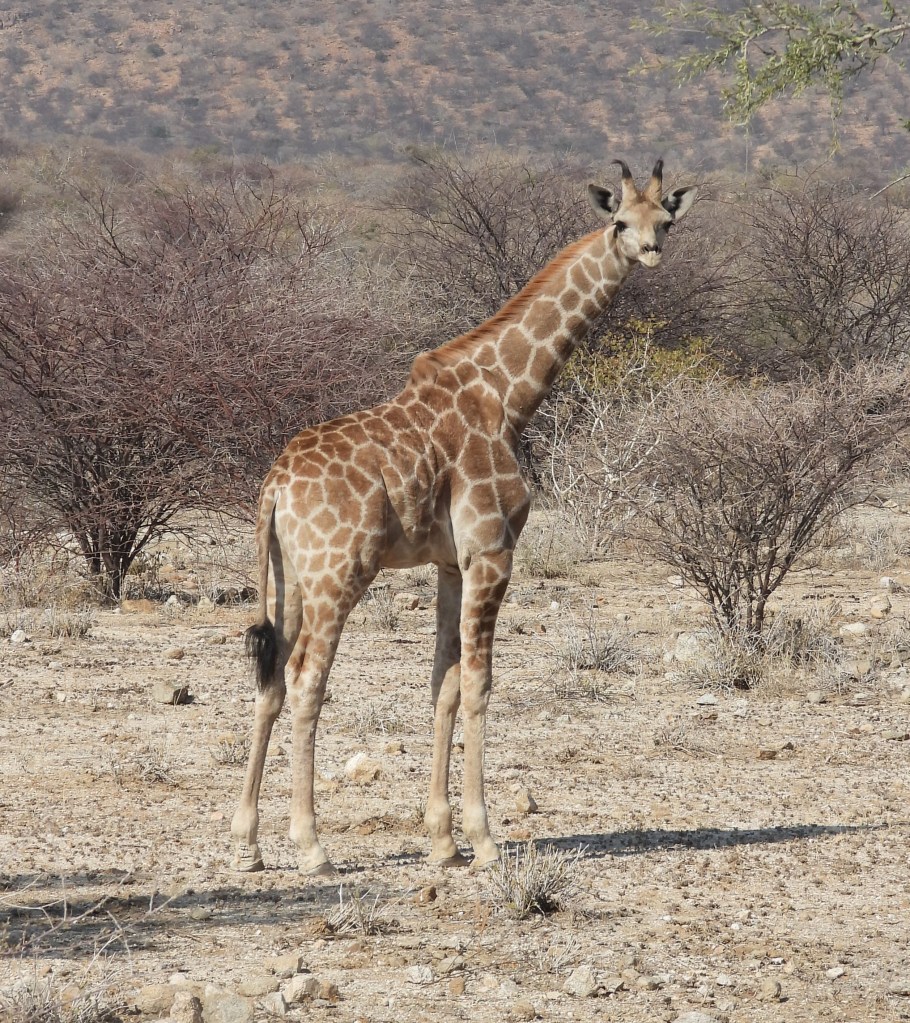
The Erongo Mountains are very picturesque. The abundance of acacia trees means that giraffes can make a good living there, and we saw several of them in the region.
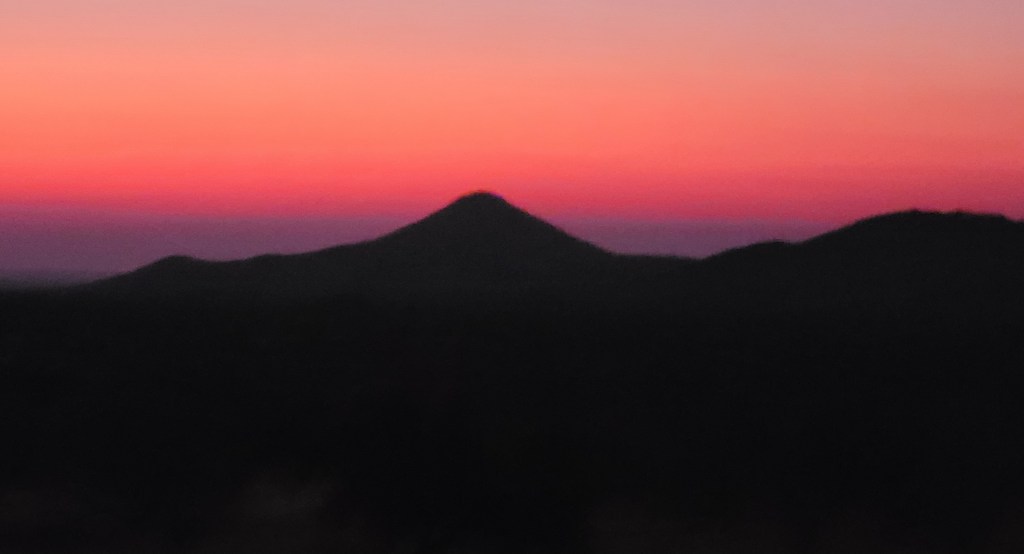
I’ll end this post with a picture of a beautiful African sunset over the Erongo Mountains. The next post will introduce Etosha National Park, which has an absolutely incredible amount of wildlife.
 Peace Country Naturalist