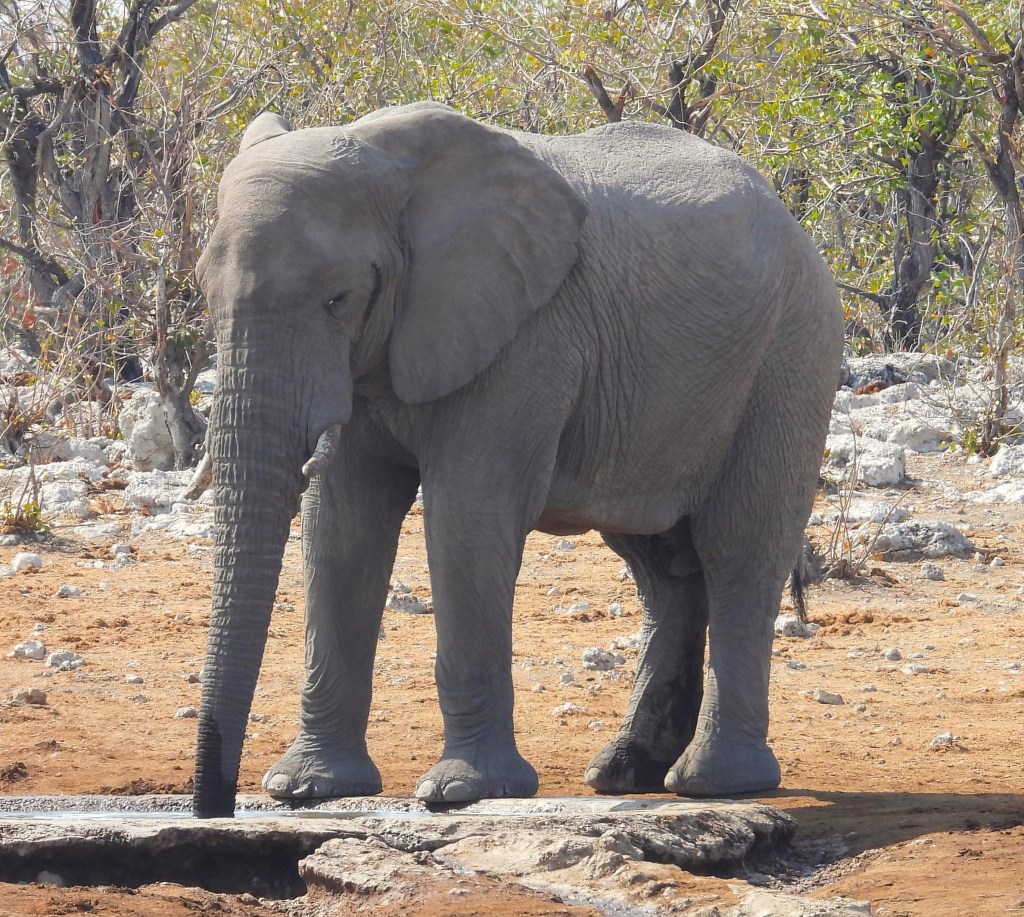
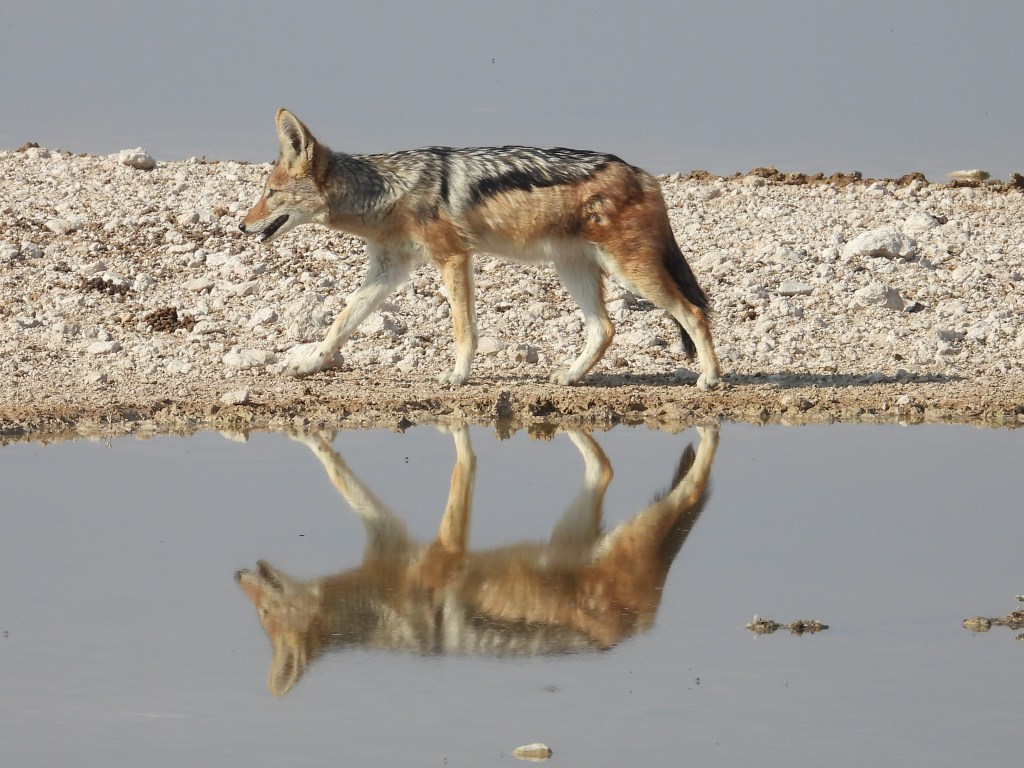
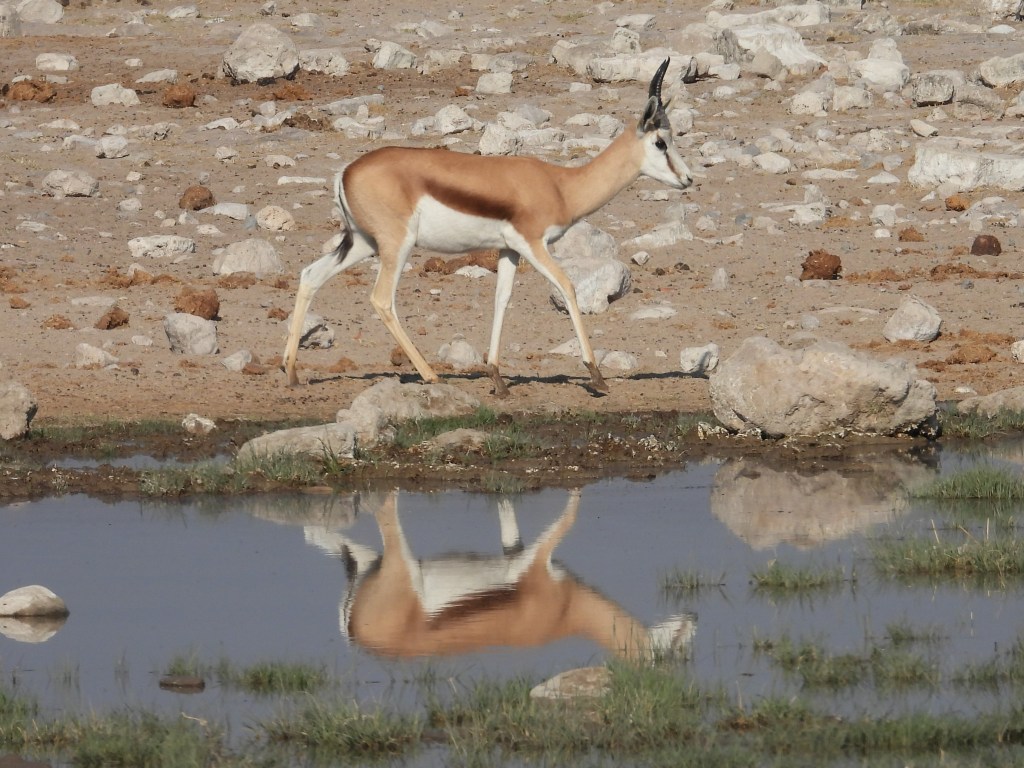
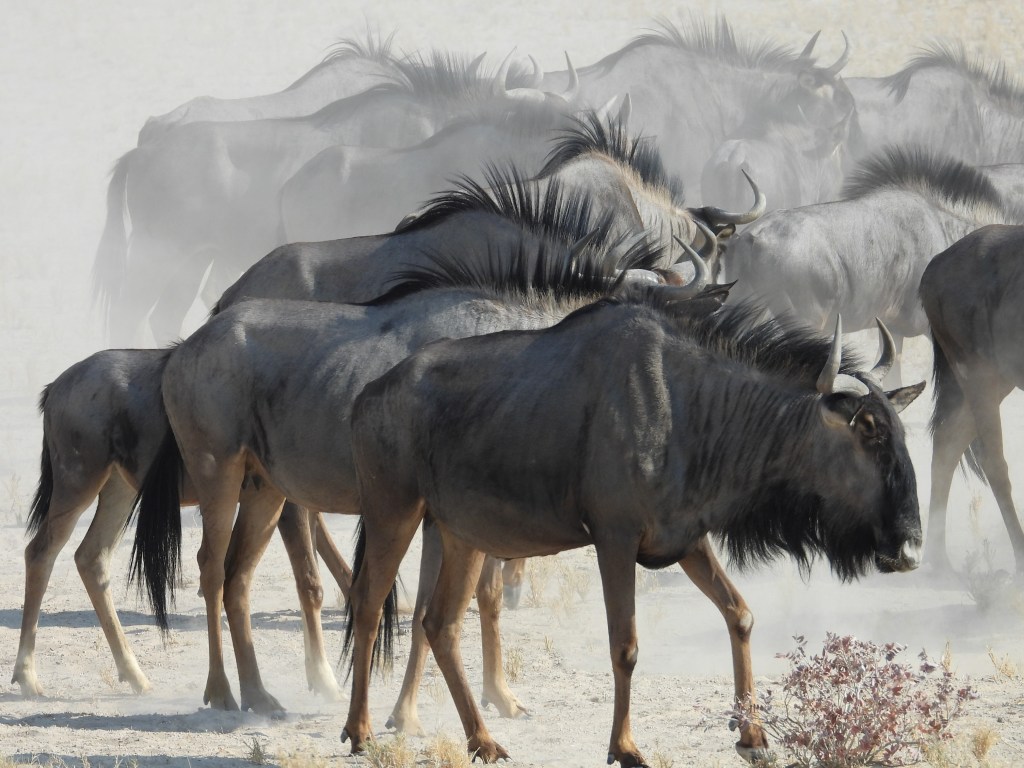
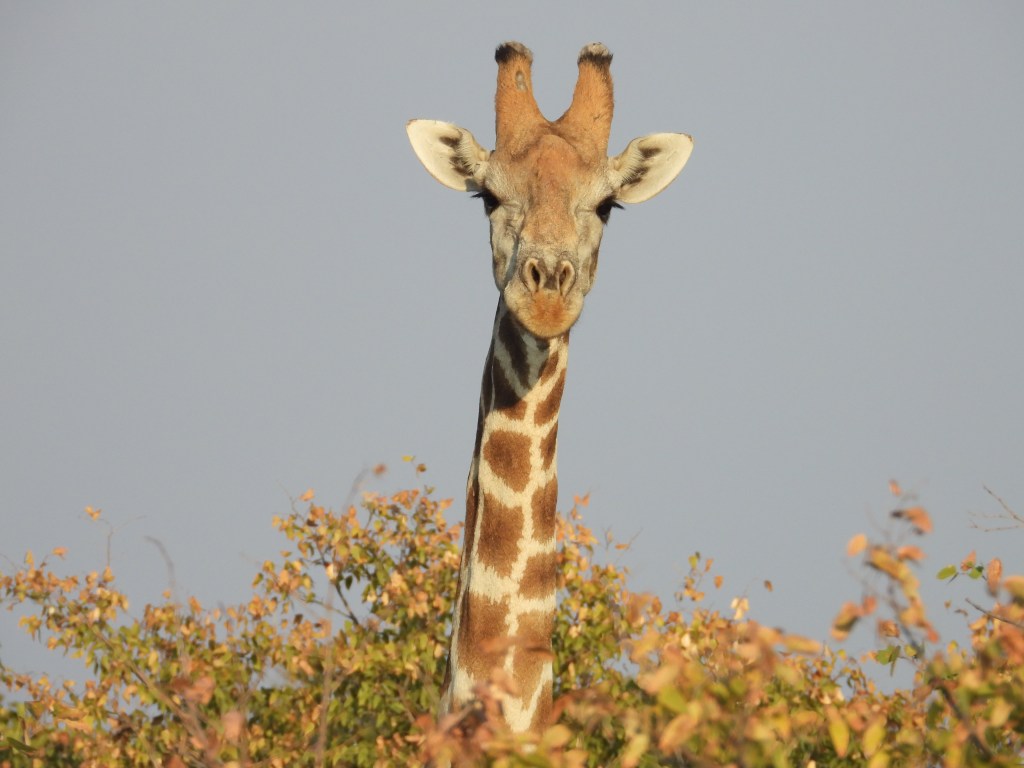
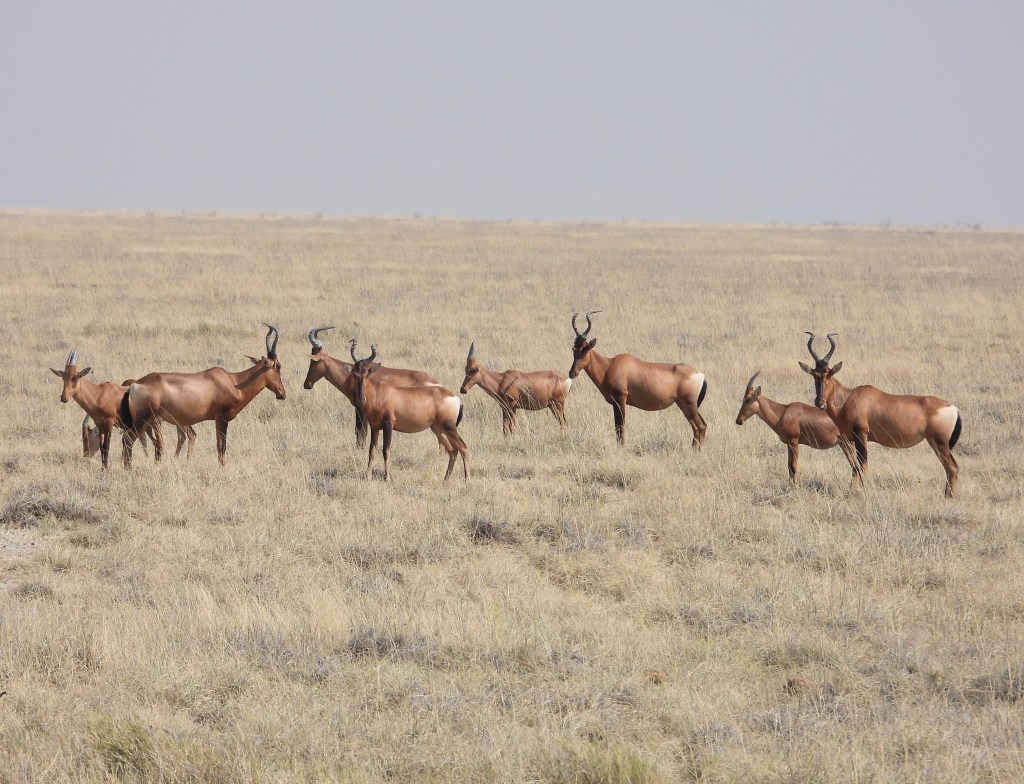
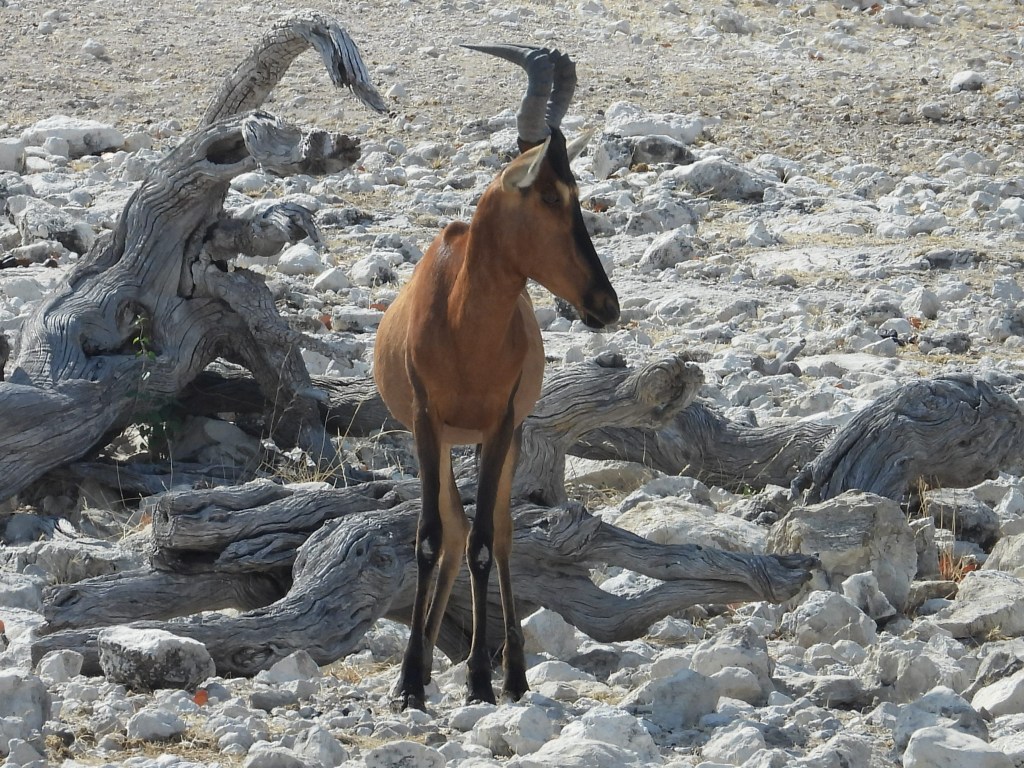
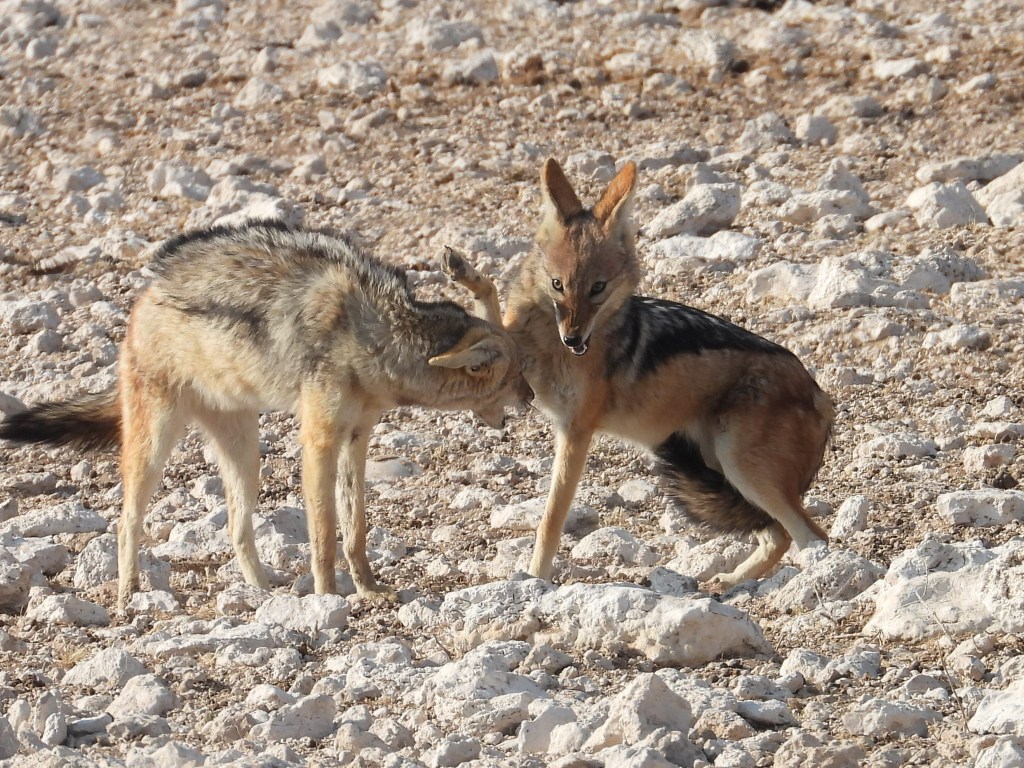
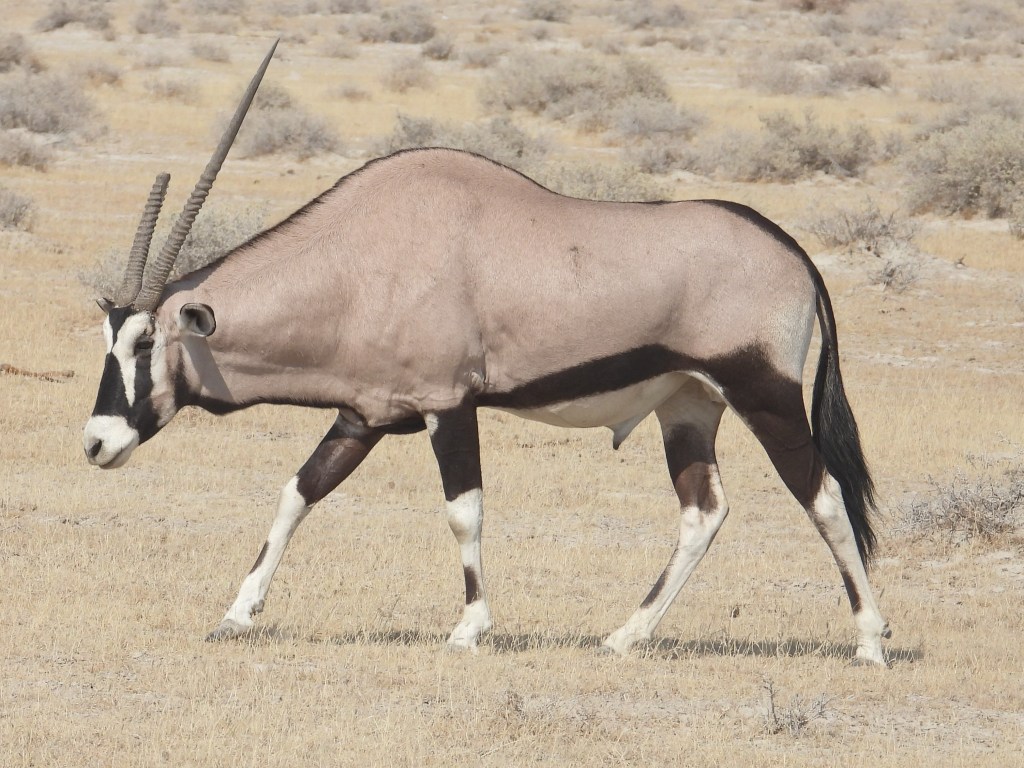
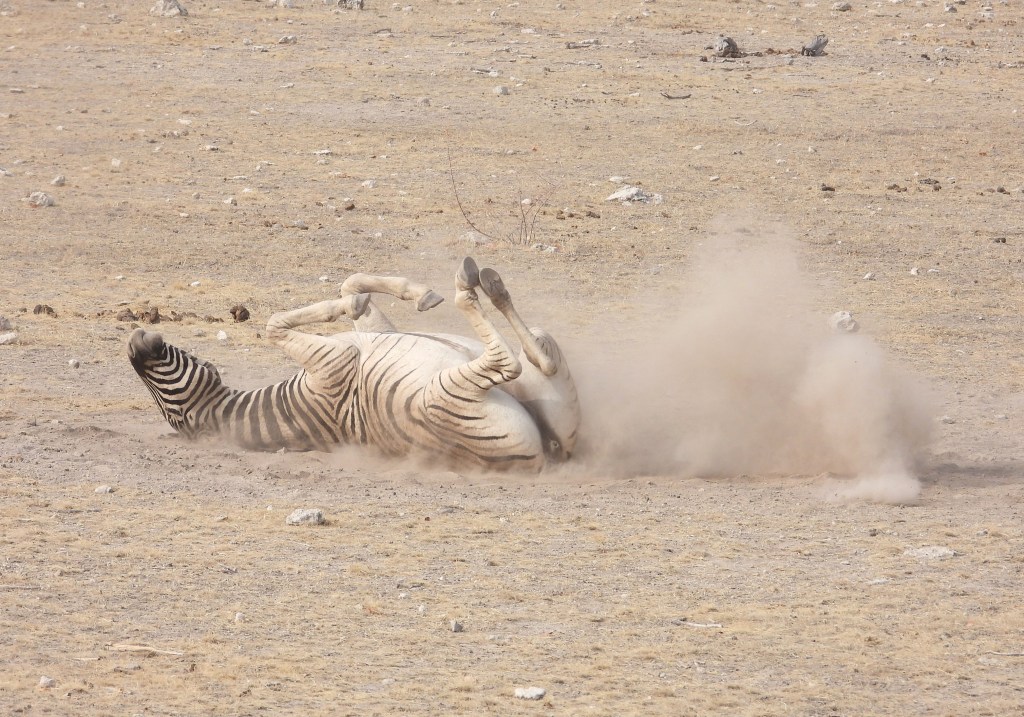
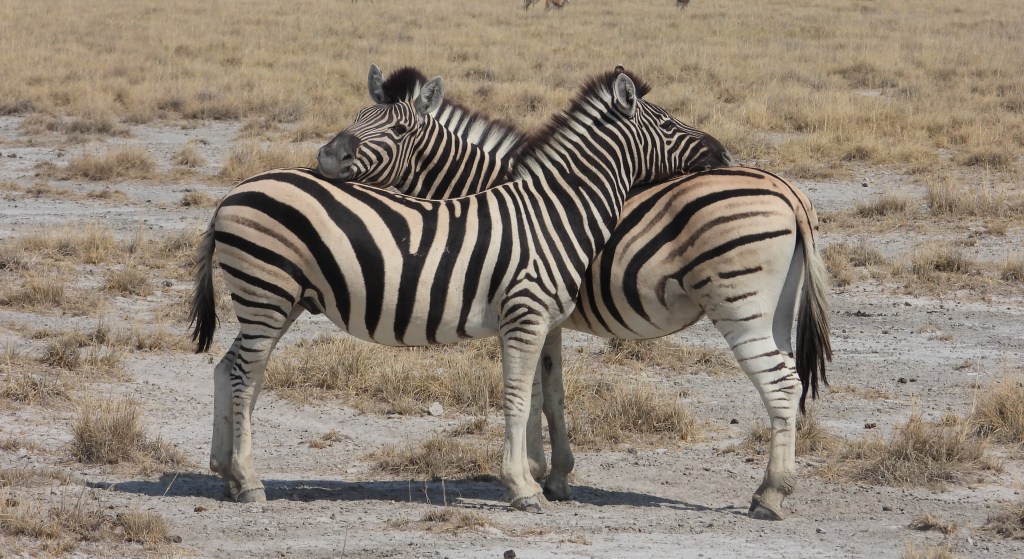
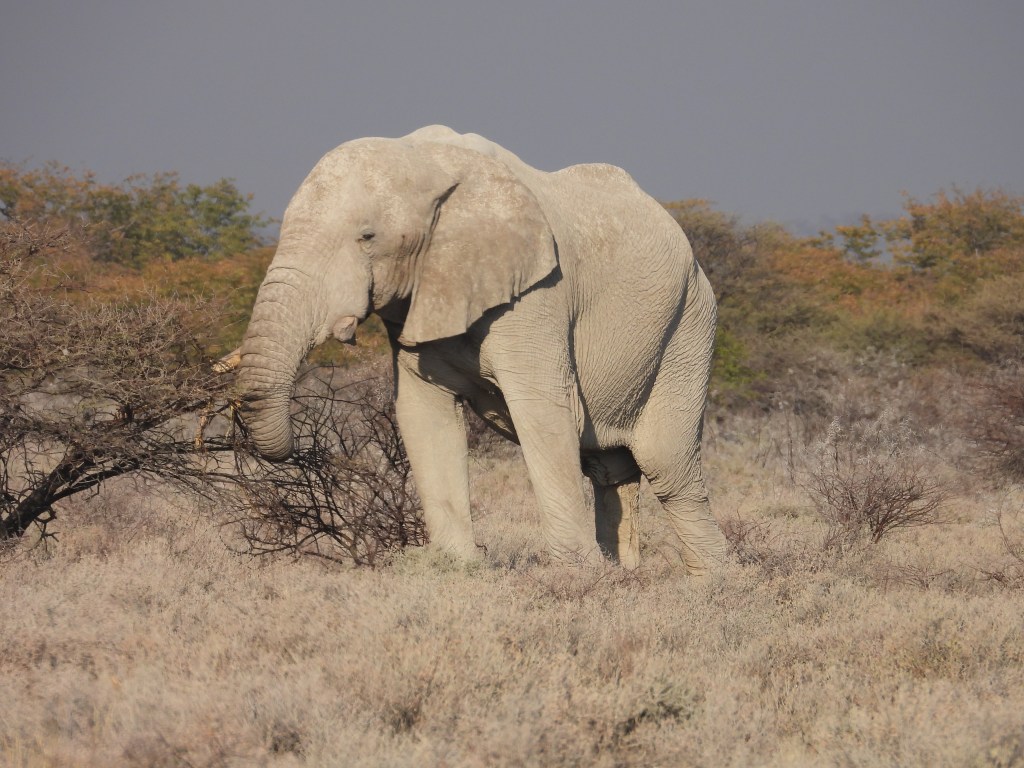
The next stop on the trip was Etosha National Park, a large (22,270 km2) wildlife reserve located in northern Namibia. Etosha is famous for its astonishing concentration of wildlife, which includes almost all of the iconic African big game animals, including savannah elephants, white & black rhinoceros, giraffes, zebras, gazelles, oryx, wildebeest, lions, leopards, cheetahs, hyaenas, and warthogs. The only large species missing are hippos (there’s not enough water) and buffalo. There are a lot of small mammals to see as well, such as African wild cats, mongooses, and jackals. The birdlife is impressive as well, but I’m going to focus on the mammals in this post.
I was in Etosha during the dry season, so the land was desiccated and the grass was dead and dry. However, there’s a big advantage to visiting during the dry season – there will be large congregations of thirsty animals gathered around the waterholes in the park. It’s not odd to see half a dozen or more large mammal species at once at a single waterhole. It’s a wildlife photographers dream.
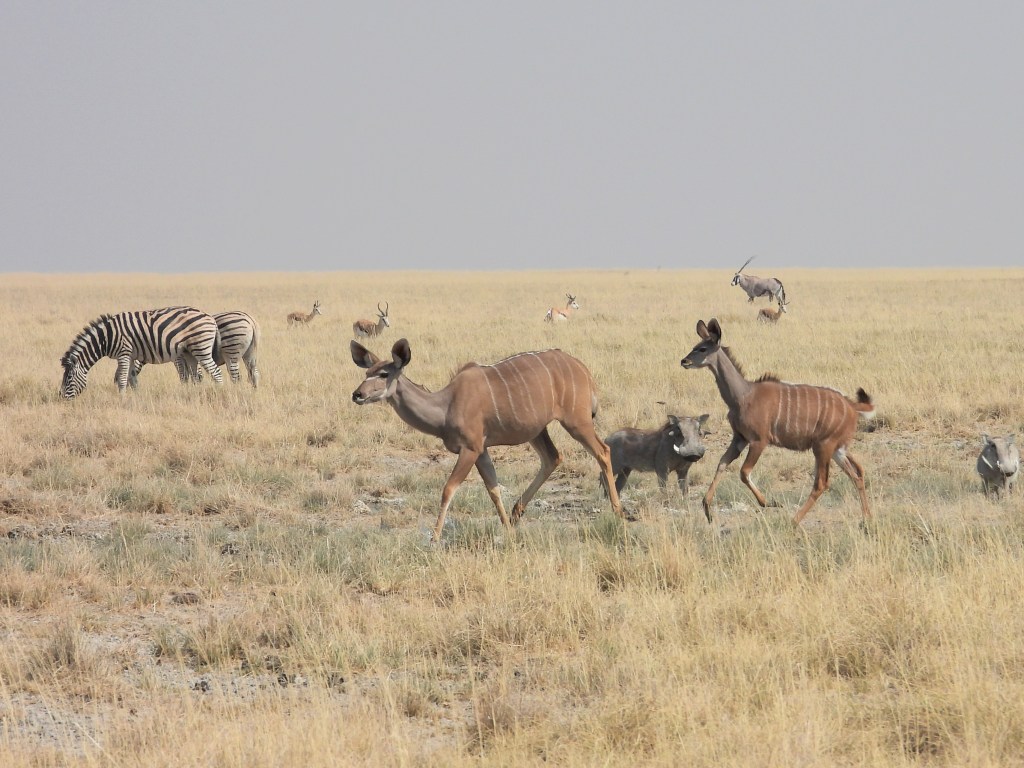
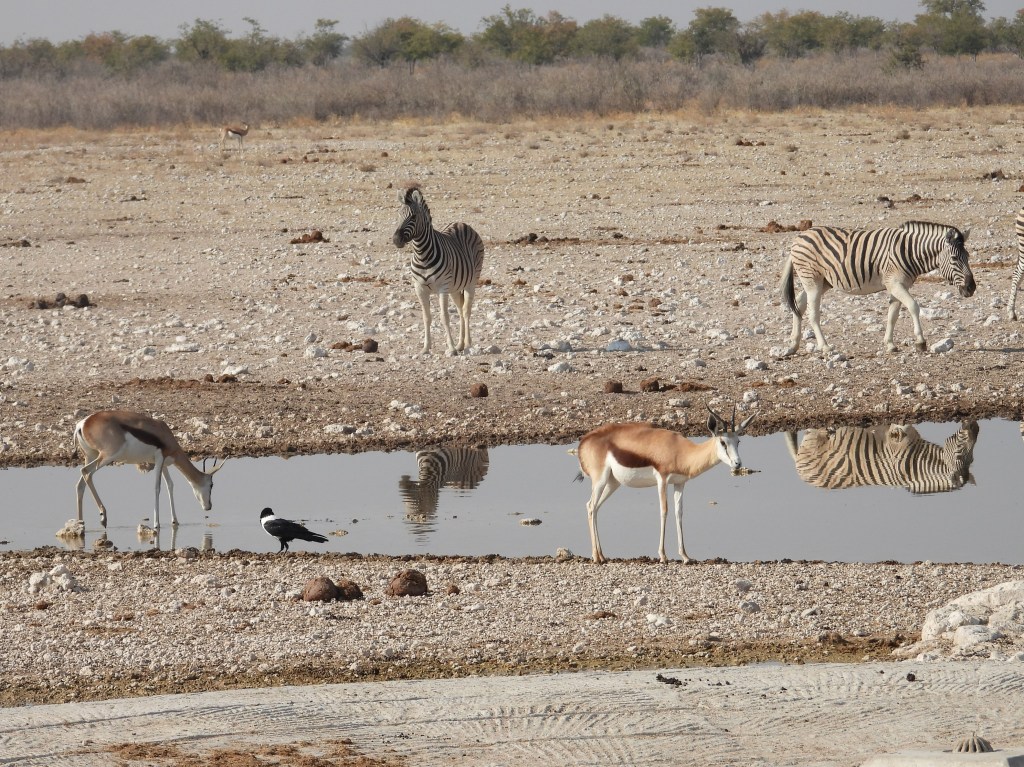
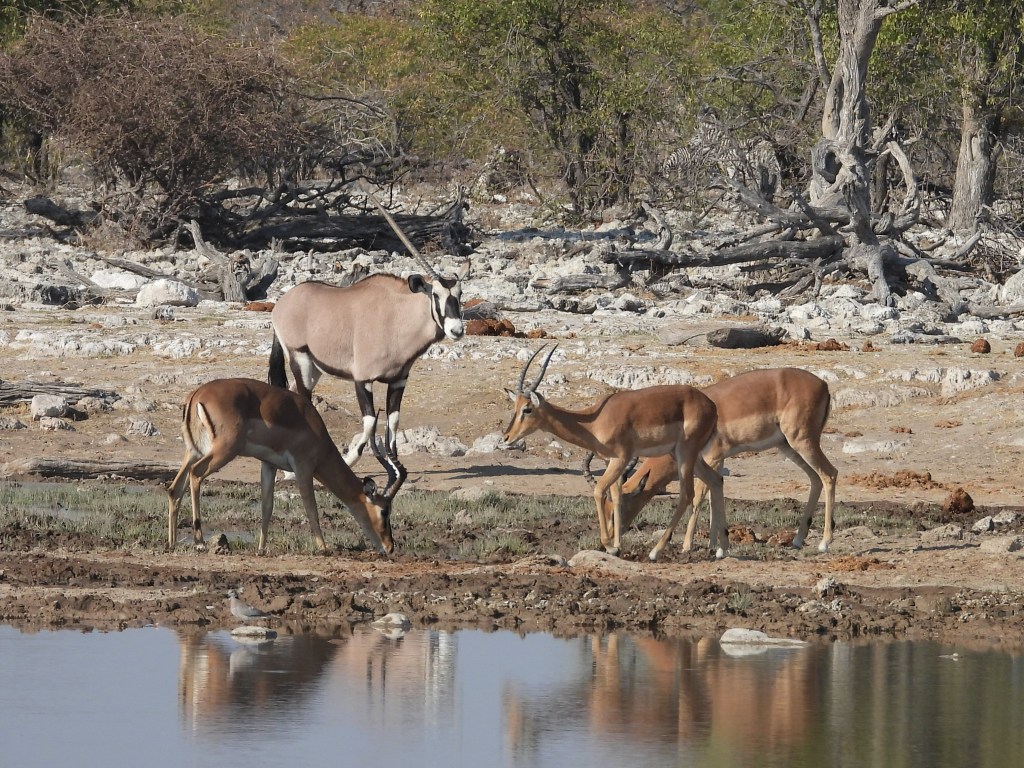
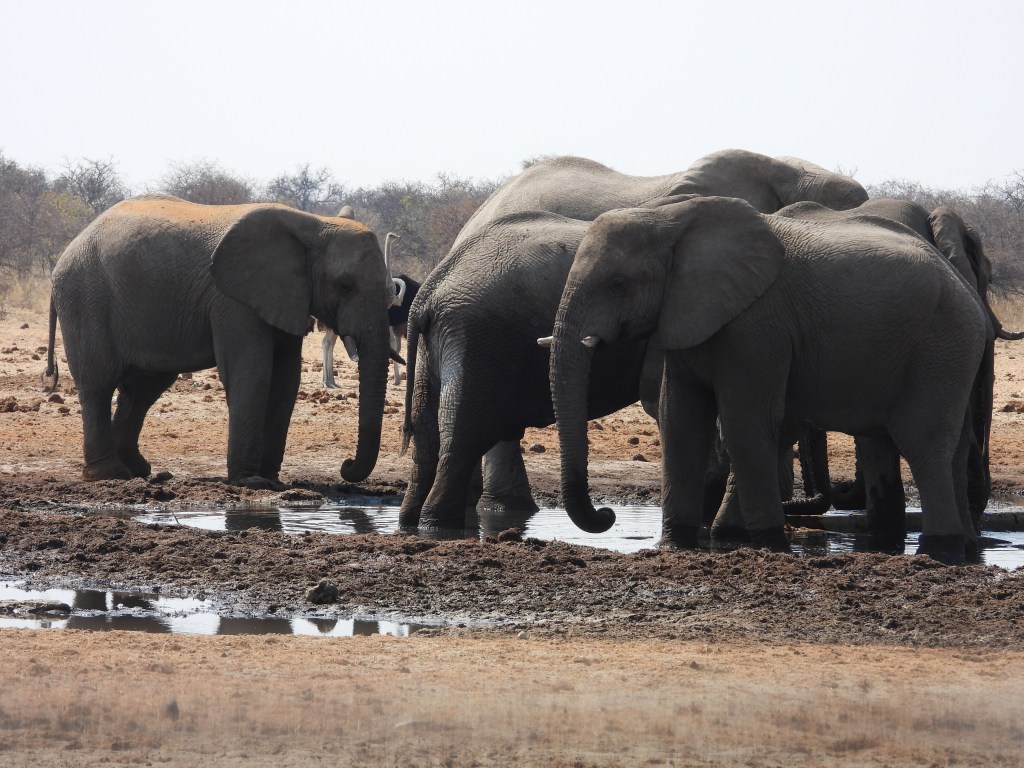
A few of the waterholes in the park are natural but many are fed by man-made boreholes. The artificial waterholes are a necessity because the entire park is fenced. Before the park was fenced, many large mammals would migrate out of it during the dry season. Now that they can’t migrate out of the park, they must be provided with water.
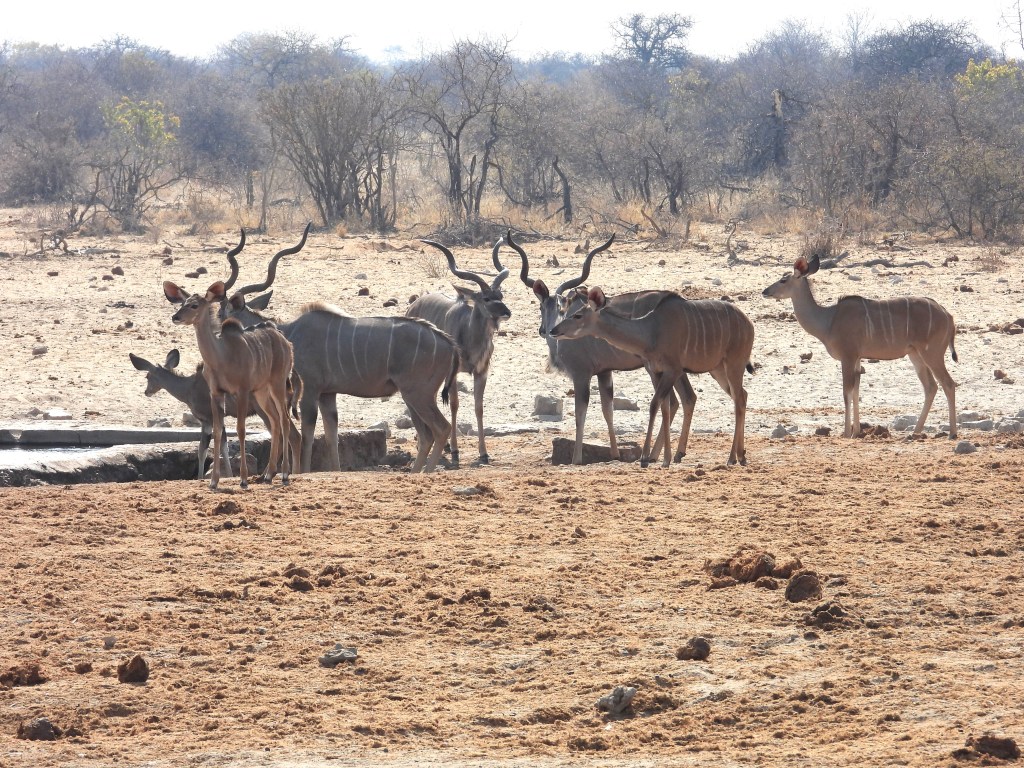
Fencing a wildlife reserve does have its advantages and disadvantages. The big disadvantage is that fences disrupt the natural movements of wildlife. Therefore, wildlife in fenced reserves frequently have to be intensively managed. For instance, they may need to be provided with water, as they are in Etosha. Additionally, fences can fragment populations and increase the chances that populations of rare species will start to suffer inbreeding depression. However, this can be mitigated to an extent by translocating animals among reserves. It is also less likely to be a problem in very large reserves, like Etosha.
The main advantage to fencing wildlife reserves- and the primary reason that it is done – is that it reduces human-wildlife conflicts. Provided that they are maintained, fences can prevent certain dangerous species from attacking humans who live outside the reserve, or from killing their livestock or destroying their crops. This is beneficial for both humans (who are protected from dangerous animals) and the wildlife, who are less likely to be killed for getting into conflicts with people. It’s not a perfect system, because it’s difficult and expensive to maintain a fence around a huge area like Etosha, and animals do sometimes get through the fence.
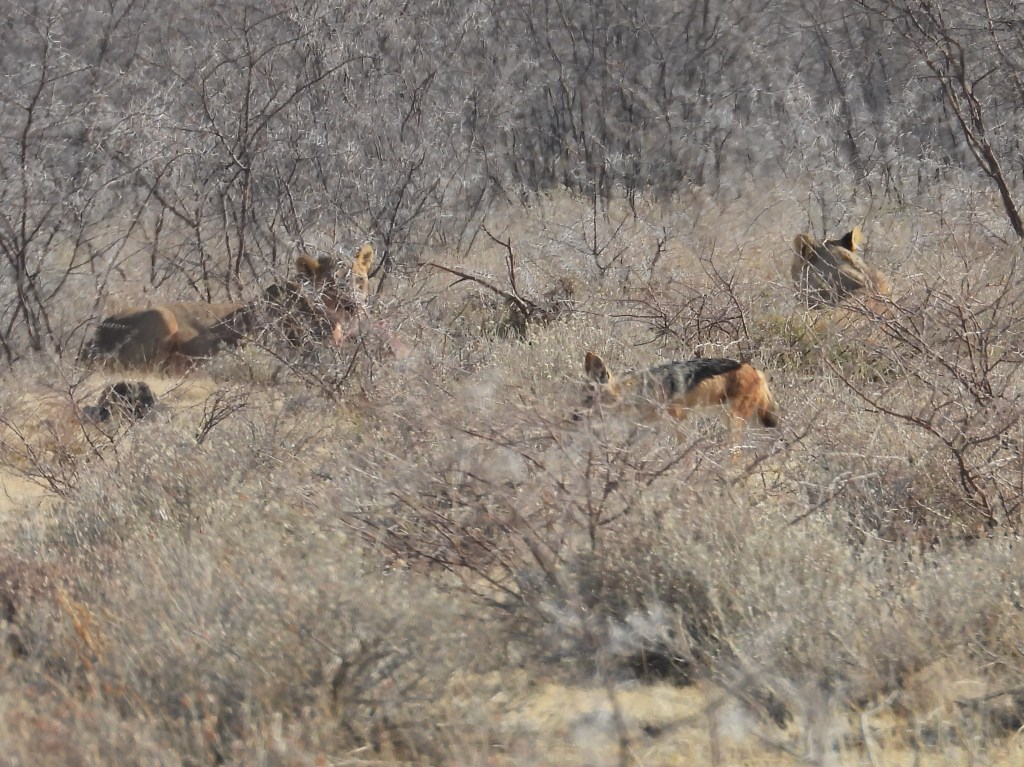
Lions are one of the species that the fence is meant to contain. We saw a few groups of lionesses in the park, including one that had a jackal circling them. The jackal was likely trying to steal some meat off of a kill. There are leopards and cheetahs in the park, but they are more difficult to find than lions.
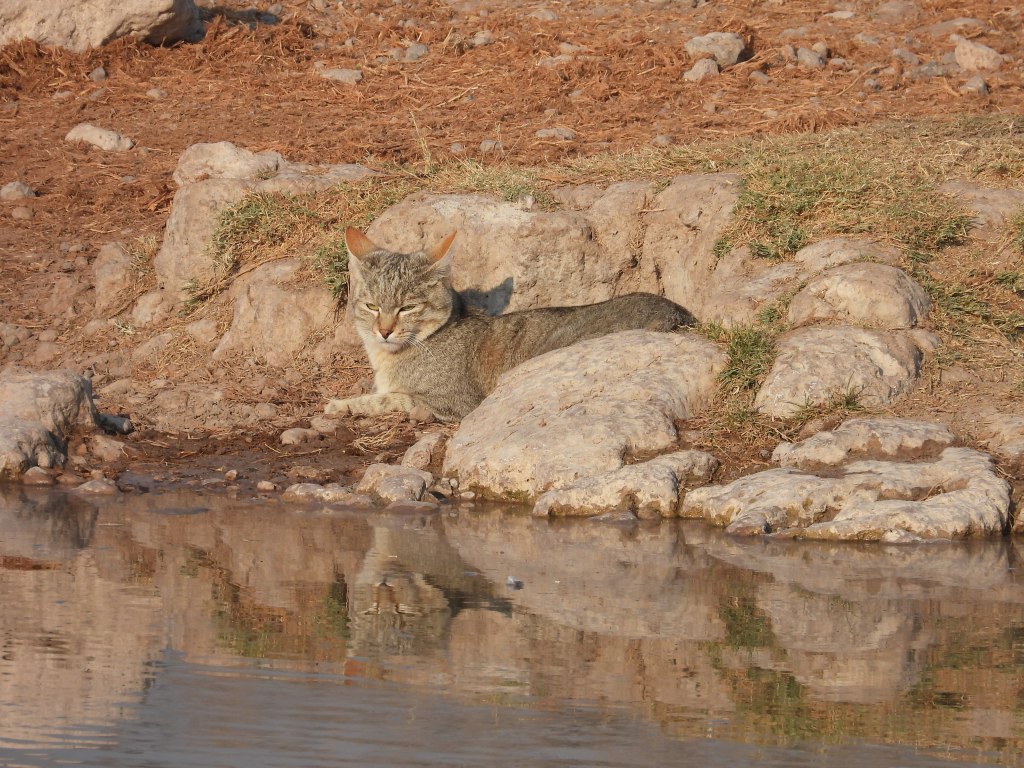
We did find one of the smaller cat species – an African wild cat. This one was sitting at a waterhole, trying to catch one of the sandgrouse that arrive in the morning to drink. The sandgrouse did seem aware of the wild cat and they avoided the side of the waterhole it was on. The cat made a jump at some sandgrouse that got close to him, but he didn’t manage to catch one.
The pictures presented here so far were all taken from the inside of a vehicle. A lot of the wildlife in Etosha is very dangerous, so visitors are not allowed to exit their vehicles, except at lodge properties or rest areas.
However, there are places where visitors can watch large wildlife species without being confined to a vehicle. Some of the lodges in the park have adjacent waterholes that are fenced on one side, so people can sit and watch the wildlife without being in a vehicle.
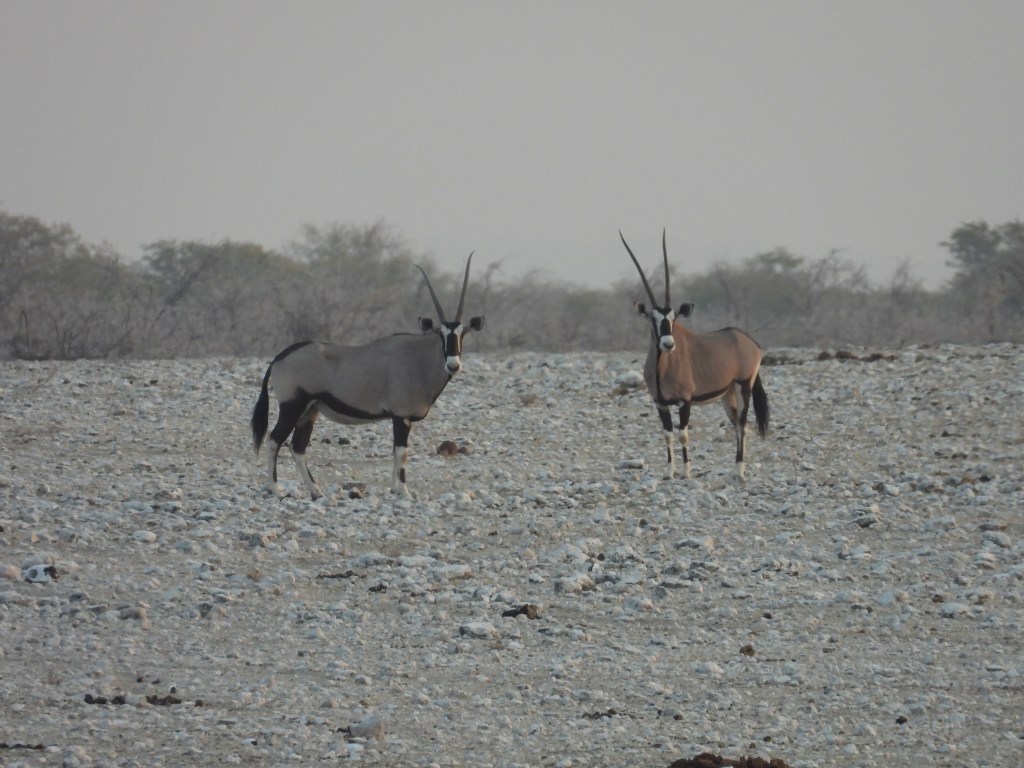
The waterhole at the Okaukuejo camp in particular attracts a lot of animals so I spent time there when I could. The first animals I saw heading to the waterhole just prior to sunset were oryx, zebra, and giraffe. I noticed that these animals were very wary about approaching the waterhole, presumably because they knew that there could be predators nearby. I watched a pair of oryx and a giraffe very slowly approach the waterhole in a zigzag pattern before they actually went up to it to take a drink. The rhinos and elephants that showed up later were different – not much can prey on them so they could confidently walk up to the waterholes to drink.
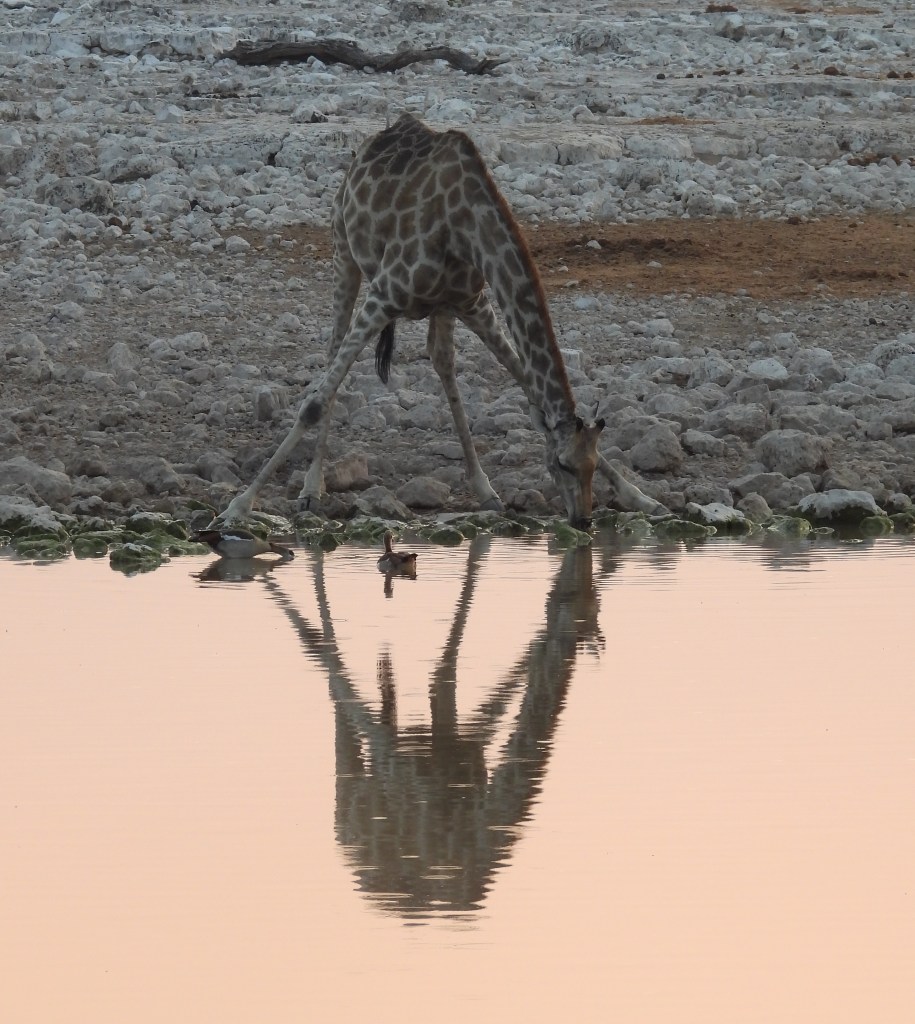
The Okaukuejo waterhole becomes very busy just after dark, and there are floodlights so visitors can see the animals. After dark is typically when the elephants and rhinoceros arrive.
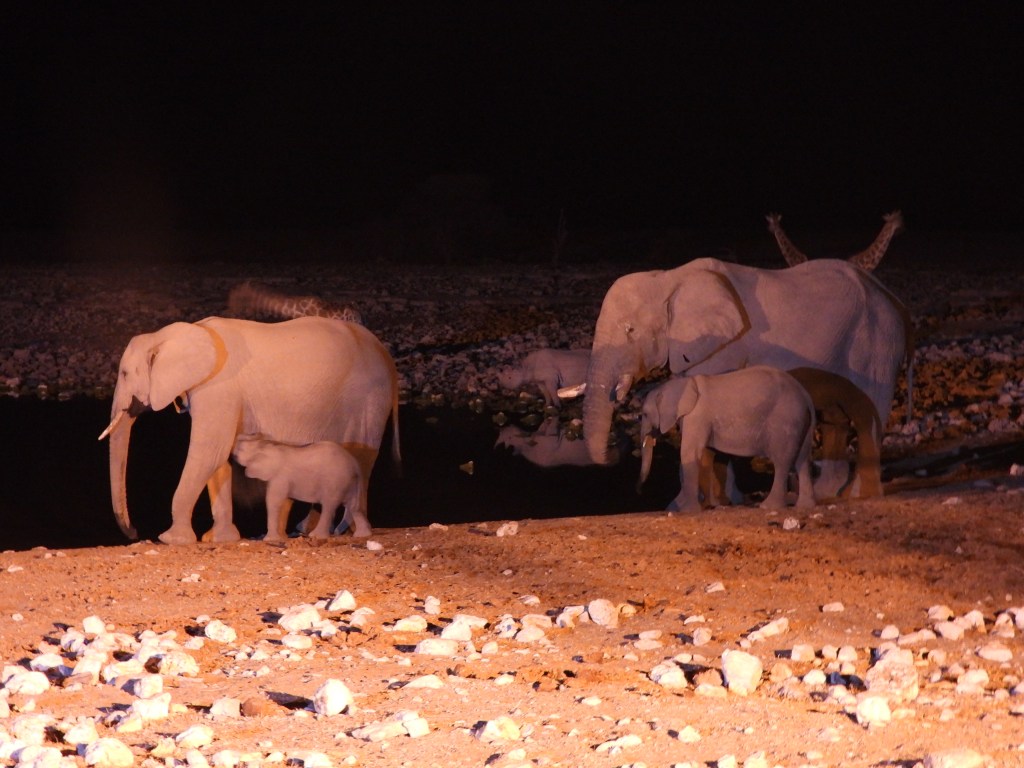
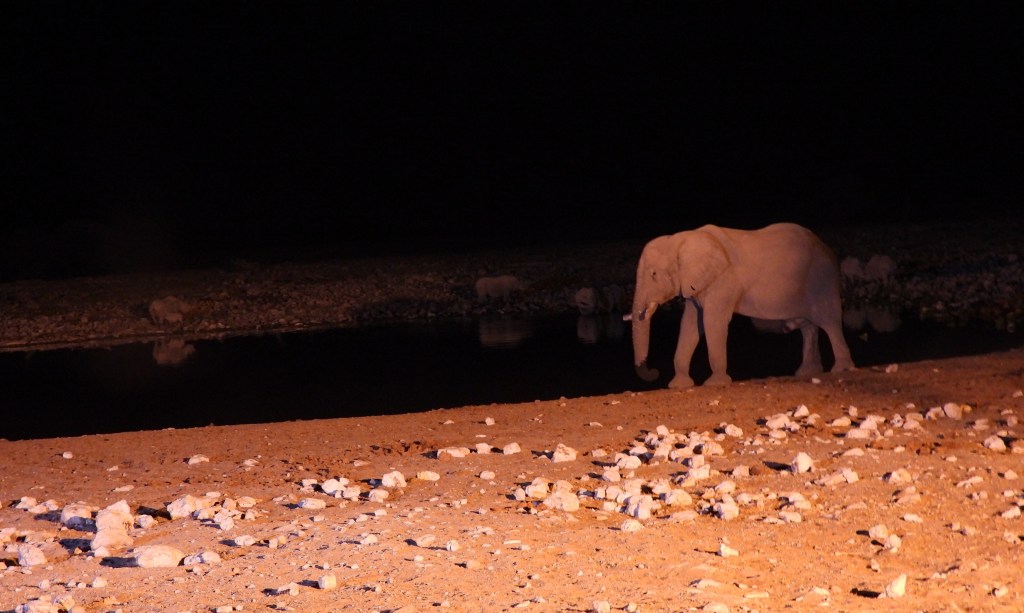
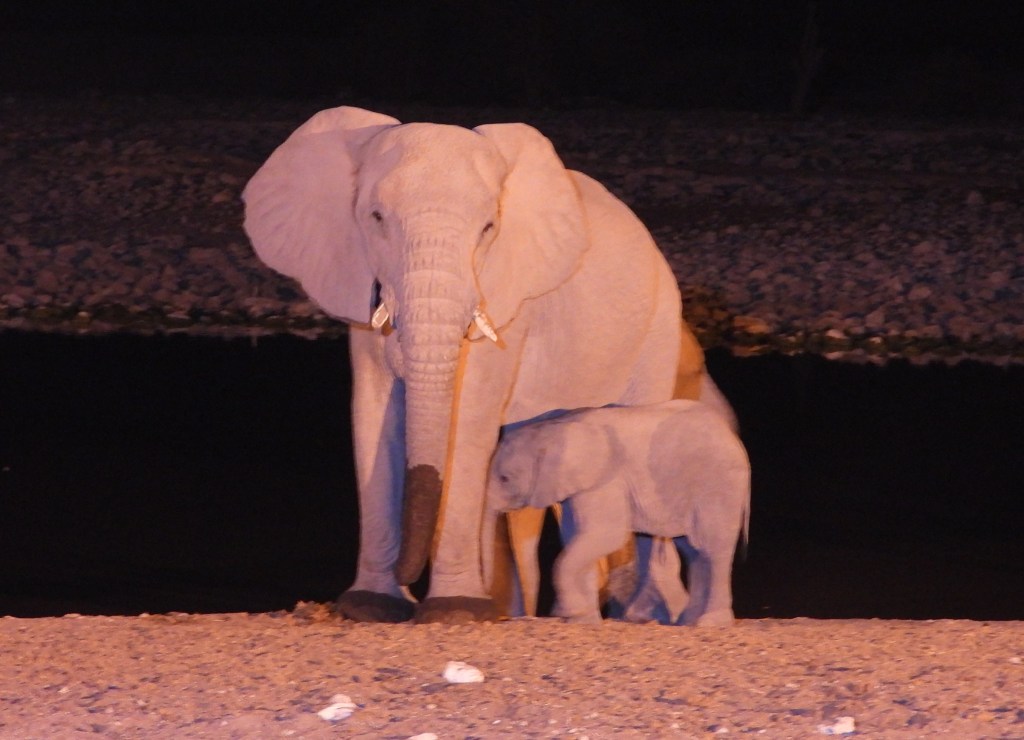
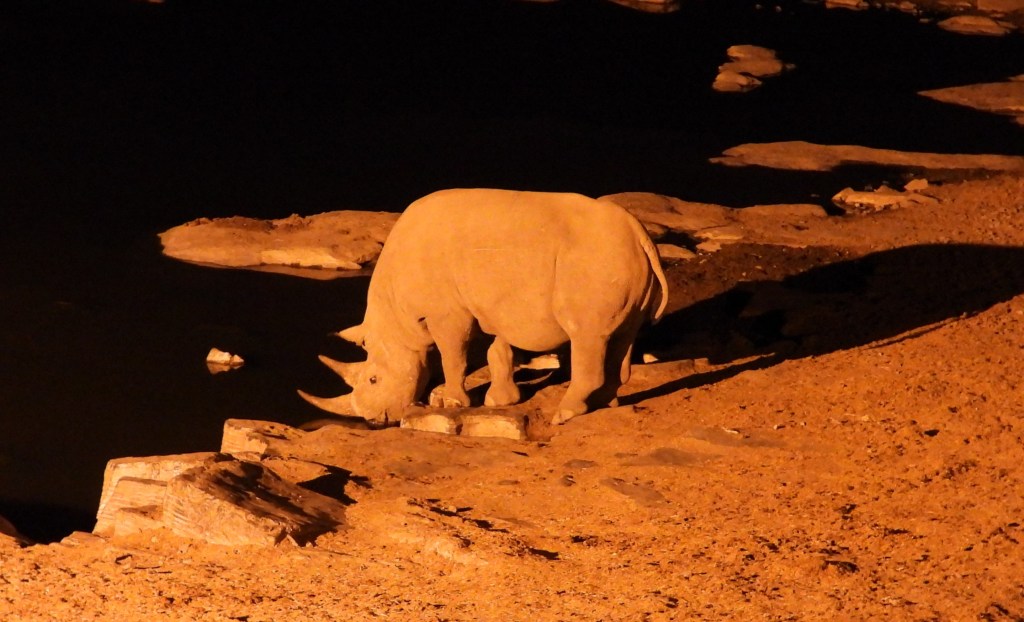
Being able to see multiple black rhinoceros at the waterholes was an incredible experience because they are considered critically endangered by the IUCN (International Union for the Conservation of Nature). Namibia is home to about half of the world’s black rhinoceros, and most of those live in Etosha.
There are white rhinoceros in Etosha as well. We found both species during a single game drive in the park.
Despite the names, both species are gray. They do have different diets, with the whites being grazers and the blacks being browsers. White rhinoceros have flat, square lips that allow them to effectively clip grass, and black rhinoceros have a hooked upper lip that allows them to clip shrubs.
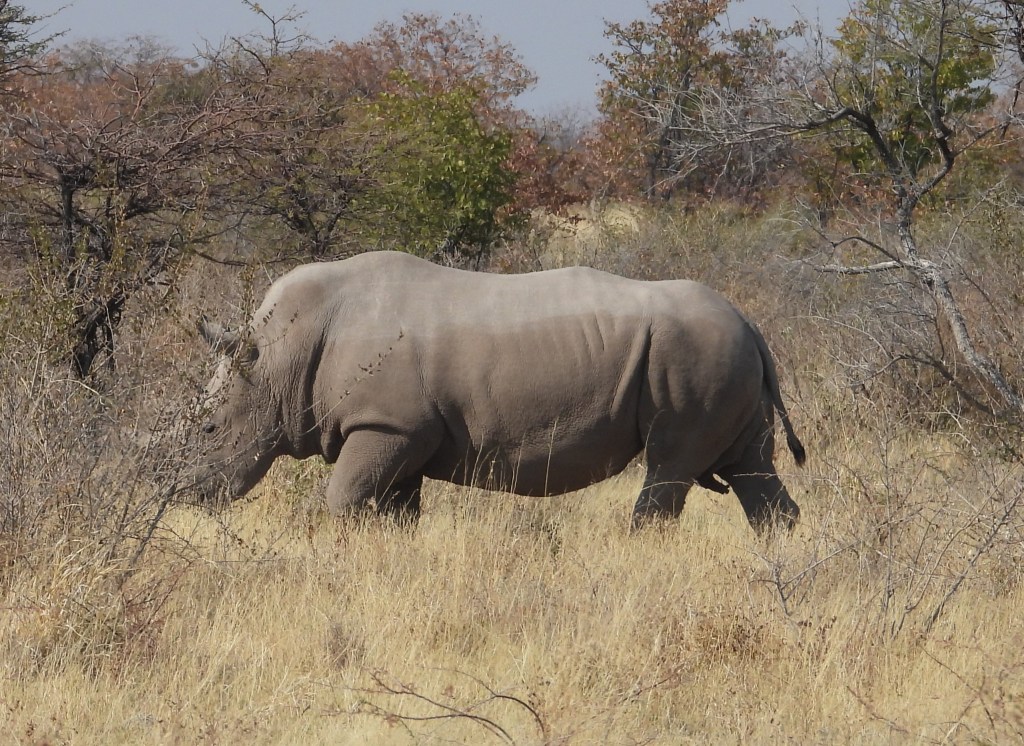
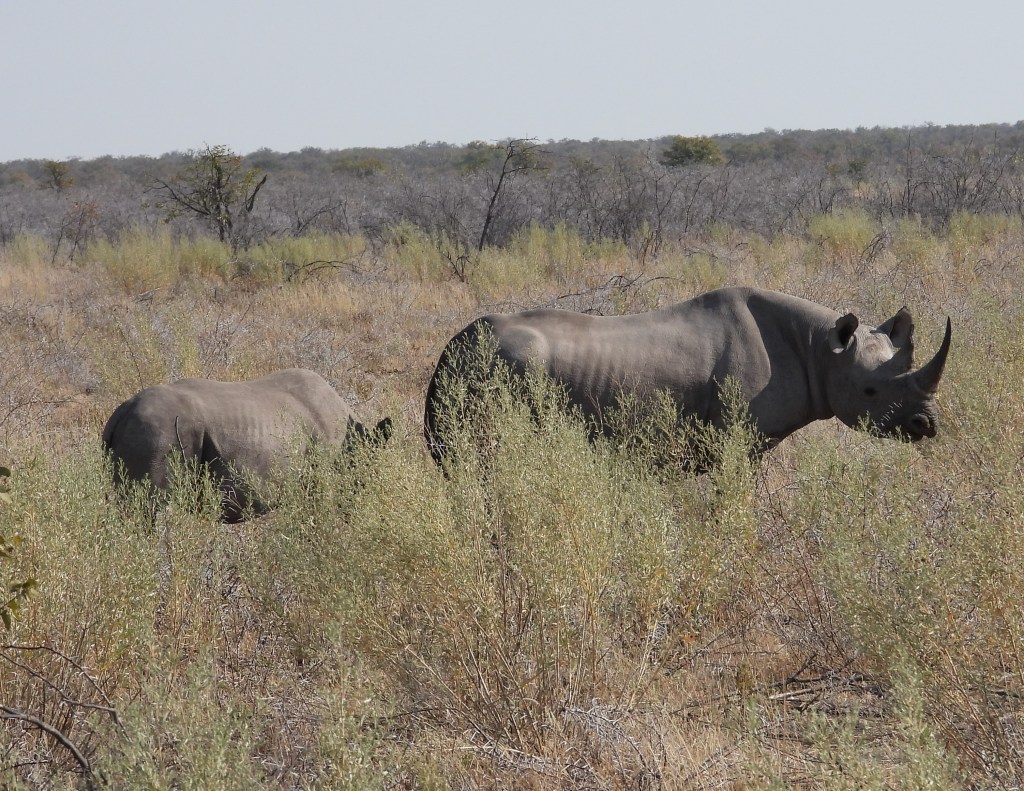
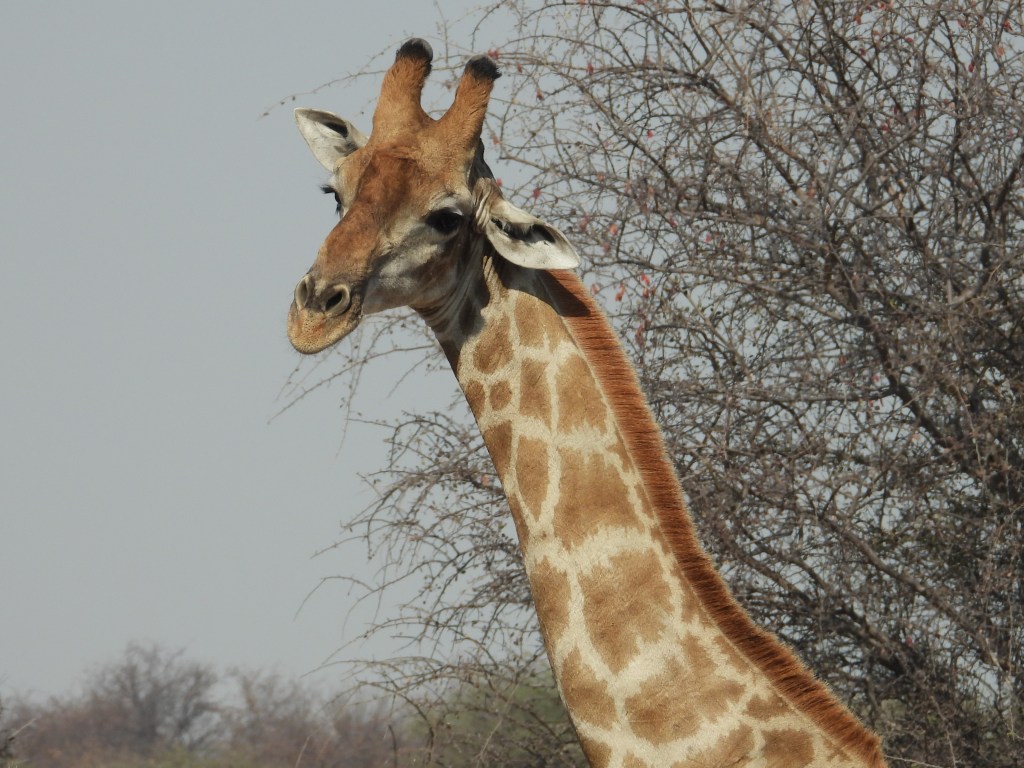
The waterholes are the best places in the park to see wildlife, but it’s possible to see animals in the forests or on the grasslands between the waterholes.
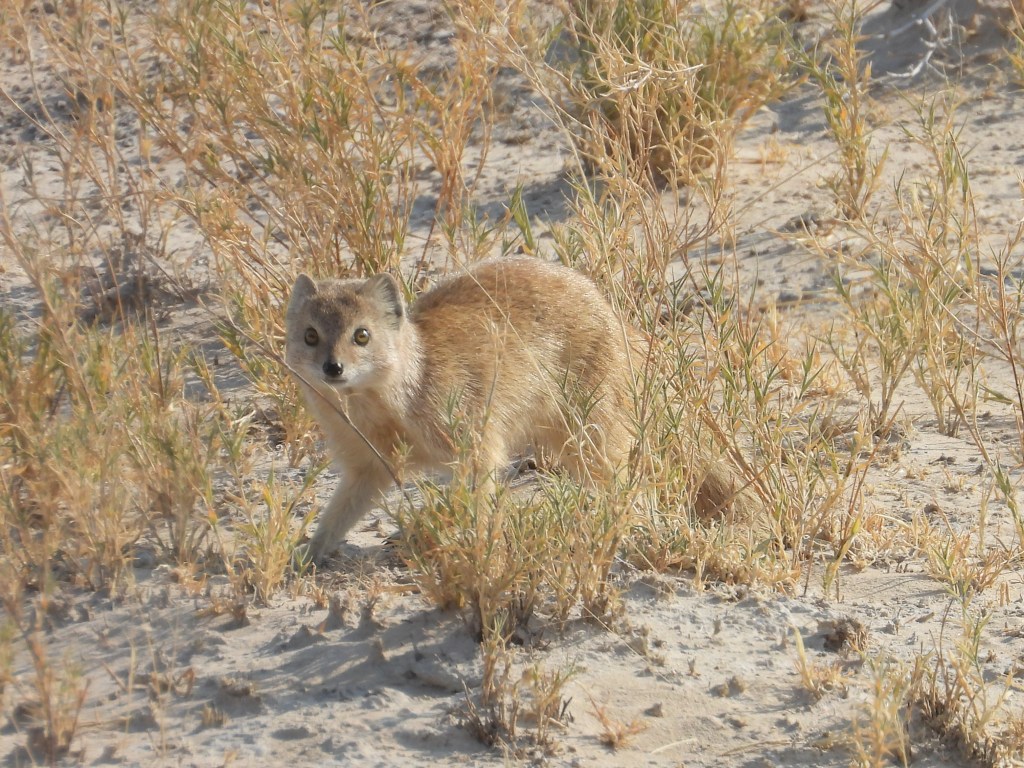
Etosha is famous for its large game species, but there are small mammals to see as well. Mongoose in particular are common and can often be seen around the lodge properties.
Etosha is also a great place to see a variety of Namibian birds, which will be the topic of my next post!
 Peace Country Naturalist