Etosha National Park in Namibia is famous for its astonishing diversity of large mammals, but it is also home to an impressive variety of birds, from tiny finches to giant ostriches. Many of these birds are easy to find and photograph because of the abundance of open country in the park.
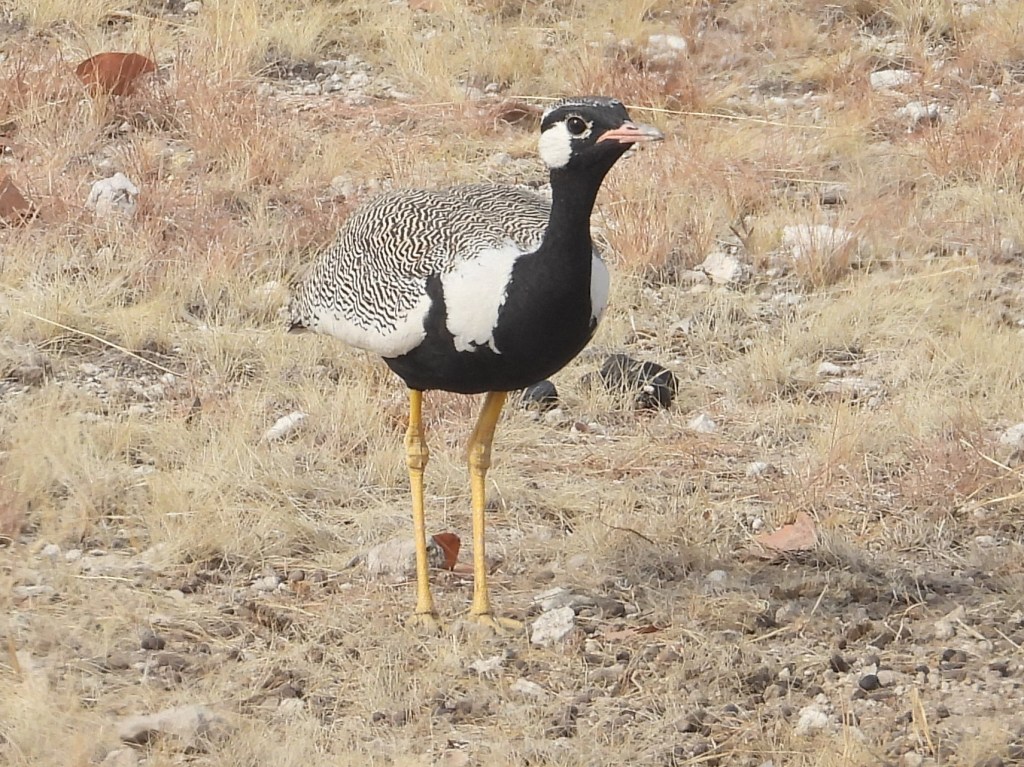
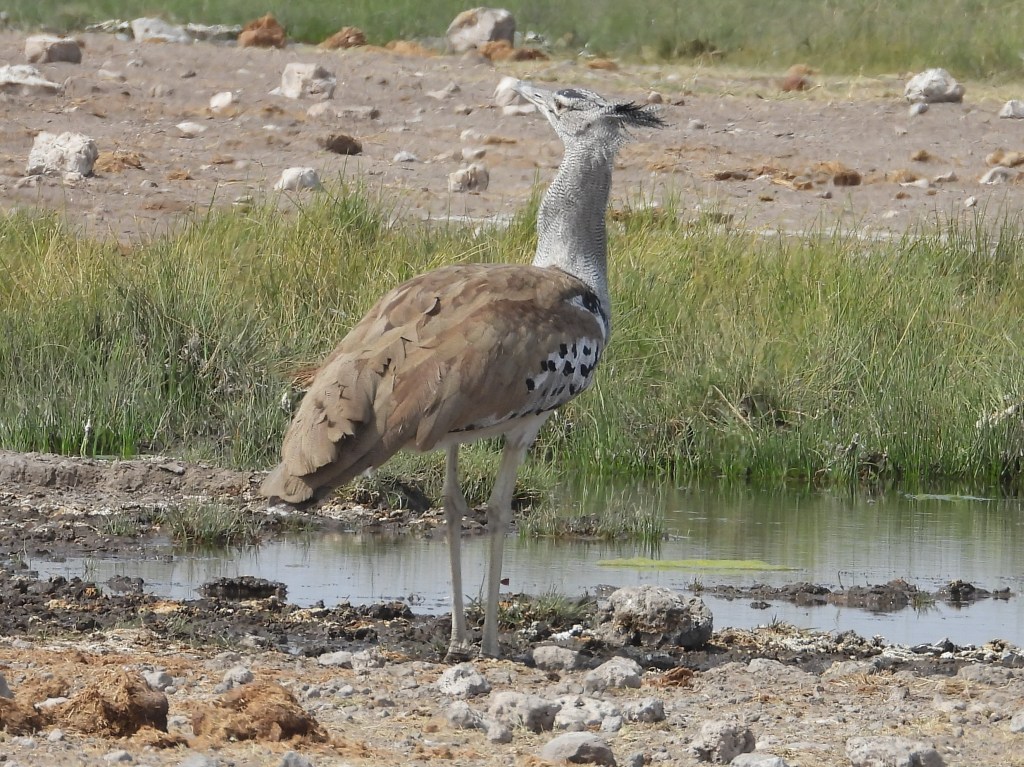
Bustards (family Otididae), including the impressive Kori Bustard, are common in Etosha. The Kori Bustard is oft said to be the world’s largest flying bird, as males can weigh up to 40 pounds. Bustards do, however, seem to prefer walking to flying. Bustards typically prefer open habitats, so they are easy to find in Etosha. We found three species of bustard in the park: Kori, White-quilled, and Red-crested.
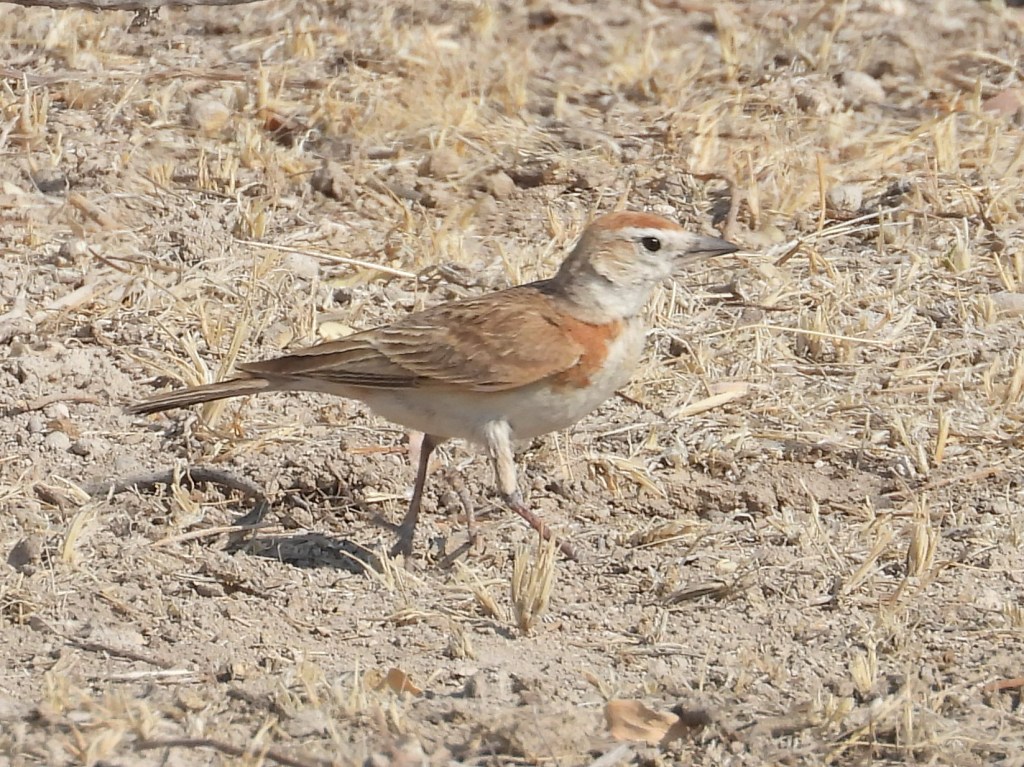
Larks (family Alaudidae), which are plain brown and gray songbirds that prefer dry, open habitats, are plentiful in Etosha as well. We found Spike-heeled Larks, Gray-backed Sparrow Larks, Sabota Larks, Eastern Clapper Larks, Stark’s Larks, and Red-capped Larks in the Park. They were often present along the roadsides, but if they aren’t moving, they are tricky to see because they blend in so well with their habitats.
Larks may be plain in appearance, but many have very melodious, bubby songs. The males of many lark species sing while they perform aerial courtship displays.
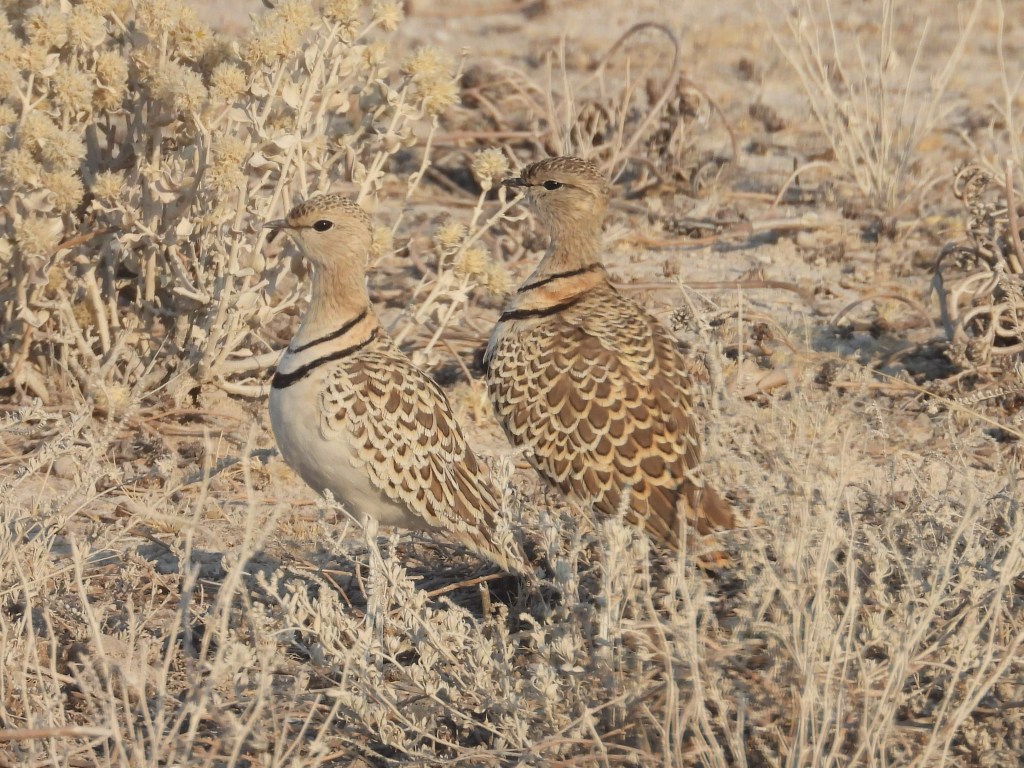
Coursers (Glareolidae) are another family of birds that are generally well-suited to living in arid environments. Interestingly, they are in the order Charadriiformes, which contains many shorebirds and pelagic birds that live around water. We found two courser species in Etosha: the Double-banded and Burchell’s Courser.
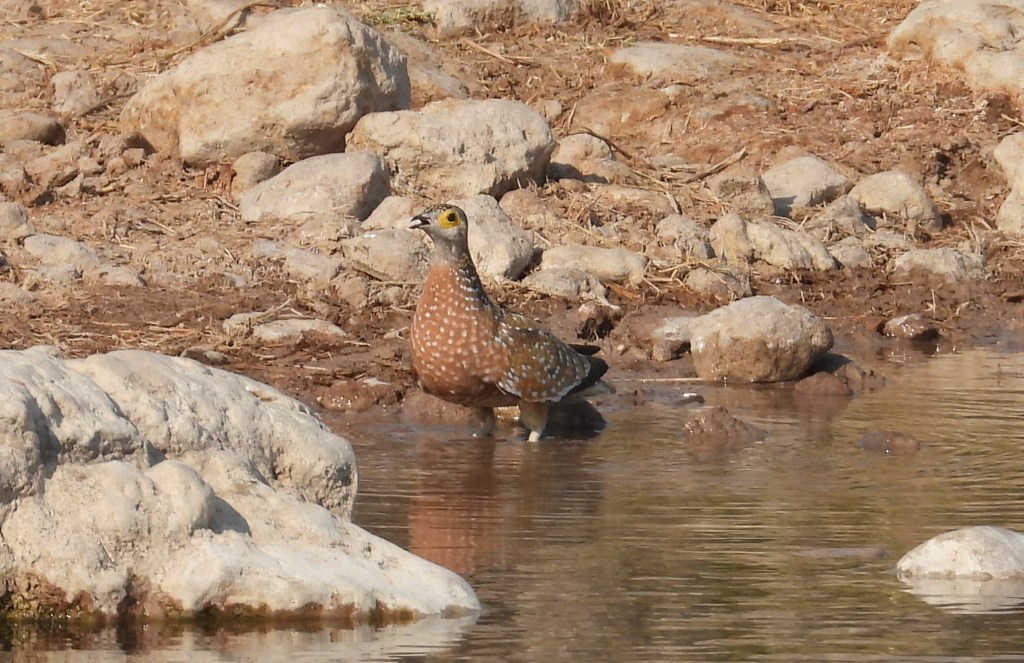
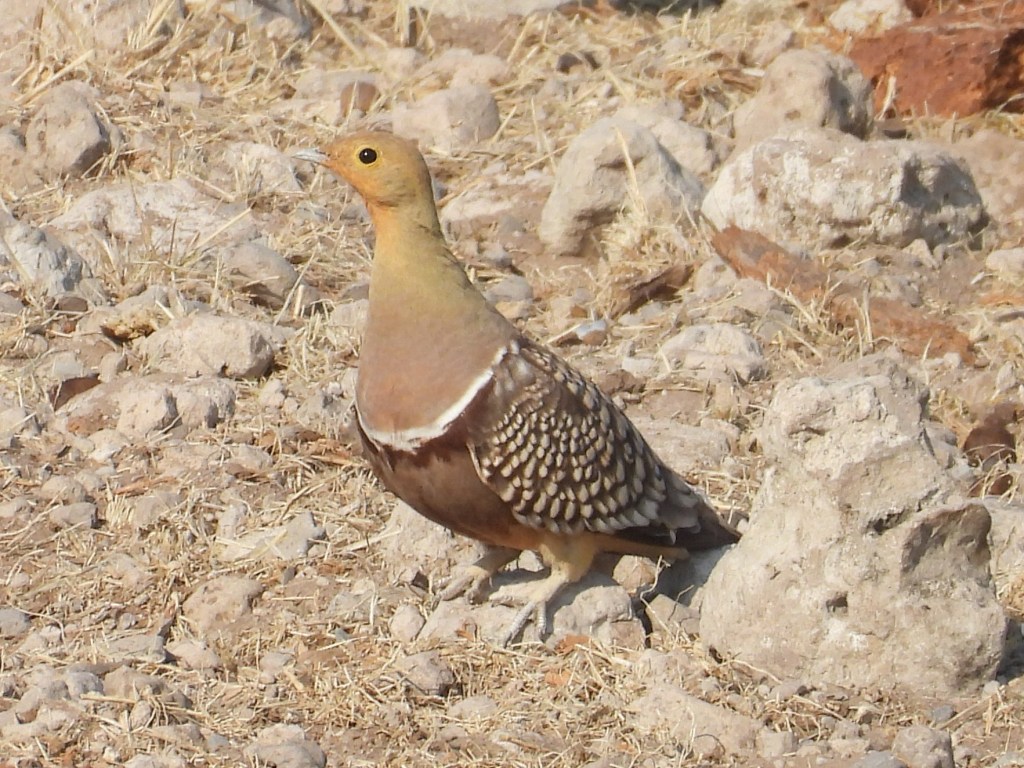
Waterholes are great places to see birds in Etosha, especially early in the morning, when many birds arrive to drink and bathe. We stopped at a waterhole in eastern Etosha to see sandgrouse, and it turned into an interesting spectacle when an African wildcat showed up. Flocks of sandgrouse began to arrive to drink, but when they saw the cat, they wheeled away from it. They’d often come back, only to change direction when they saw the cat again. The cat waited patiently for the sandgrouse to land, but they never got close to it.

Both Burchell’s and Namaqua Sandgrouse did eventually land at the waterhole, on the side opposite the cat. Sandgrouse (family Pteroclidae) are very well-adapted to arid habitats. They frequently nest far from waterholes, but the chicks cannot fly until they are about one month old. How do they get enough water? They get it from their father’s feathers! The feathers on the males’ chests are somewhat sponge-like and can absorb and retain up to 25 mL of water at a time. It’s therefore not unusual to see sandgrouse dipping their chests into water. Their chest feathers soak up water, and when the male returns to the nest, the chicks can obtain water from his chest feathers.
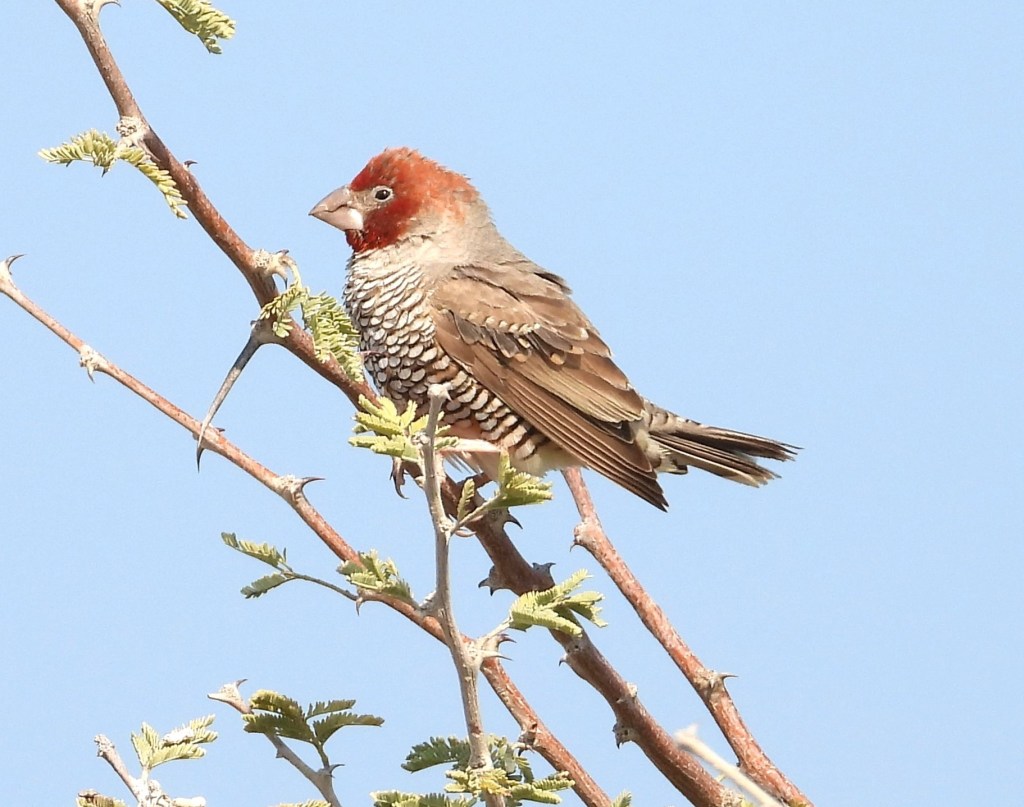
Flocks of other species also showed up at the waterhole, including this large mixed flock of Cape Sparrows and finches.

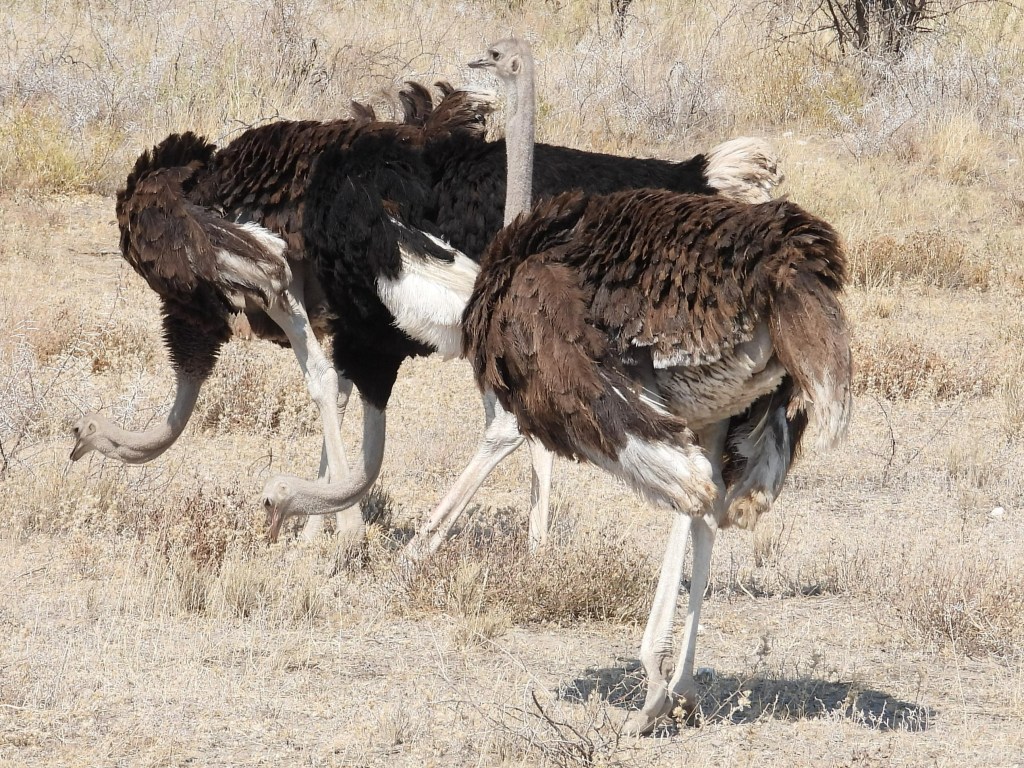
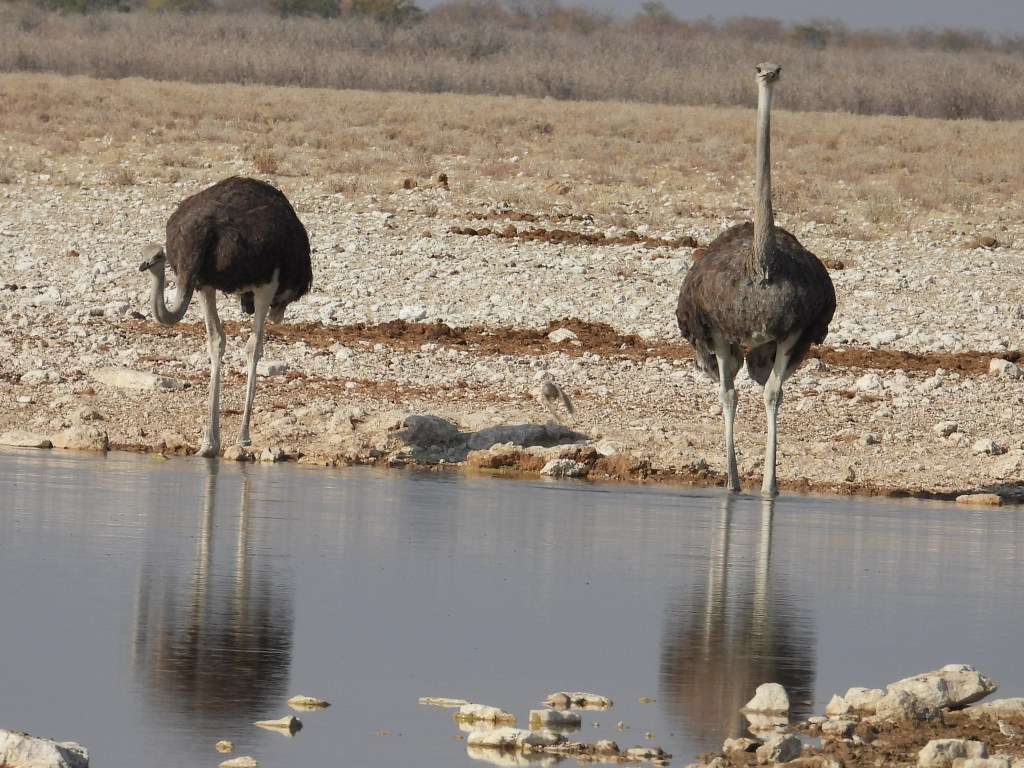
Wild ostriches – which can stand over six feet tall – occur throughout Namibia. We saw several of them during each day spent in the park. They prefer open habitats with short vegetation, and they can thrive in arid regions due to their ability to go without drinking for several days. As they cannot fly and spend a lot of time out in the open, they must rely on their speed to evade predators. Ostriches can run at speeds of up to 70 km/hr, so even very speedy predators like cheetahs may find ostriches to be a very challenging quary. They also have very powerful kicks. Nonetheless, ostriches are sometimes captured by various large predators.

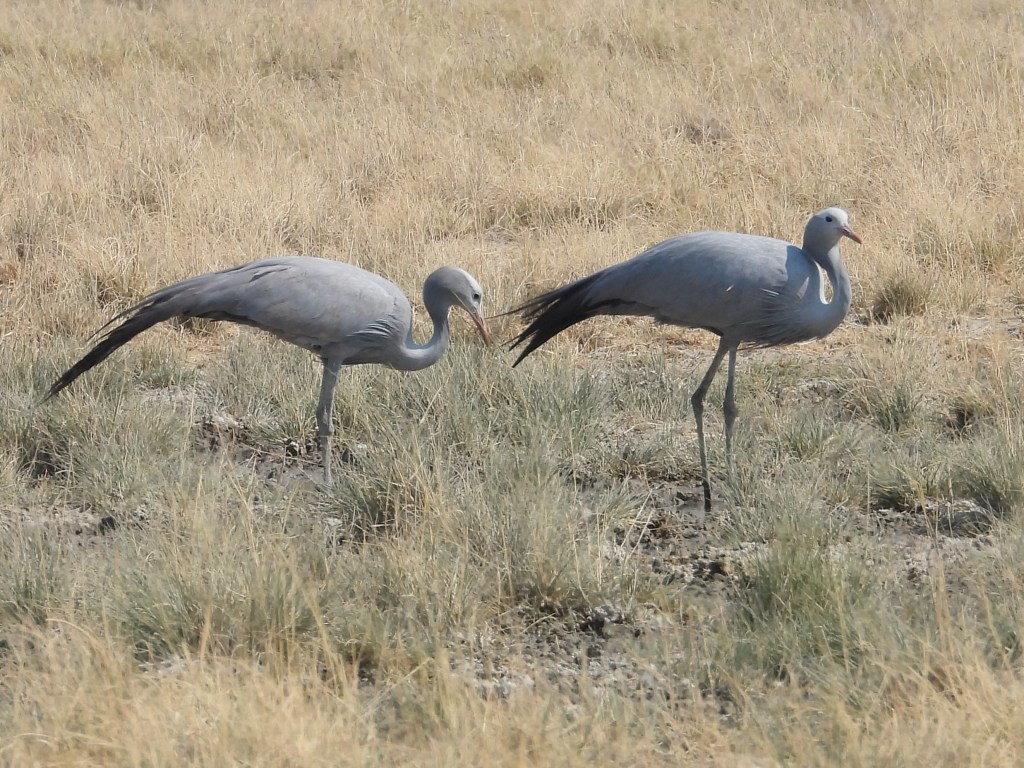
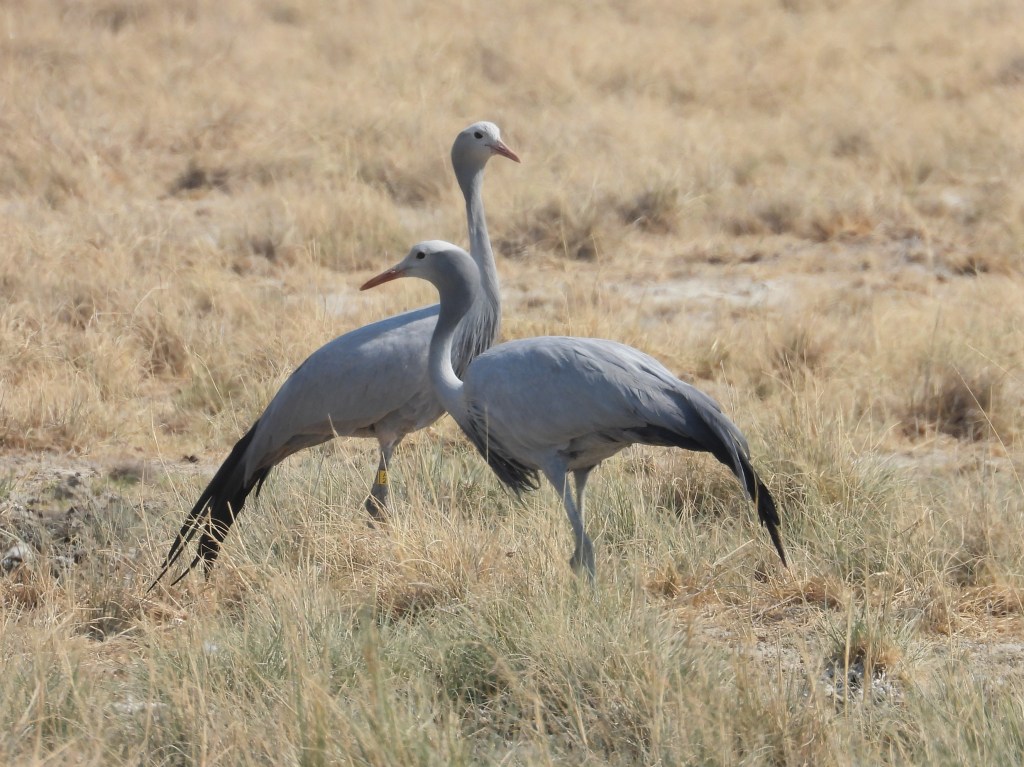
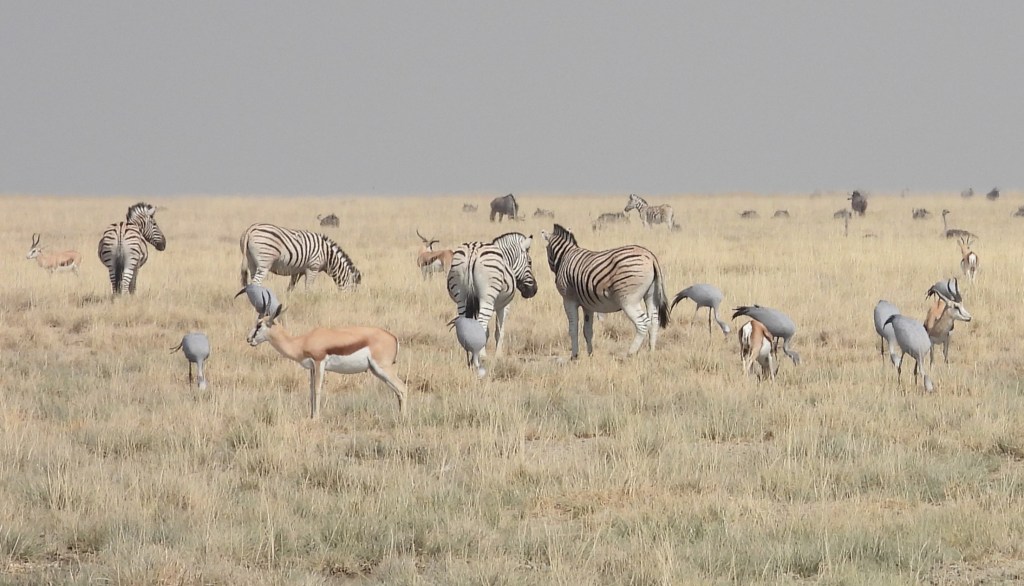
We also managed to spot a group of Blue Cranes in eastern Etosha. Etosha is the only place in Namibia where these elegant and rare birds can be seen. The cranes we found were intermingled with a large group of mammals including wart hogs, oryx, plains zebra, red hartebeest, springbok, and kudu.
African Hoopoes are another distinctive bird species that occurs throughout Namibia in almost any type of shrubby or forested habitat. They are very distinctive birds due to their orange feathers, spiky crests and long, decurved bills. They are also very conspicuous in flight, due to their bold black and white wing stripes.
Hoopoes are adaptable birds that range throughout much of Africa, Asia, and Europe. African, Eurasian, and Madagascar Hoopoes were formerly considered the same species (Upupa epops) but they are now all treated as separate species. African Hoopoes (now Upupa africana) occur in southern Africa, but Eurasian Hoopoes occur in central Africa and parts of northern Africa, either as residents or as overwintering birds from Europe.
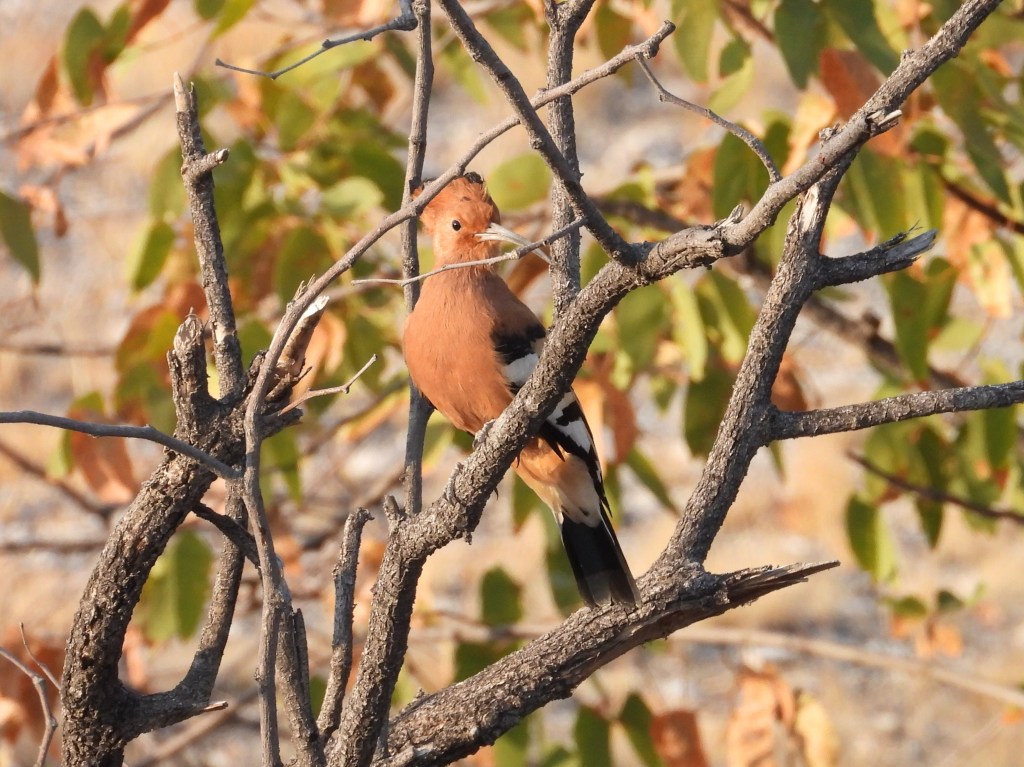
Hoopoes are in their own family (Upupidae) but they are in the order Bucerotiformes, which also contains hornbills. Hornbills are common in Etosha and can often be seen foraging around the grounds of the various lodges in the park. The lodges and rest stops are really the only places where one can bird on foot in Etosha, but there are often a lot of birds around the lodge properties.
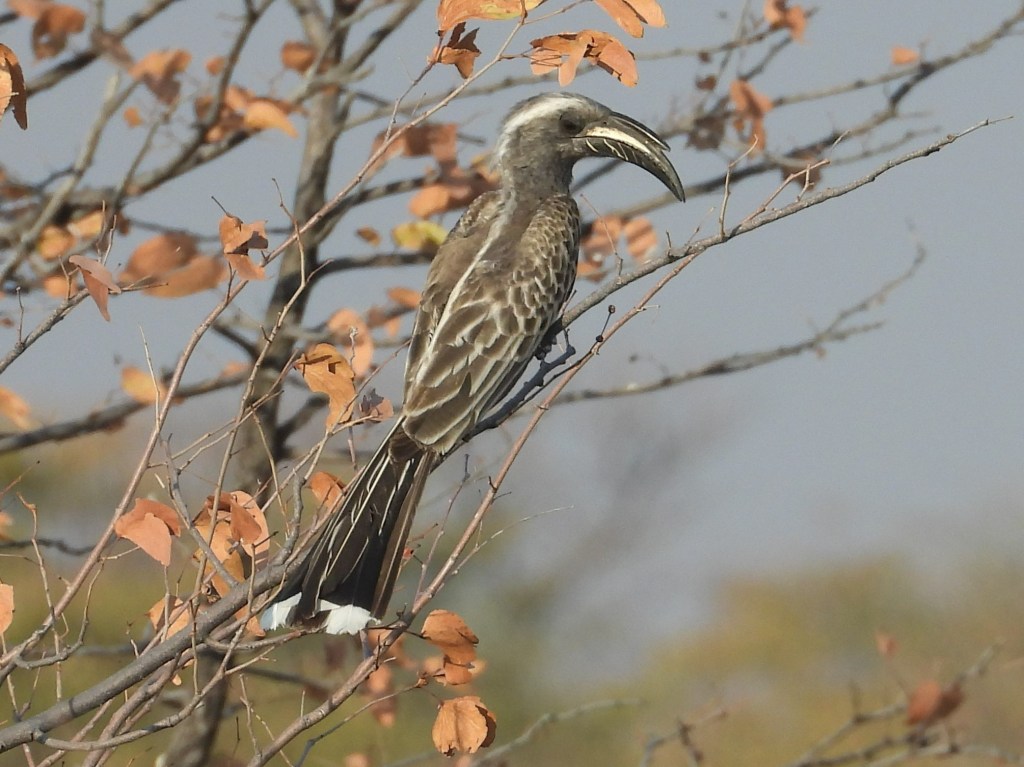
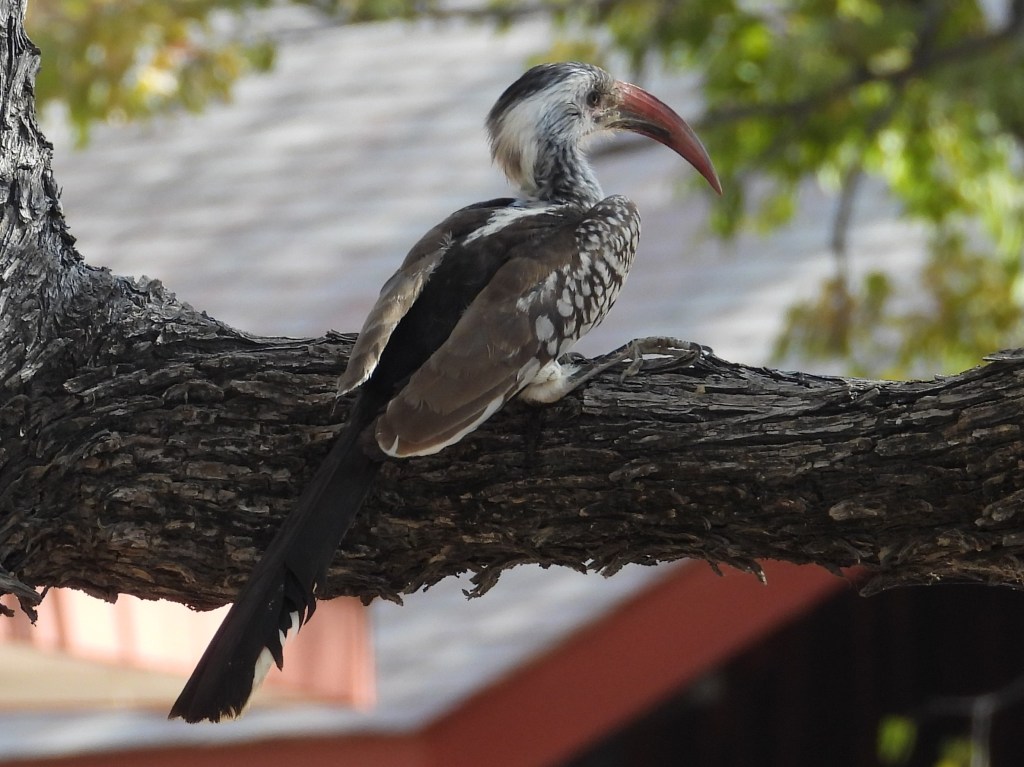

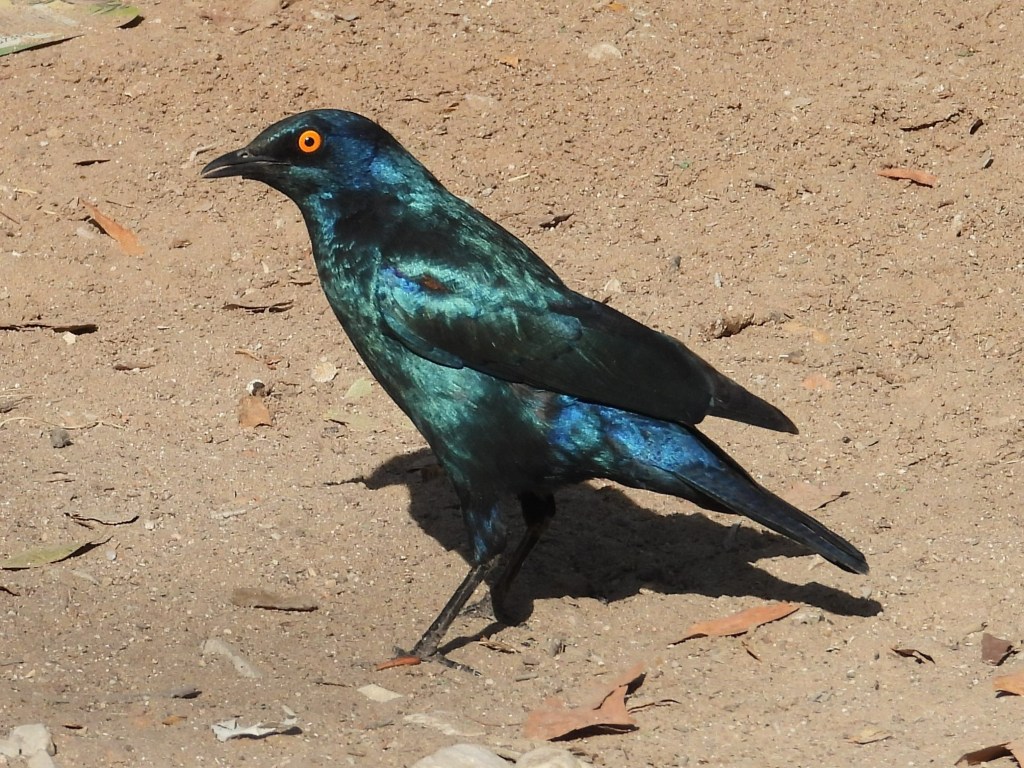
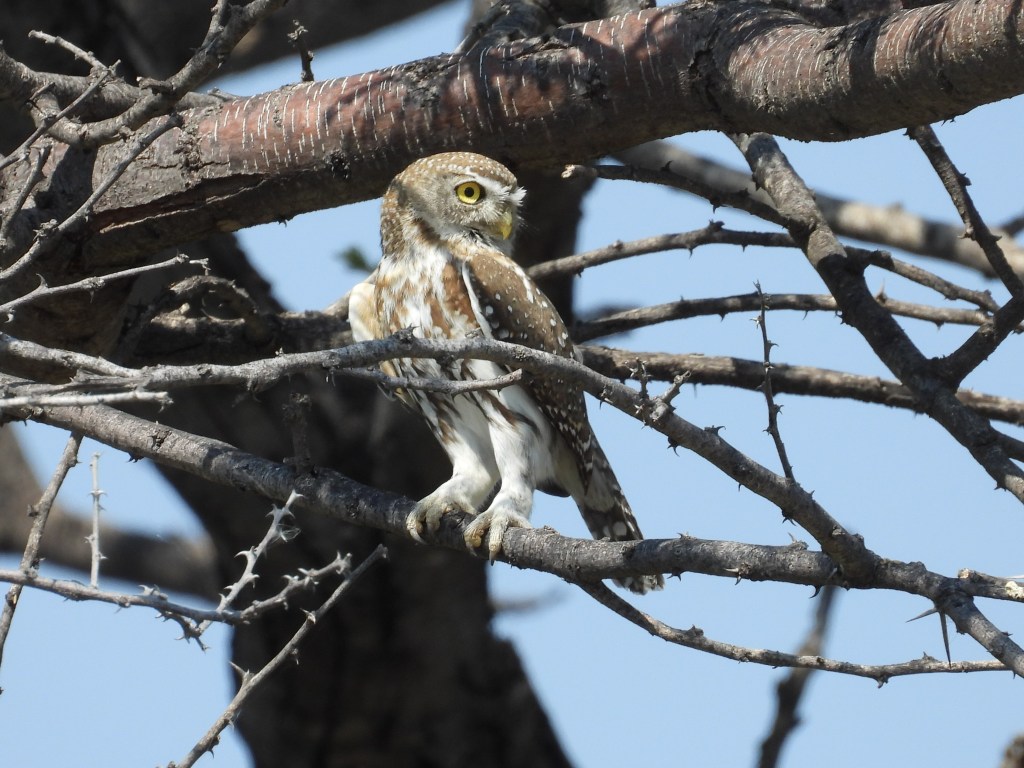
The birds shown below (Cape Starling, Pearl-spotted Owlet, and Red-necked Falcon) were photographed at the Namutomi Camp.

Many of the birds of Etosha are plainly colored so they can blend in well with the landscape, but there are some very flashy birds to be seen as well. Colorful Lilac-breasted Rollers are common in the park and their bright blues, greens, and purples make them stand out extremely well against the rather muted colours of their surroundings.

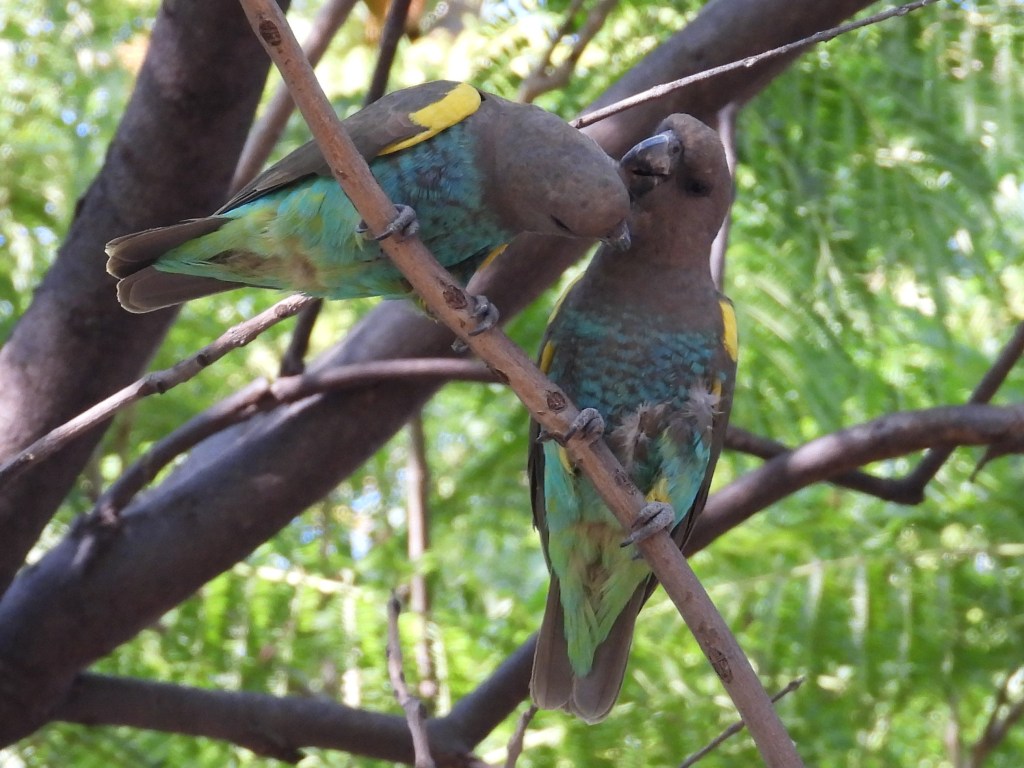
The beautiful turquoise, gray, and yellow Meyer’s Parrot also occurs in the woodlands of Etosha. The pair I managed to photograph (below) were part of a small flock that was resting and foraging at the top of a tall acacia tree just outside the eastern boundaries of the park.
After Etosha National Park, we visited areas in the Zambezi region, including Bwabwata National Park. Bwabwata has more moisture than Etosha so it is home to many semi-aquatic animals such as hippopotamuses and crocodiles. I will post my photos of that area in the next post!
 Peace Country Naturalist