After the visit to Etosha National Park, we headed through the Kavango and Zambezi regions of Namibia, which are located in the northeastern part of the country. This region of Namibia is much greener and more densely populated than the south, in part due to the presence of two major permanent rivers: the Kavango and the Zambezi. We also made an excursion into Botswana, but I will cover that in a different post.
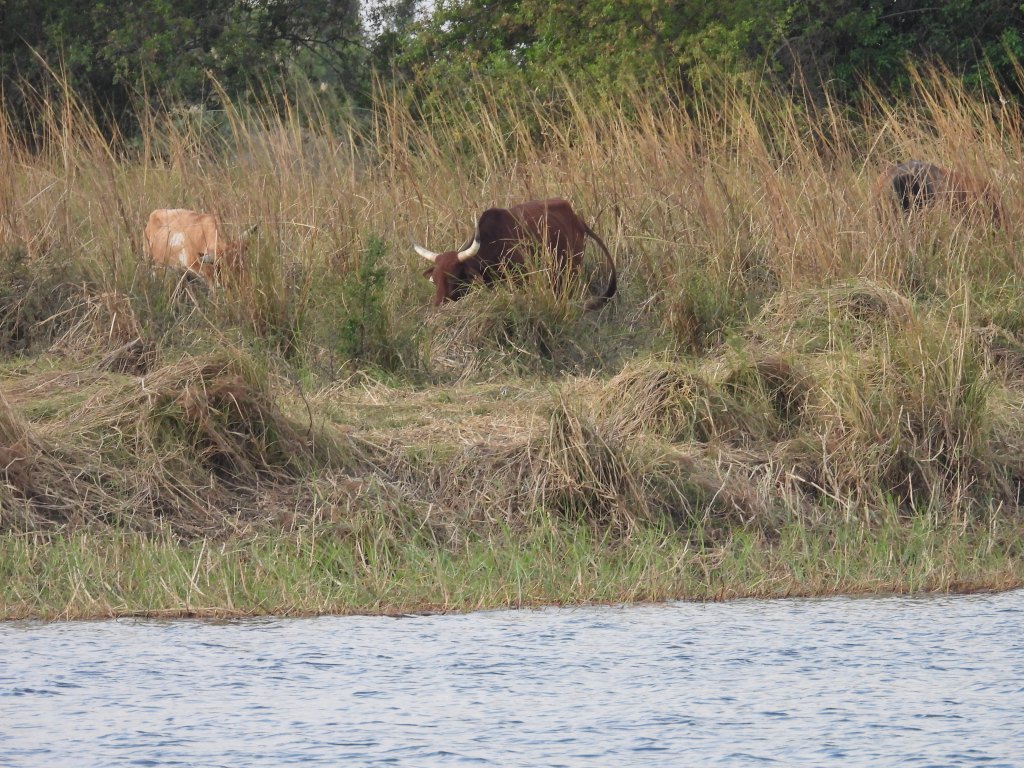
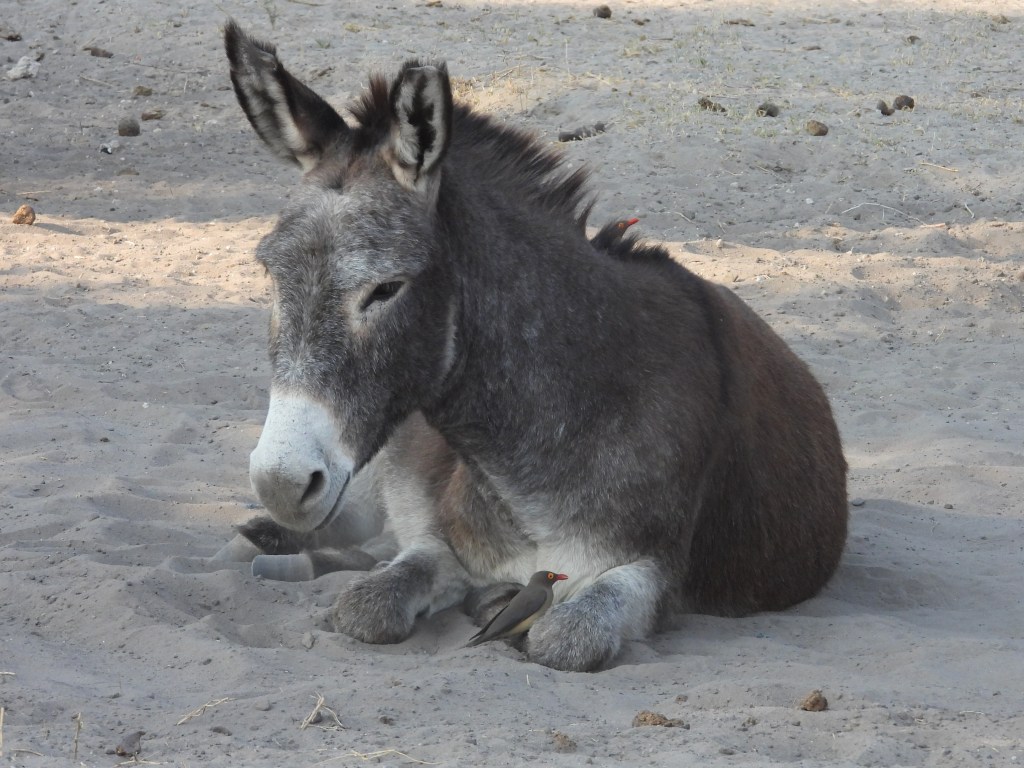
There are game parks in the Zambezi region, and they contain a lot of wildlife species that are rare or absent in the drier parts of the country. Such species include African buffalo, hippopotamus, waterbuck, red lechwe, Nile crocodile, vervet monkey, roan, and sable.
We spent some time in Bwabwata National Park, which is divided into three disjunct areas. Unlike Etosha National Park, it is not completely fenced, so animals can move in and out of the park. People are also not completely excluded from living in the park. There are villages in Bwabwata and some areas where people may farm.
Bwabwata contains flood plains that attract large concentrations of animals. It’s a great place to see big game such as buffalo, elephants, and hippos. It was also not crowded – there were times when we were the only people around at a nice viewpoint.


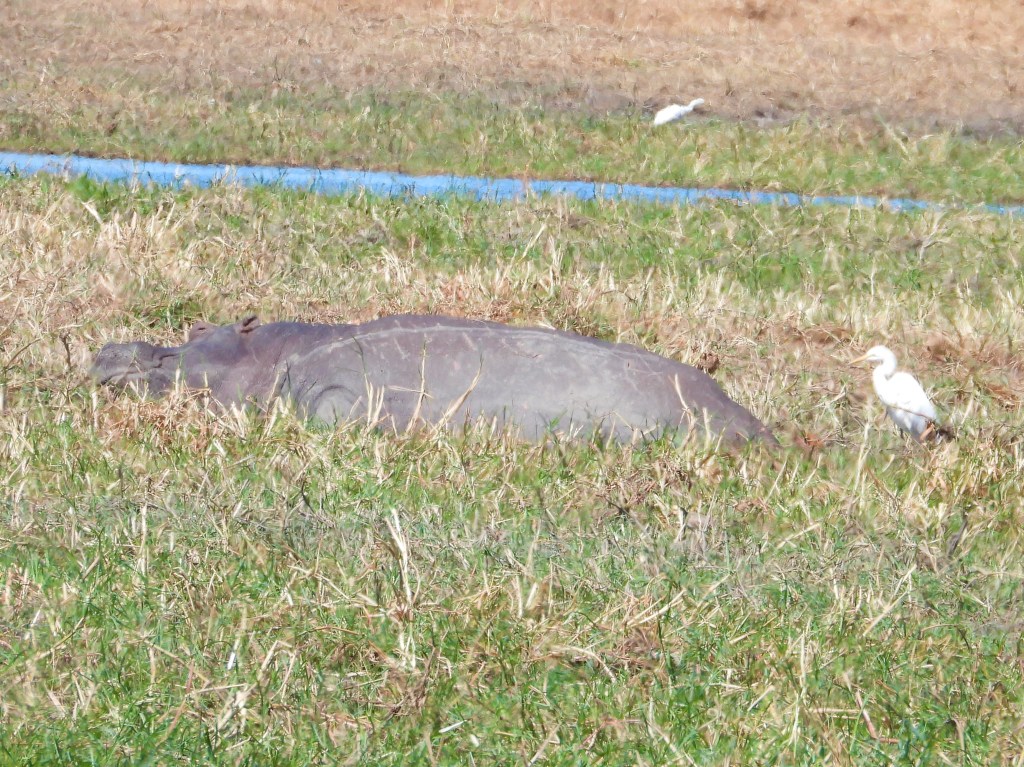
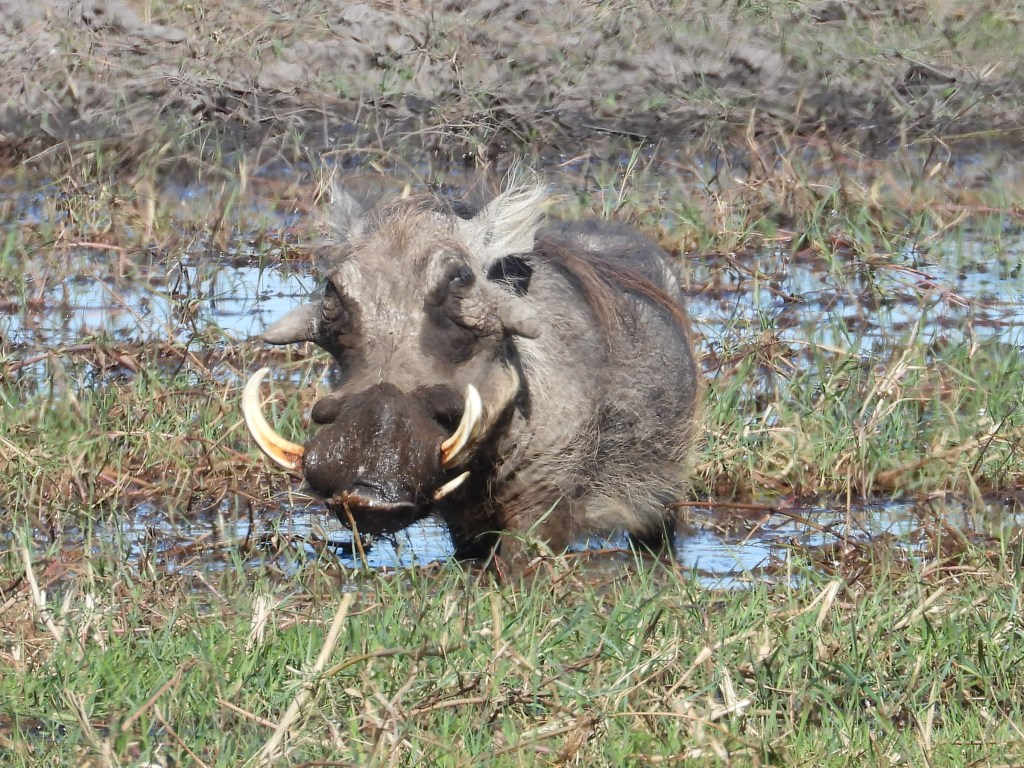
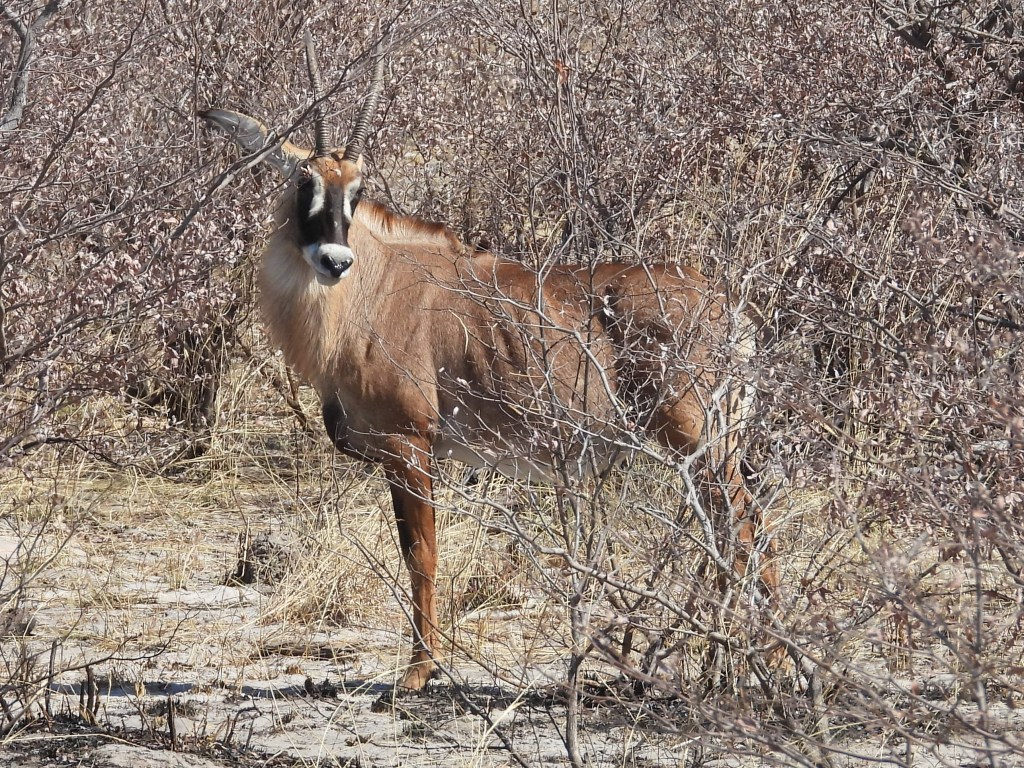

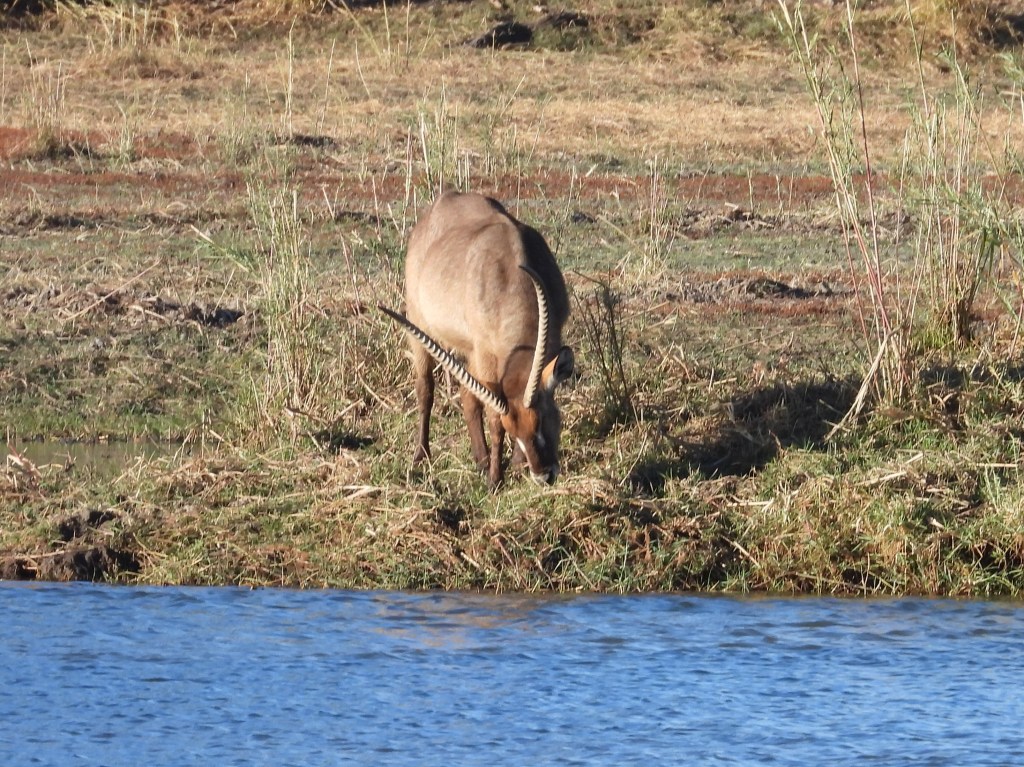
The lodges we stayed at in this region were either along the Kavango River or a backwater of the Zambezi. They had ‘safari’ tents close to the river and I could often hear hippos, or in one case, lions, making noise during the night. You can’t really leave your room or tent at night in areas where hippos are common. They can be very dangerous.
Birding in the game parks often has to be done inside a vehicle for safety reasons, but we were also able to go for boat rides and walks at different lodge properties or along the road. Birds are very abundant in this region of Namibia and there are a lot of species present that cannot be seen in southern Namibia.
We saw multiple species of bee-eaters, including the Southern Carmine Bee-eater, a brilliantly-colored bird that doesn’t occur in the south of the country. Bee-eaters nest in burrows dug along riverbanks or sandy cliffsides, but they don’t breed during July or August, so we were unable to view any breeding colonies. We still saw individual bee-eaters feeding along riverbanks or perched on wires. They are very beautiful, colorful birds.
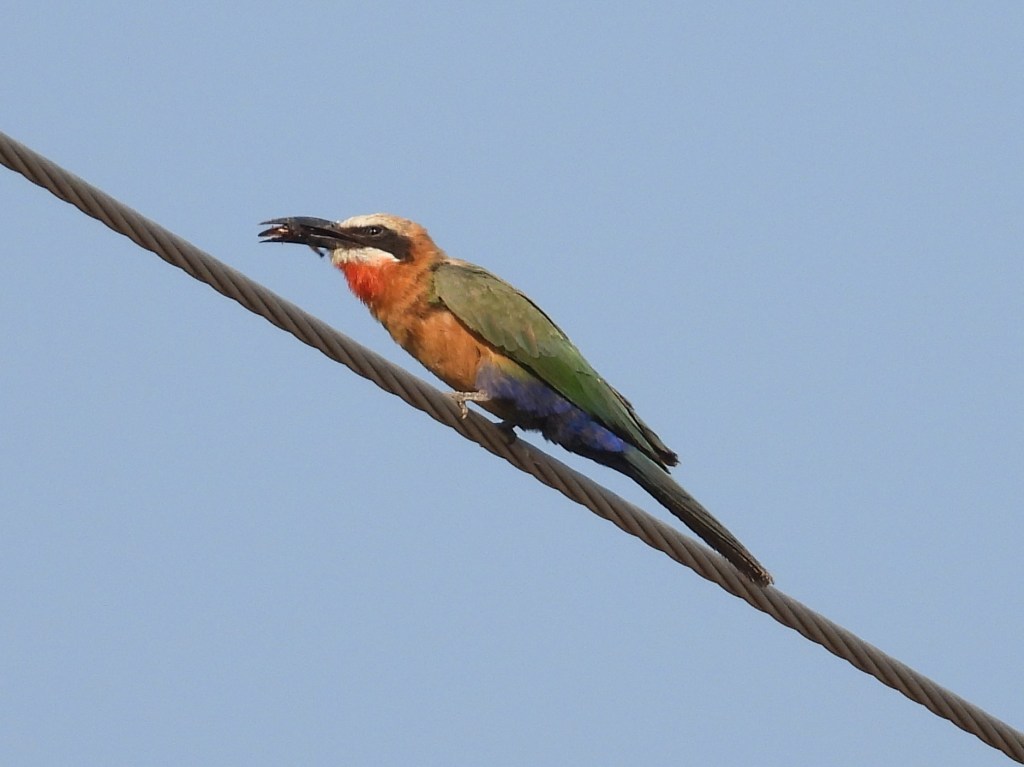

Seeing these birds during the breeding season would be an amazing spectacle, because they tend to nest in very large colonies, with 200 or more individuals. White-fronted Bee-eaters in particular have been well-studied because of their cooperative breeding system. A breeding pair will often have one or more ‘helper’ birds who assist them with raising the chicks. The ‘helpers’ help with digging the nest, feeding the breeding female and chicks, incubating eggs, and brooding chicks. Because of all this help, breeders with helpers will raise more chicks, on average, than breeders without helpers. The helpers are usually related to the breeding pair.
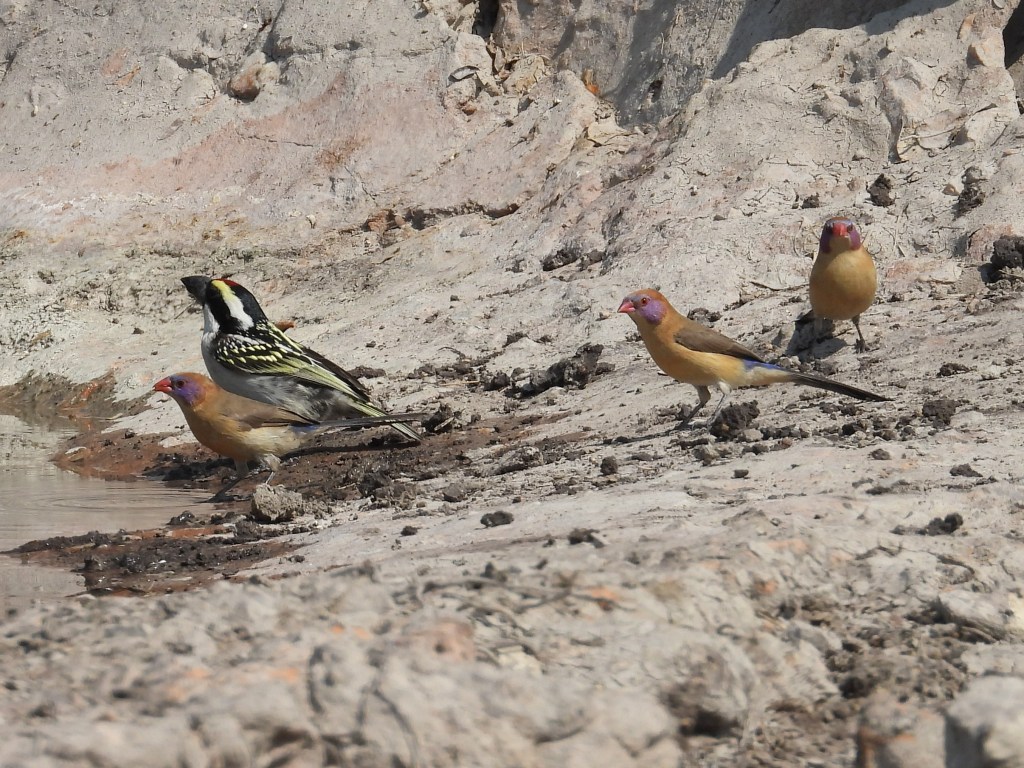
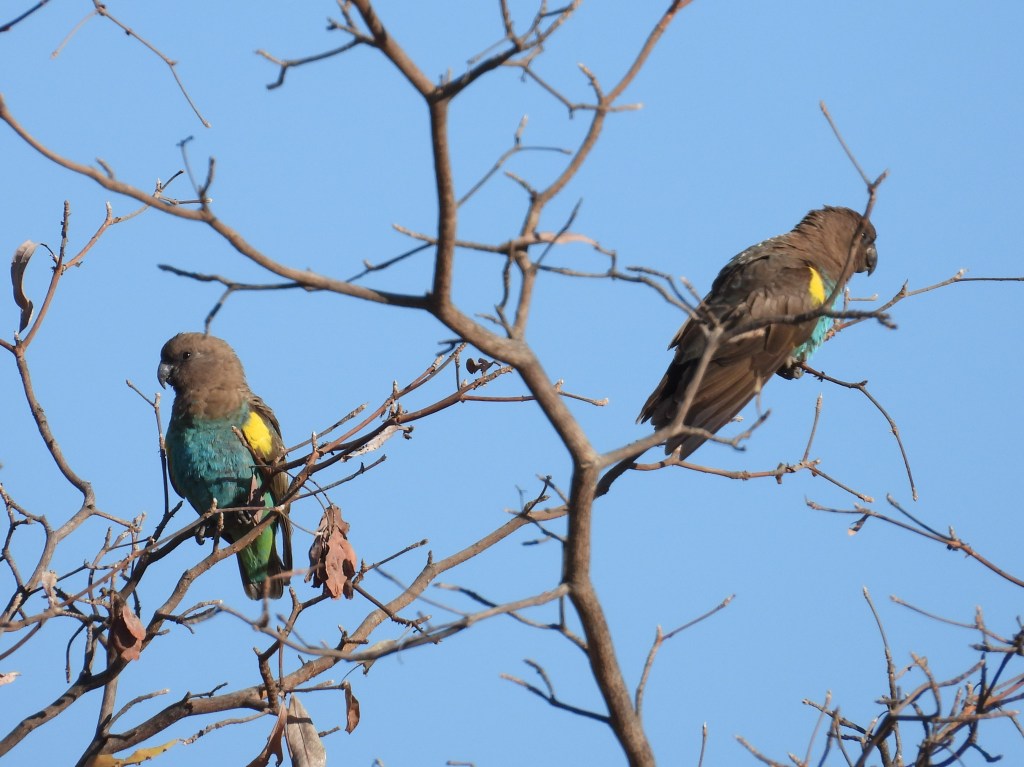
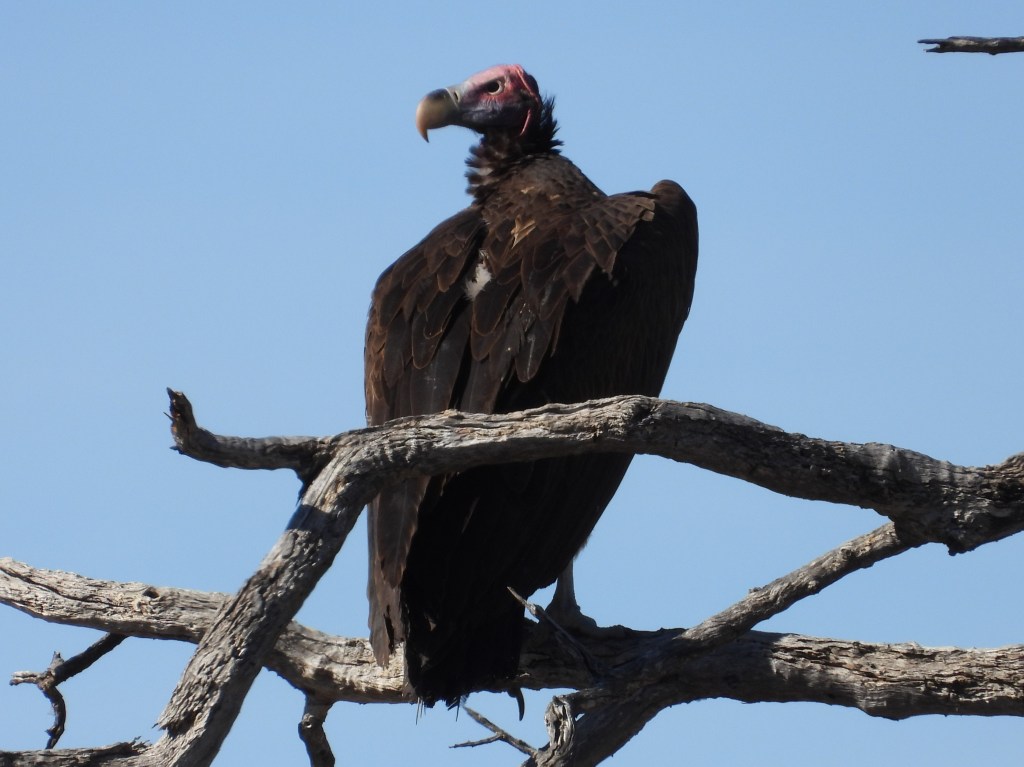
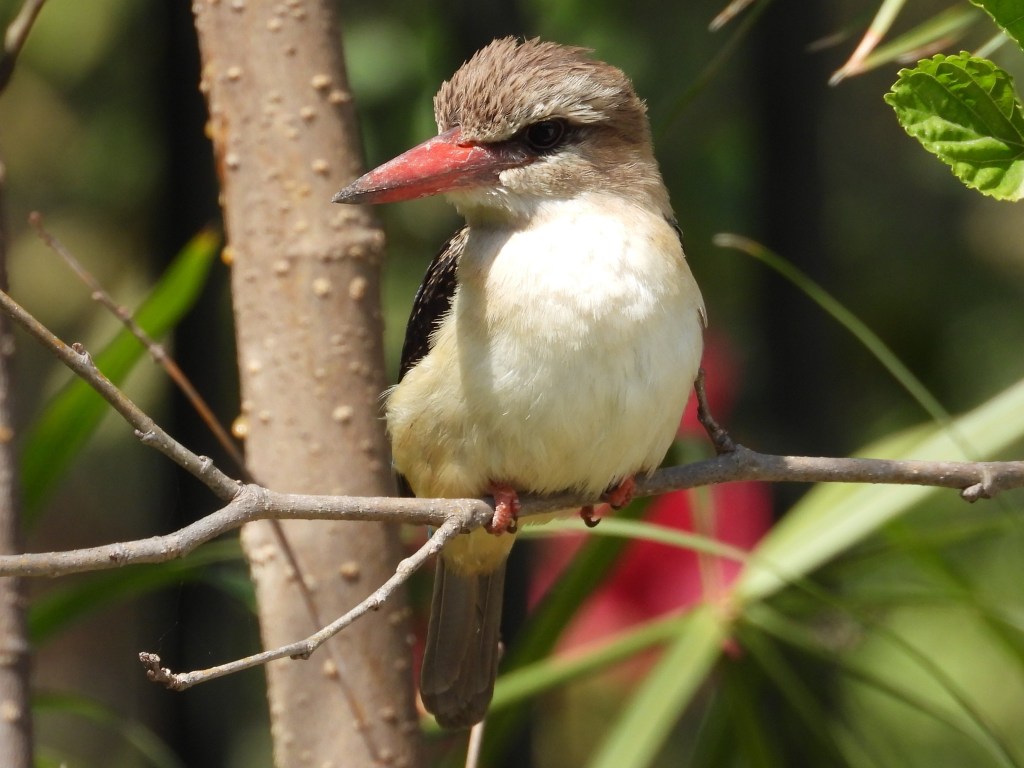
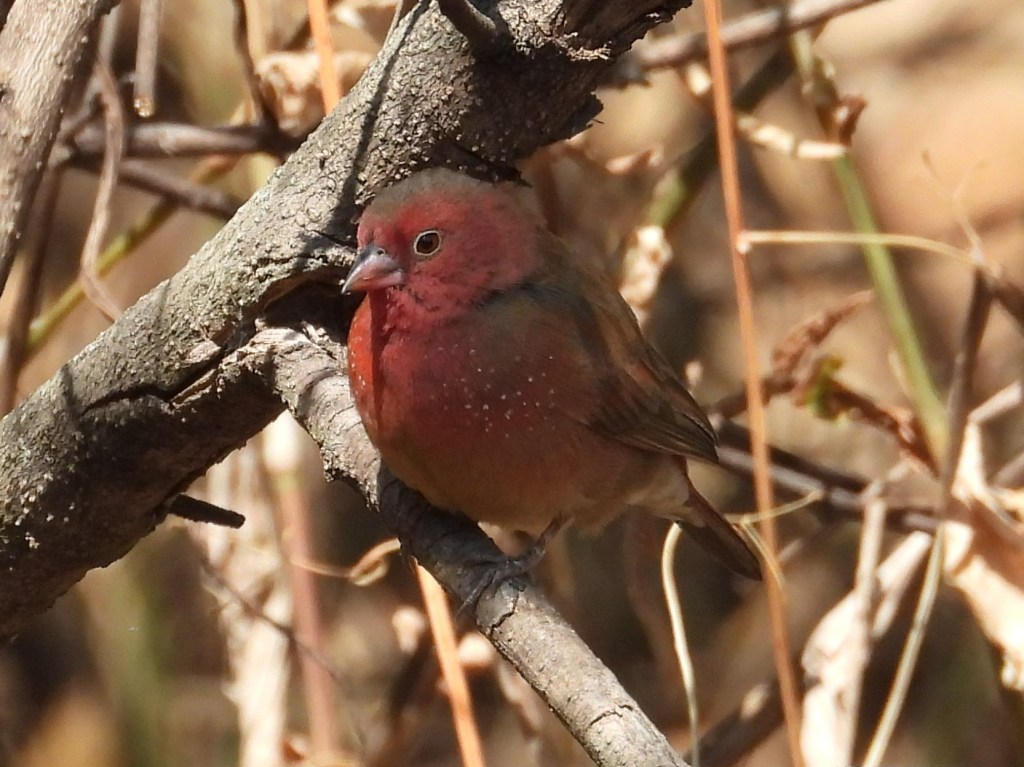
Below are some more of the birds I was able to get nice pictures of:



Birds and mammals aren’t the only interesting creatures in this region of Namibia. I noticed a strangler fig (pictured below) growing in Bwabwata National Park. Strangler figs grow from the tops of ‘host’ trees from seeds that are deposited there by birds (usually when they defecate them out). The fig then sprouts and starts growing its roots downward, around the host tree’s trunk. In the below picture, the paler, tan growths around the tree are the strangler fig roots. The strangler fig branches grow upwards, overtop of the host tree’s branches. The fig’s roots will eventually cover most of the host tree, and its branches will block the host tree’s access to sunlight. The fig typically outcompetes the host tree for light and eventually kills it. The host tree will die and decay over time, leaving the strangler fig behind.

The iconic African baobab trees are also present in Bwabwata National Park. They tend to stand out wherever they occur because they often grow as solitary individuals in very dry soil. They are very important to both people and wildlife wherever they occur. They provide shade, food and habitat for animals, and the fruits can eaten by people.

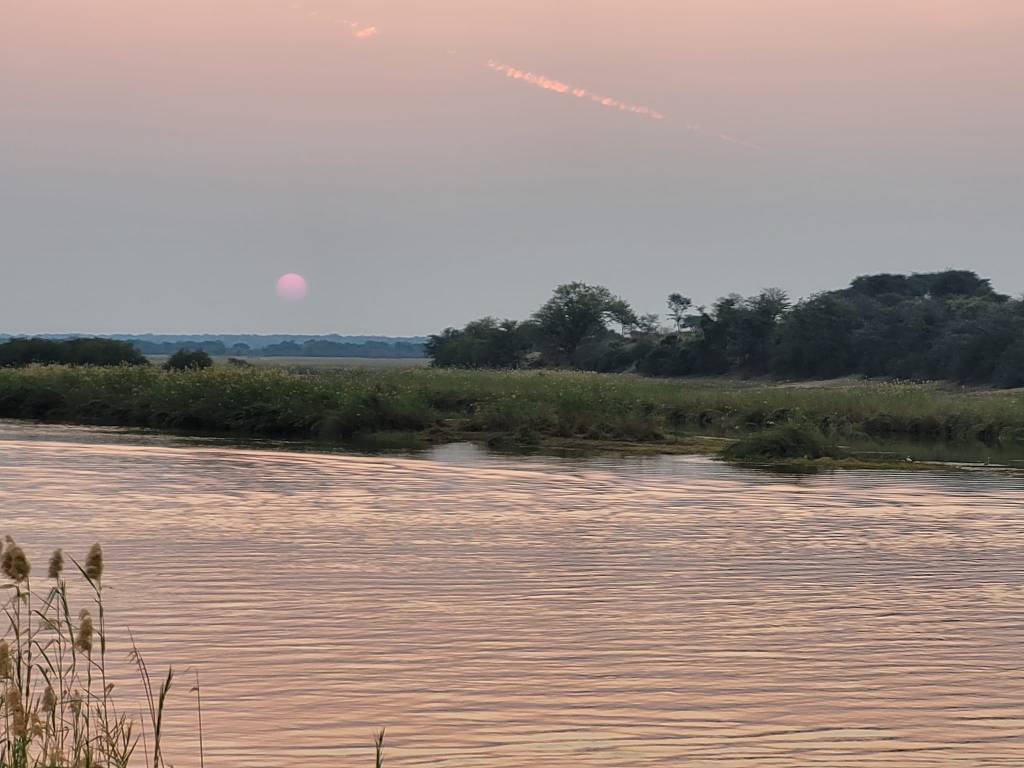
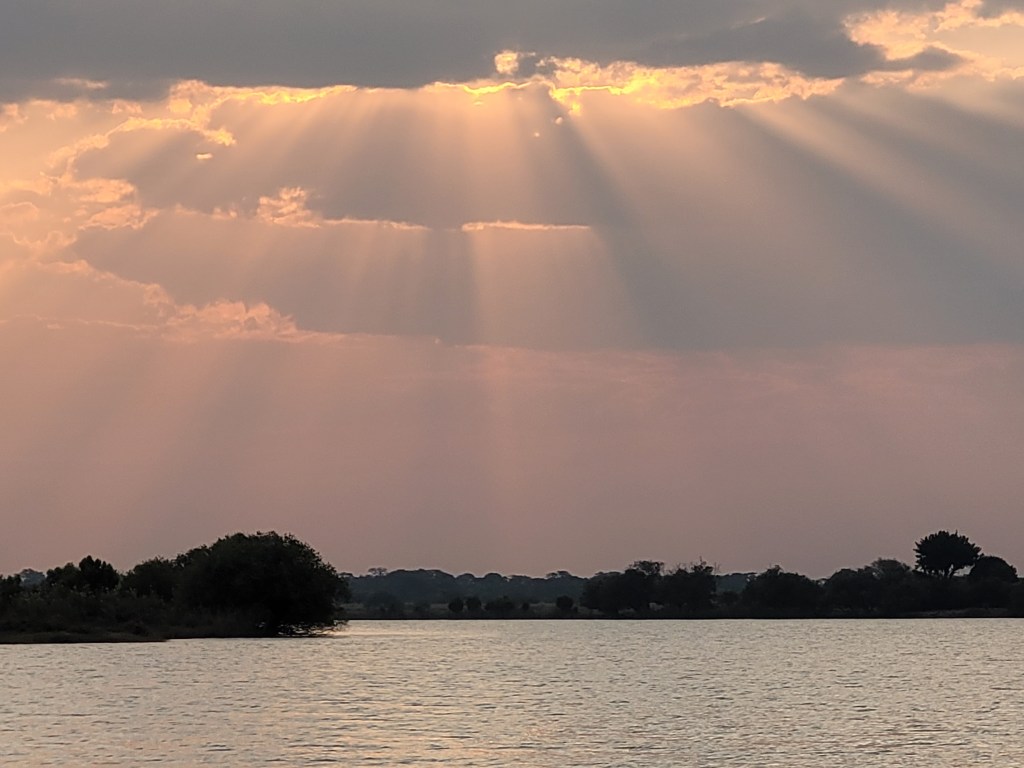
I think this photo of a sunset over the Zambezi will be a nice way to end this post:
 Peace Country Naturalist