I spent most of my trip to Africa in Namibia, but I did cross over into neighboring Botswana a couple of times. The first time was with the birding group. We spent a few nights at a secluded lodge along the Okavango River in northern Botswana. We took a short boat ride to get to the lodge and took two boat cruises north and south along the river during our stay to look for birds and other wildlife.
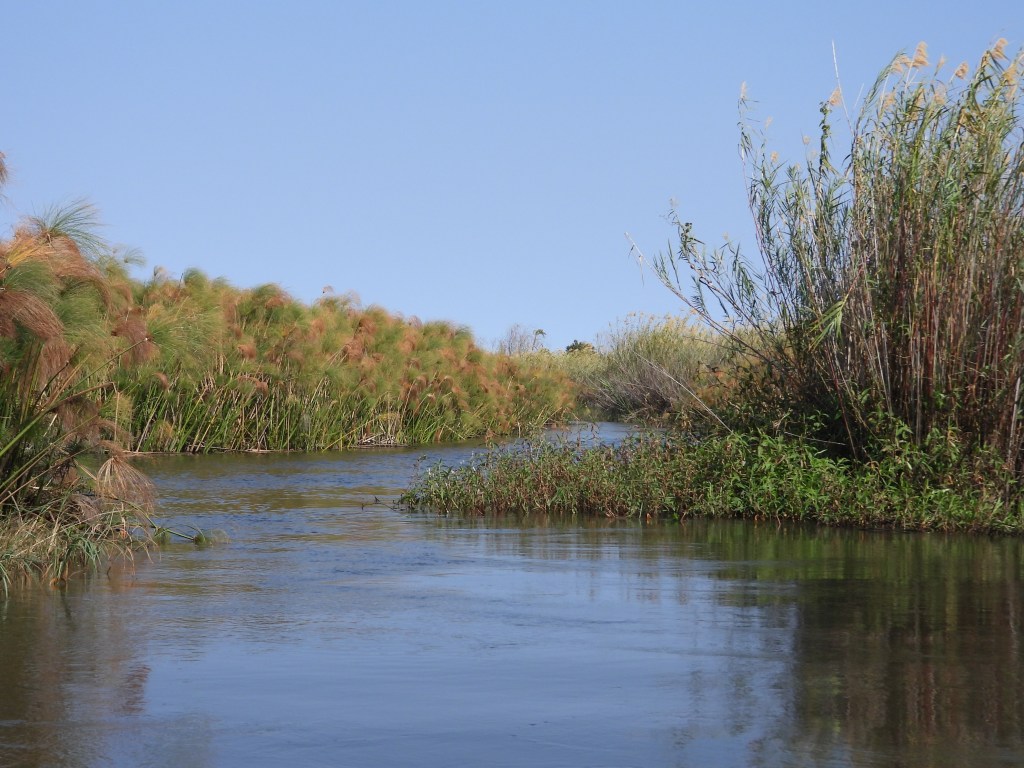
The Okavango River flows south through Botswana to form the Okavango Delta, a vast system of wetlands that is home to an incredible concentration of wildlife. We didn’t quite make it into the delta, but instead explored the panhandle region in the north to see the many bird species that live along the river.
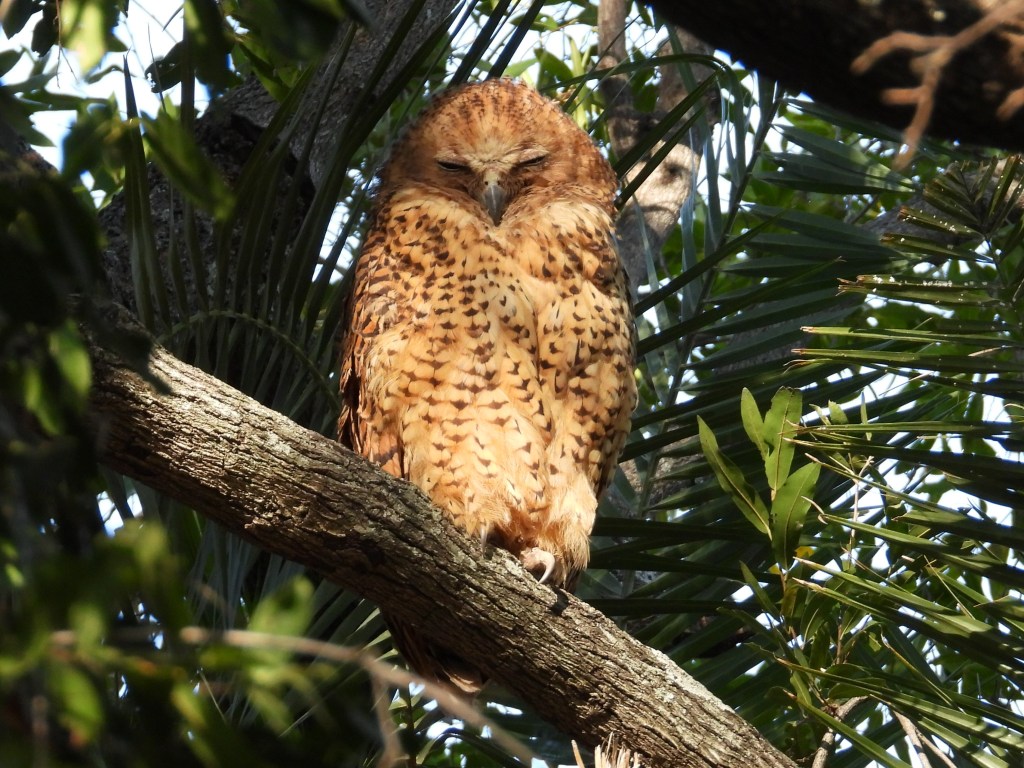
The above Pel’s Fishing Owl was one of the highlights of the boat cruises. They are apparently not very common, but one of the local guides managed to find one at its day roost. As their name suggests, they do indeed prey on fish. When they fish, they do not typically enter the water but instead pluck fish from just below the water’s surface with their talons.

We also found this African Wood Owl in the forest around the lodge. African Wood Owls are widespread in Sub-Saharan Africa and are in the same genus as the North American Barred Owl.
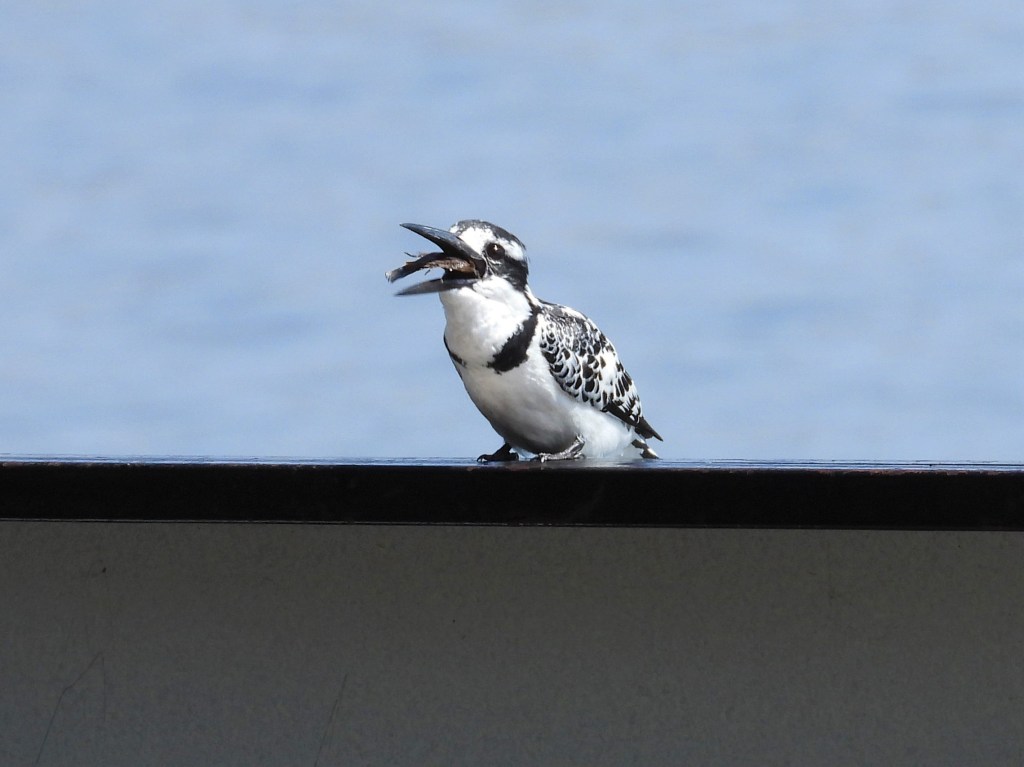
Kingfishers are very abundant along the river. I watched the above Pied Kingfisher dive for fish near the docks, and after a couple of tries, it emerged with a good-sized fish. Aside from Pied Kingfishers, we also saw Malachite and Giant Kingfishers.

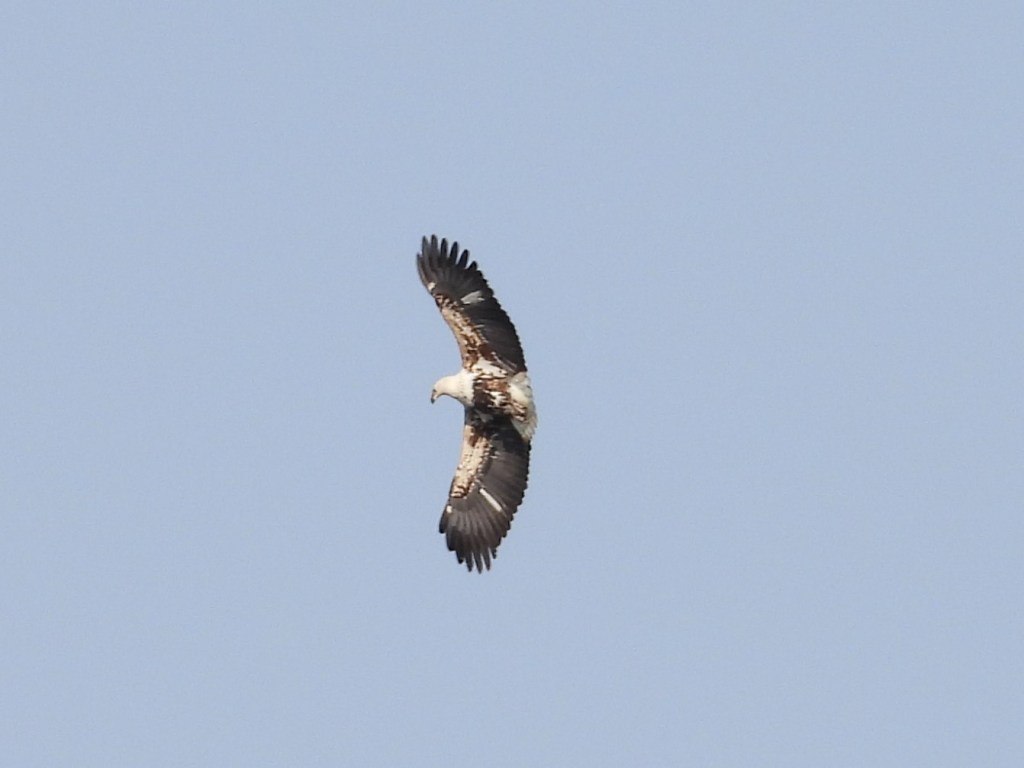
It wasn’t difficult to find African Fish Eagles (above) along the Okavango River. They were either flying overhead or perched on the branches of large trees lining the river. They very much resemble Bald Eagles in their appearance and diet, but they are in a different genus. Their genus name, Ichthyophaga, literally means “fish eater.” Like Bald Eagles, they don’t attain their adult plumage until age four or five.
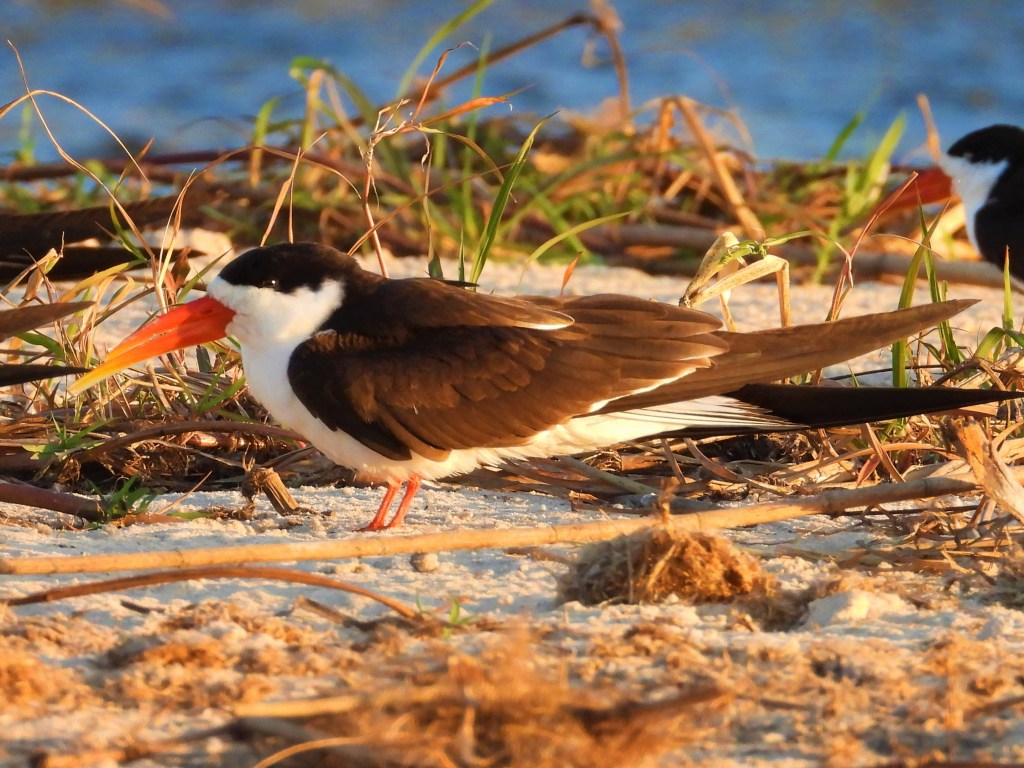
Sandbars along the river can be a good place to look for shorebirds. The above skimmer was part of a flock that was standing along a sandbar. Skimmers are difficult to mistake for any other bird due to their unusual beaks, which look a bit malformed at first glance because the lower mandible is so much longer than the top one. That beak morphology is, however, a adaptation for their style of foraging. They will fly along the top of a waterbody with the long lower mandible in the water. They will snap up any fish that they contact with the mandible.
Below are more of the birds we saw on the river cruises.


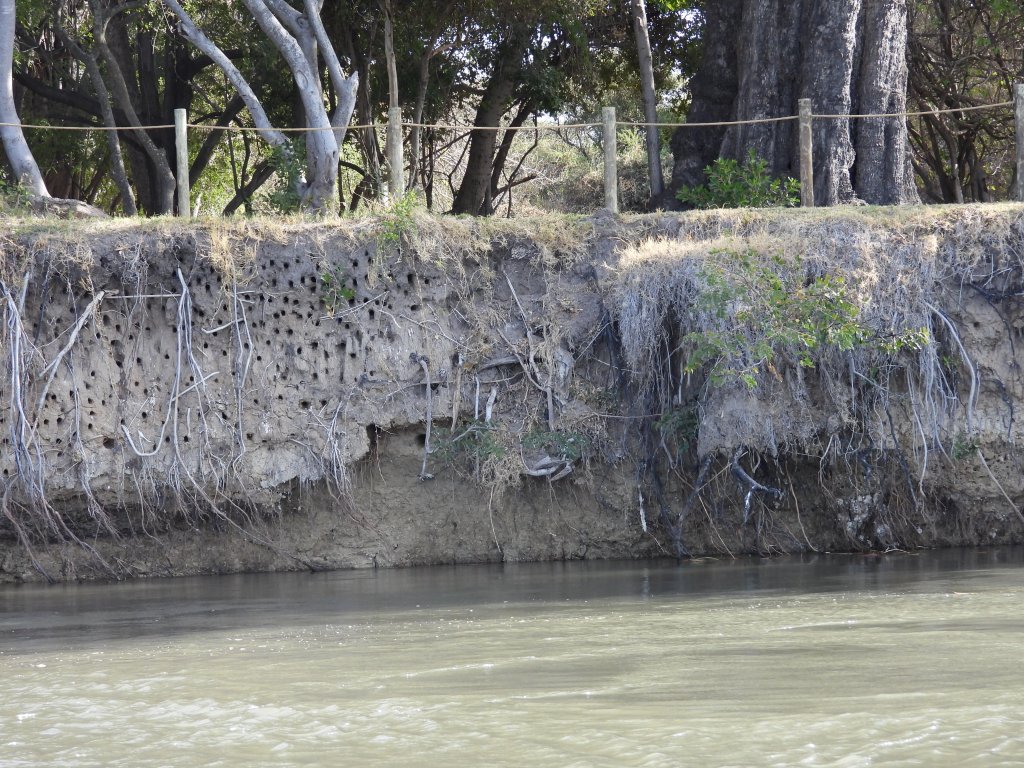
There was also a White-Fronted Bee-eater nesting site along the river (below). It wasn’t breeding season for bee-eaters, but there were a few of them still around.

The woodland around the lodge was also home to a variety of birds:
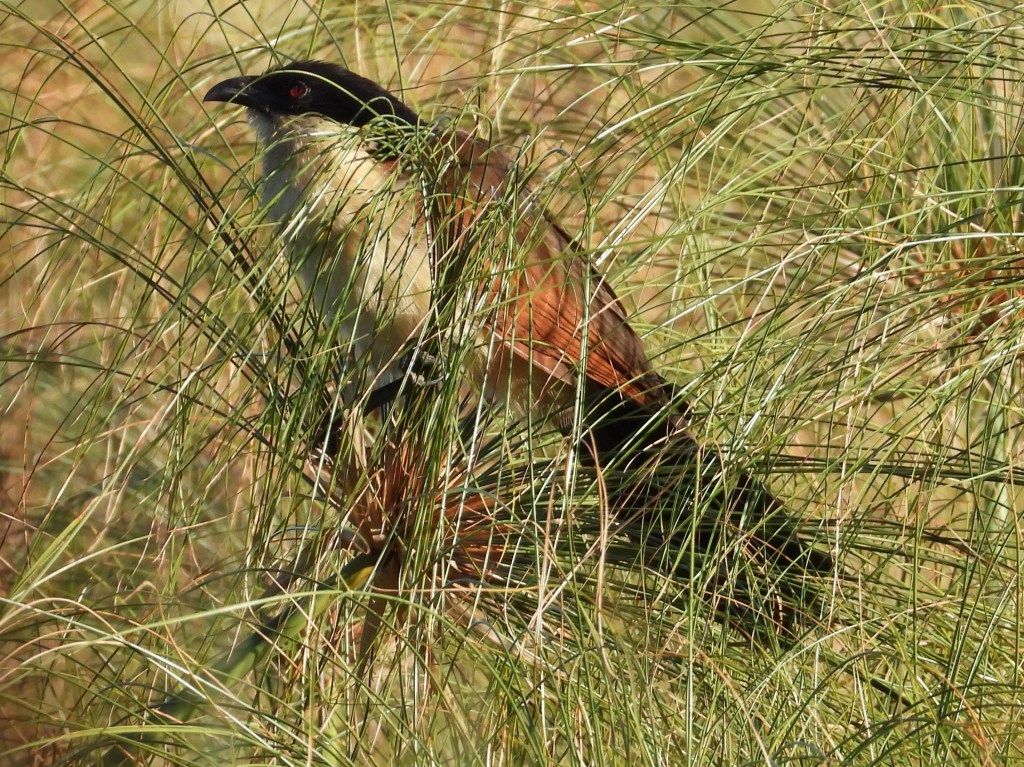
We found the above Coppery-tailed Coucal on a bush walk around the lodge. Coucals are members of the cuckoo family (Cuculidae) but unlike cuckoos, they are not brood parasites. In fact, both parents care for the young, with the male sometimes taking on a greater proportion of the care.

The above birds are Green Woodhoopoe. There was a small group of them on the lodge property probing the trees for insects and other prey. They would have been difficult not to notice due to their gorgeous, iridescent plumage, busy behavior, and loud vocals. They weren’t too hard to photograph as they often perched out in the open on the sides of large trees.
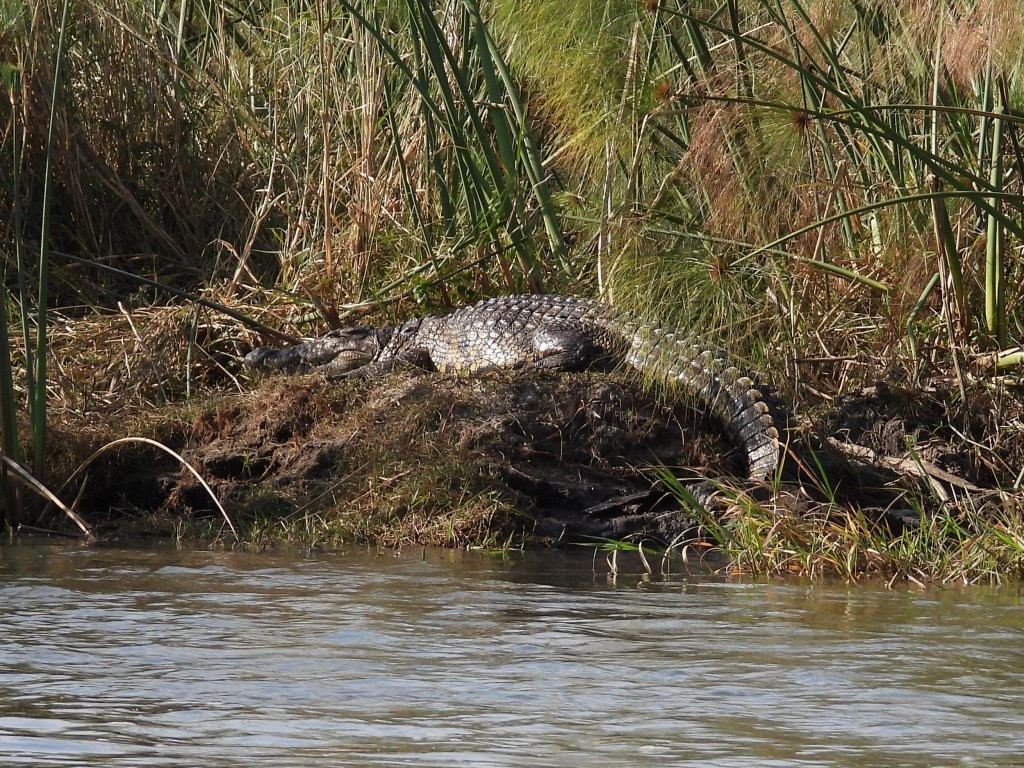
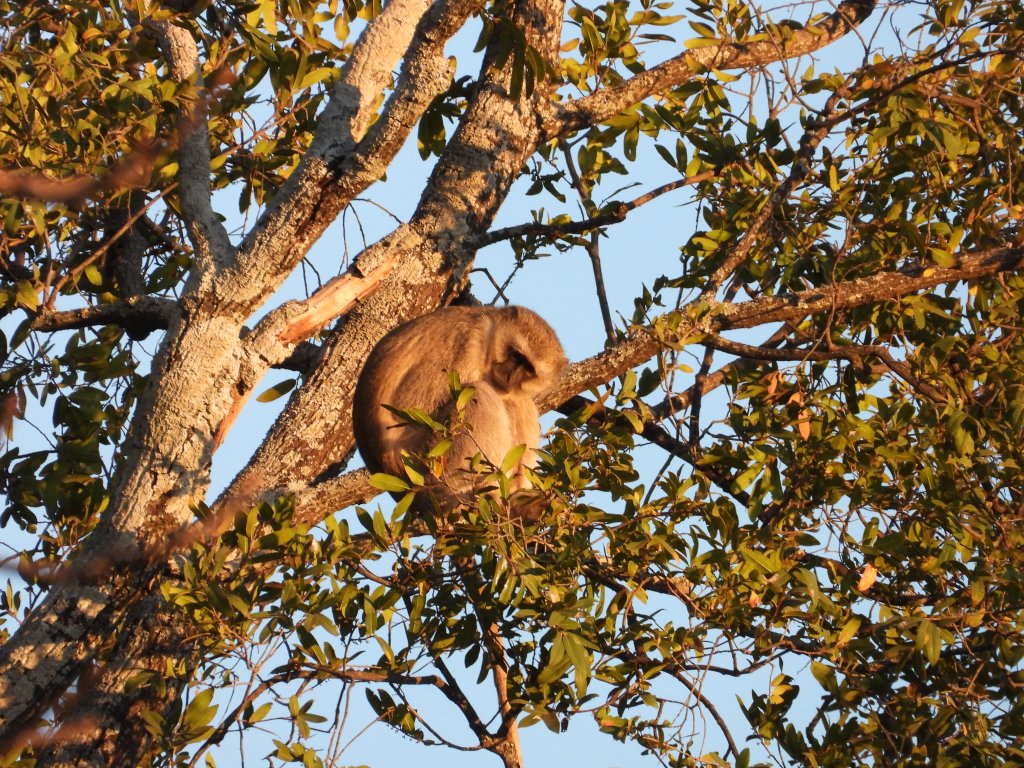
Although birds were the main highlight around the Okavango River, there were many other animals around too. I could hear hippos in the river at night, but we didn’t see them during the day. We were told to stay in our tents at night due to the hippos, which would sometimes come out of the water at night to graze on the grass. They really aren’t an animal you want to surprise at close range. Nile crocodiles, monitor lizards, and vervet monkeys were also common.

My second excursion into Botswana occurred after the birding tour ended. I stayed in Africa for an extra couple of days and took a day tour into Chobe National Park. That will be the topic of my next post.
 Peace Country Naturalist