After Lore Lindu, we headed back to the city of Palu and stayed a night there before heading to Manado.
The hotel in Palu (Sultan Raja) was quite nice. I left a hat behind there and the hotel staff actually contacted the tour leader about it and had it sent to the last hotel we stayed at so I could get it back. I don’t think I’ve ever had a hotel try to return an item I left behind, so I thought that was incredibly nice of them.
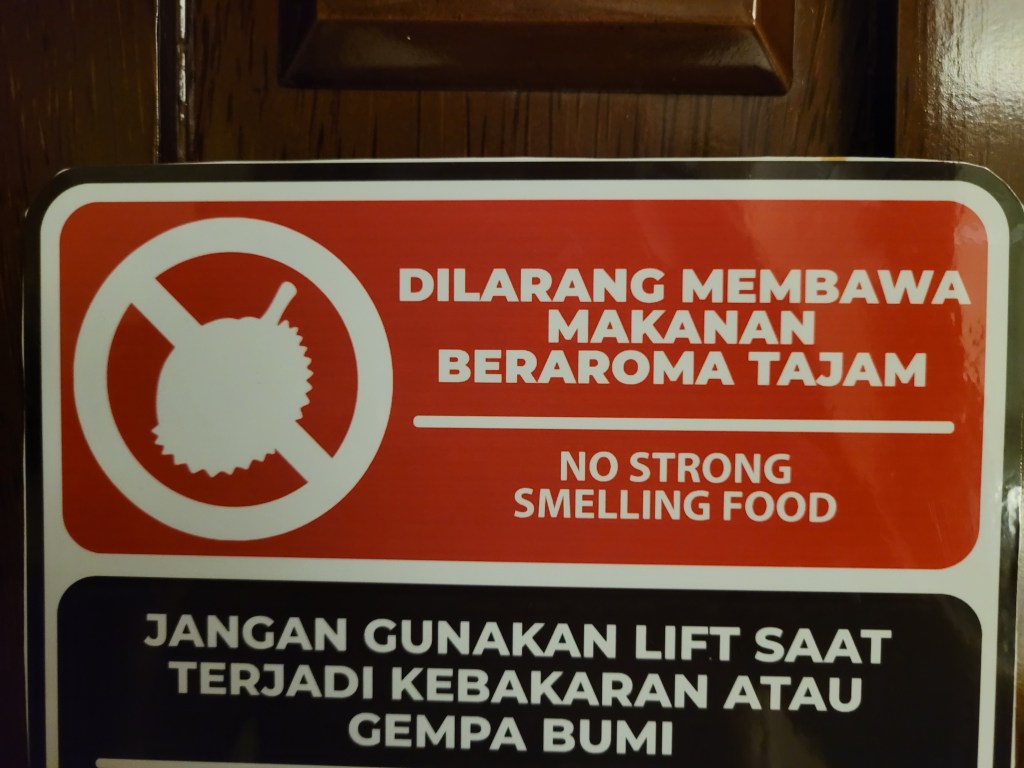
I also saw my first “no durians” sign. Well, it didn’t specify durians specifically, but there was one crossed off on the sign. My husband and I bought one once and opened it up in the house and the smell was so awful that even the dogs fled from the kitchen.
We spent a lot of our time in northern Sulawesi in Tangkoko National Park. It seemed to have more tourists than Lore Lindu and there were a variety of lodges and homestays near the park. The environment was quite different from that at Lore Lindu because the forest was more open and easier to walk in.
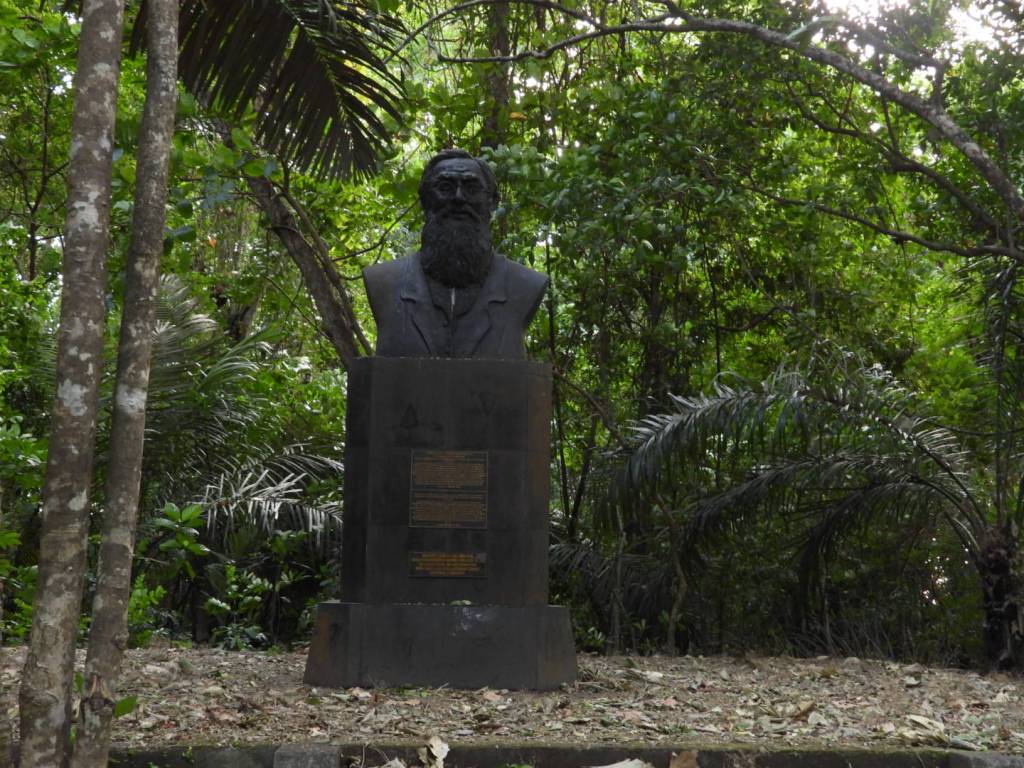
Despite the more open environment, I wasn’t really sure how fruitful birding in Tangkoko would be. We hiked around on the trails and initially didn’t see much. It was very windy and there weren’t any birds vocalizing or flying around.
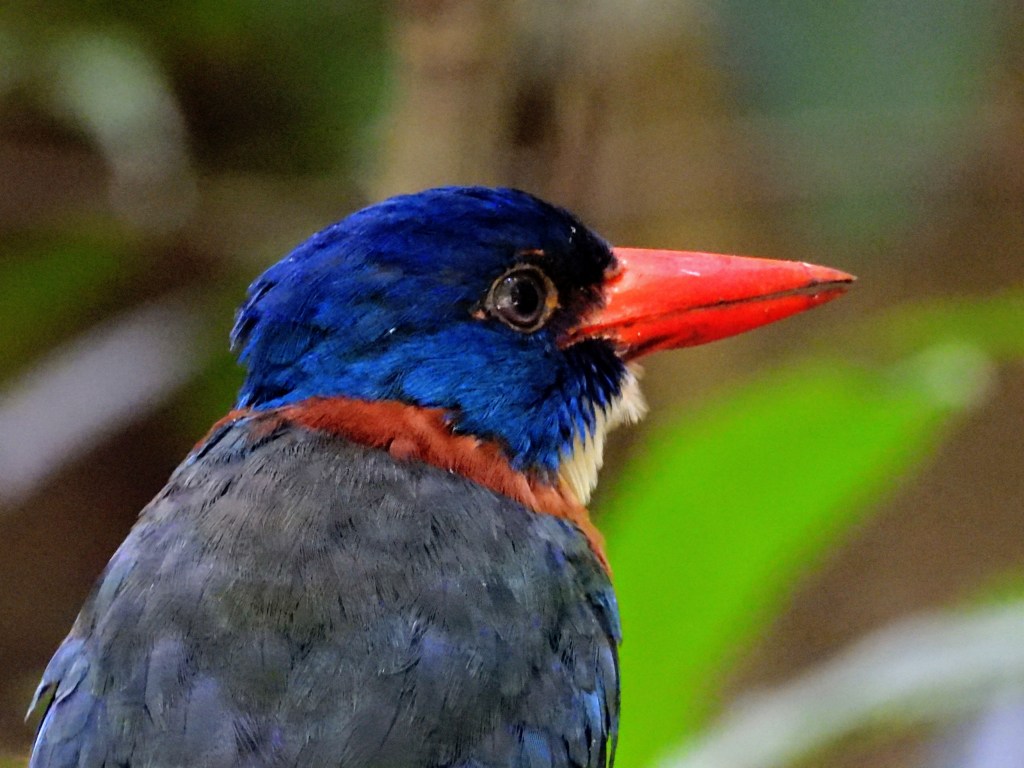
My initial assessment of the area was wrong. The guides managed to find some incredible birds, some of which were sitting still deep in the forest. For instance, we had to go off the trail quite a bit to see the below Green-backed Kingfisher. The guides also found a small owl sitting on the ground in the forest, but I could not get my camera to focus on it.
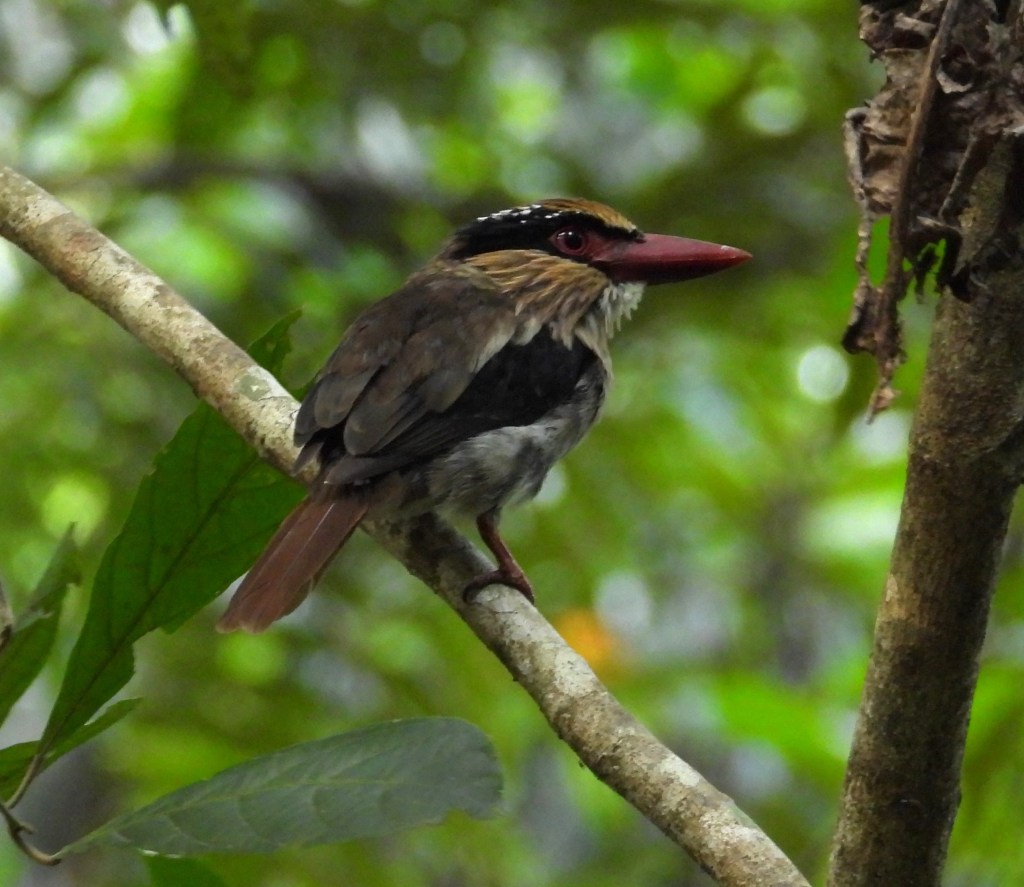
There were other kingfishers in the forest, including the below Sulawesi Lilac Kingfisher and Sulawesi Dwarf Kingfisher.

We also got decent views of a Philippine Megapode (I couldn’t get a picture though) and an Ashy Woodpecker (below), which is reminiscent of the North American Pileated Woodpecker.

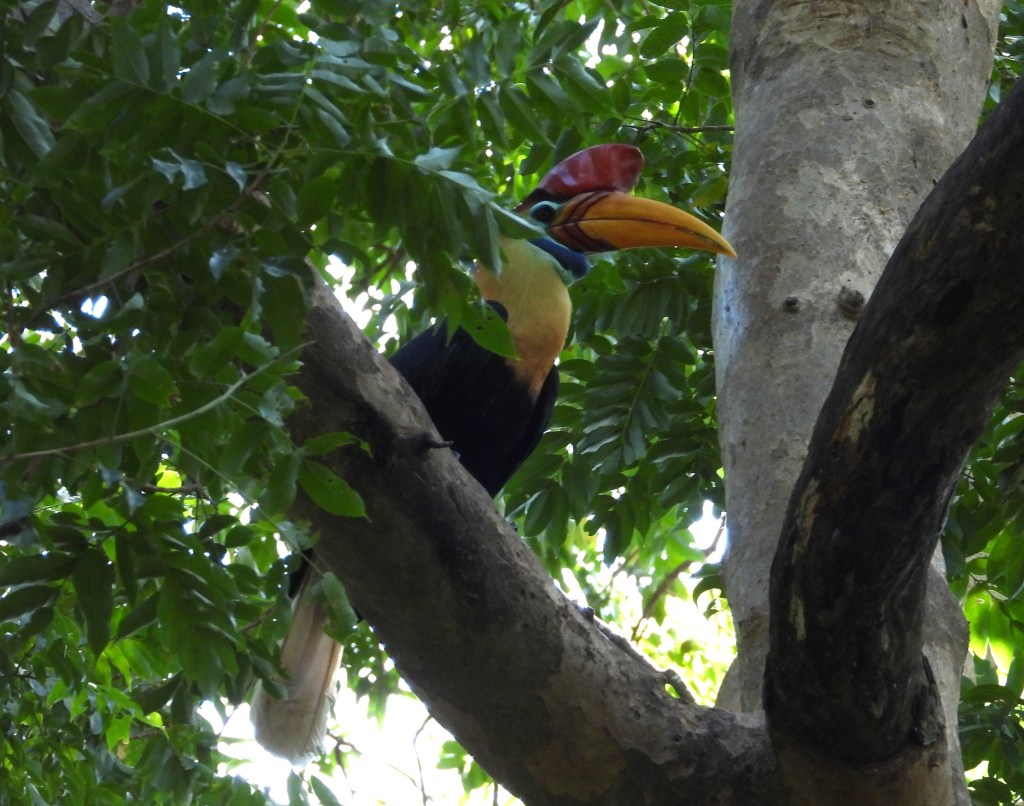
One of the major highlights of Tangkoko had to be the spectacular pair of Knobbed Hornbills our guides found for us. They were at a nesting cavity and we saw both the male and the female. Hornbills in general have some very unusual nesting habits, and I wrote about them in a post on my trip to Namibia: Namibia: Spitzkoppe – Peace Country Naturalist .

We also had opportunities to view some of Sulawesi’s eclectic mammal species. The first was the Sulawesi Dwarf Cuscus that we found while night birding. The second was a Sulawesi Bear Cuscus (pictured below). The Bear Cuscus is diurnal so is more often seen than the nocturnal Dwarf Cuscus.

Cuscus are marsupials, meaning that the females give birth to very undeveloped young that migrate straight to a pouch.
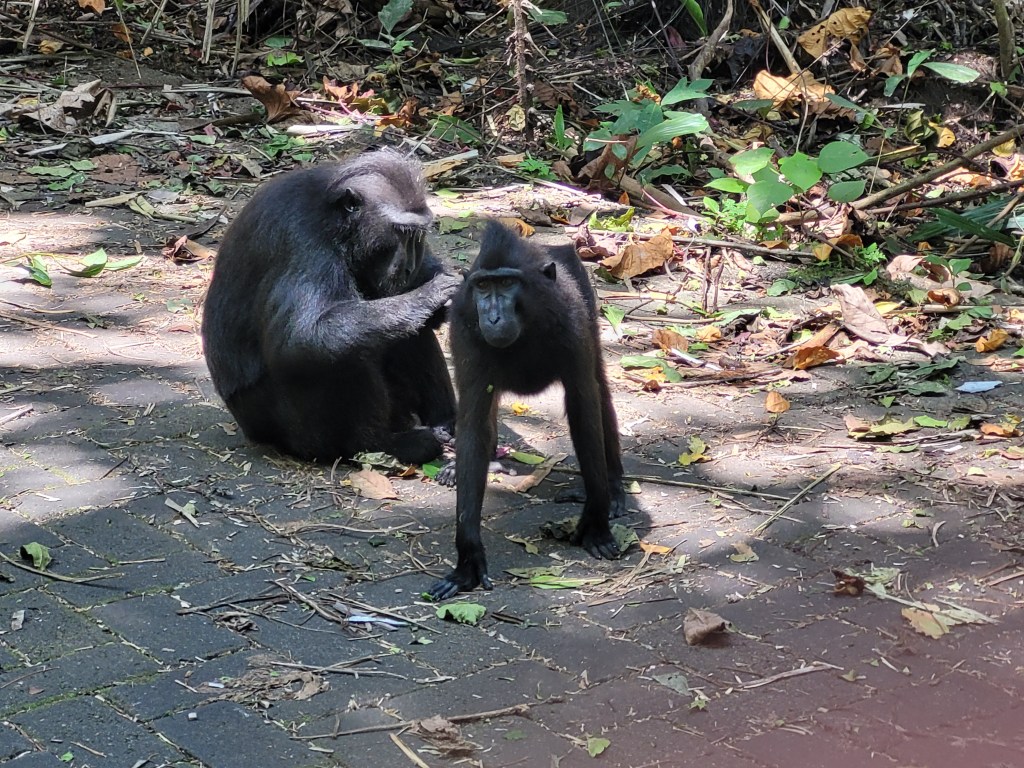
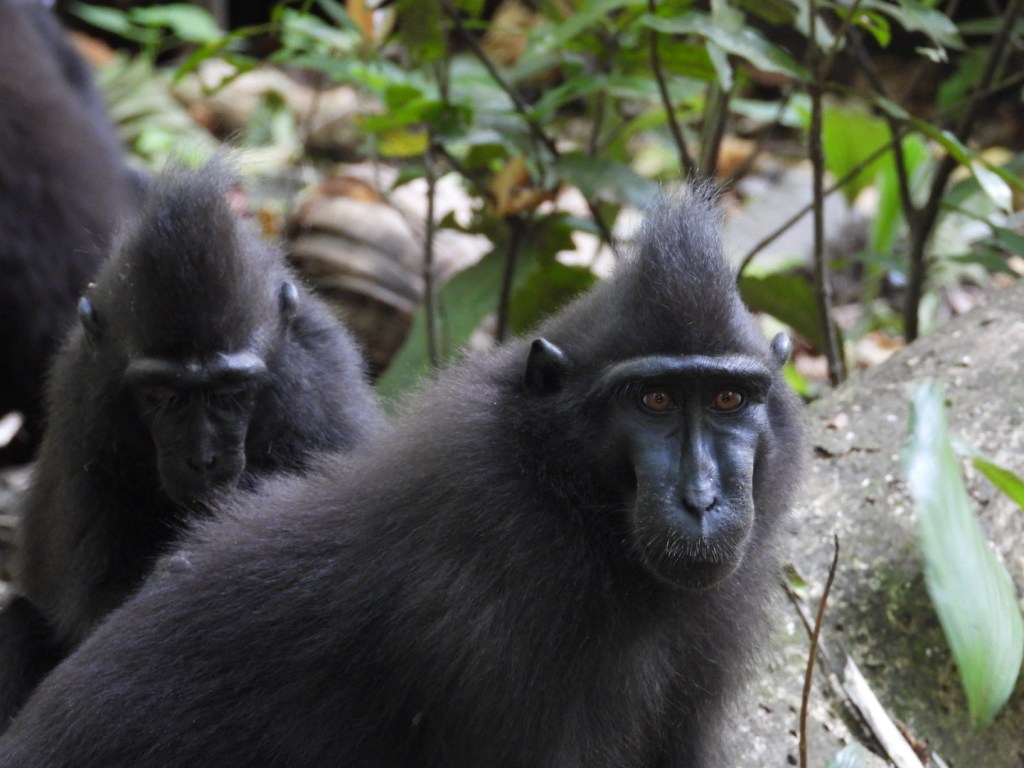
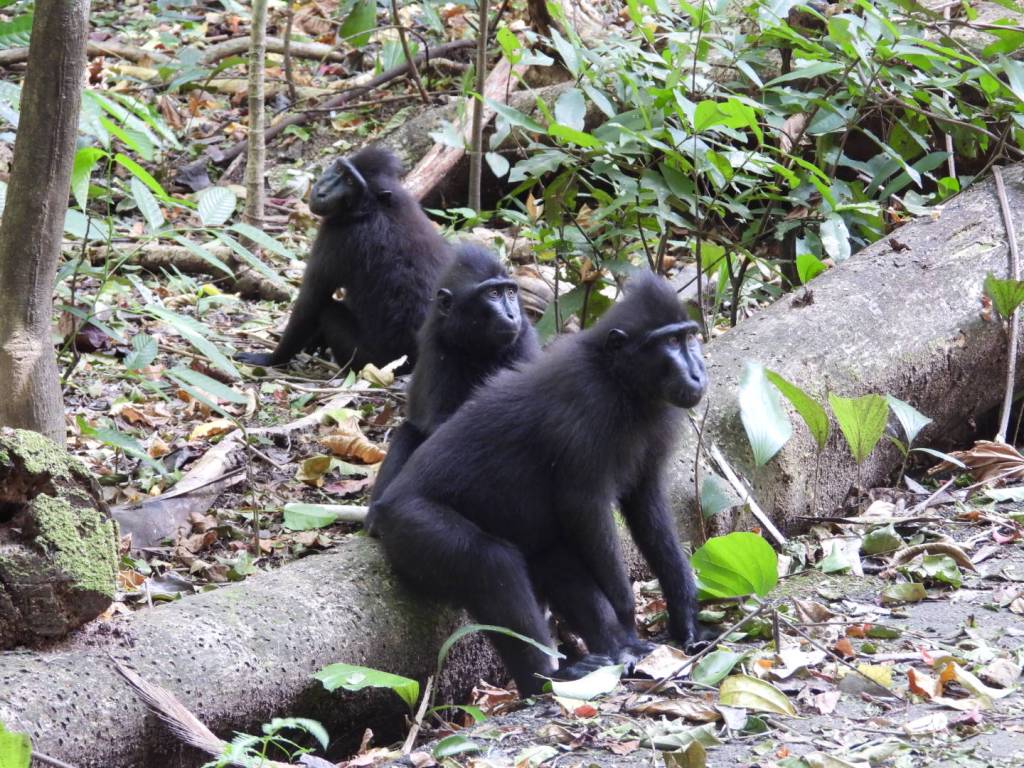
The other two mammals we saw were primates. The first was a troop of Sulawesi Crested Macaques that were hanging out right by the road. These are rather baboon-like monkeys, due to their long faces, and heavy brows. As I saw, they generally do not fear humans and they didn’t react much to our presence. However, this can be to their detriment, as they are hunted as pests in some areas.

We had to gather around a large strangler fig tree at dusk to see the final mammal species – the Spectral Tarsier. Tarsier families often sleep at the same site night after night, so there was a good chance we’d get to see this unique mammal. Tarsiers are primates but their evolutionary relationships to other primates have been debated. Some biologists have argued that they are more closely related to lemurs than monkeys, but recent genetic evidence does indicate they are more closely related to monkeys.
Unlike most primates, tarsiers are primarily carnivorous, and they come out at night to feed on arthropods and small vertebrates. Their huge eyes (oft said to be bigger than their brains) allow them to see at night. They have large ears as well, and some species can hear very high frequency sounds.
There was a somewhat large crowd gathered to see the tarsiers, but we had to be quiet as they are shy animals. Two tarsiers did emerge from the tree and started chirping as they did so. Because it was a bit dark, my photos aren’t the best, but it was a privilege to be able to see such a rare and unique animal.

We also went for a boat ride around a mangrove ecosystem along the coast. As is shown in the below image, mangrove trees and shrubs are quite unusual because much of their root system is above ground. This is an adaptation to the warm, salty, waterlogged soil they must grow in. Many plants cannot grow in waterlogged soil because their roots will “drown” and eventually die and decay. Plant roots do need to absorb some oxygen and the oxygen availability in waterlogged soil is very low. And, salty, warm water holds even less oxygen than cold, fresh water. Tropical mangrove trees therefore have most of their root systems above water so oxygen can diffuse in from the air. Air can then diffuse down to the roots through tissue called aerenchyma that contains a lot of air space.

The aerial roots of mangrove trees can be good places to see animals like mudskippers and crabs. We also found kingfishers, including a Great-billed Kingfisher and a Sacred Kingfisher (below).


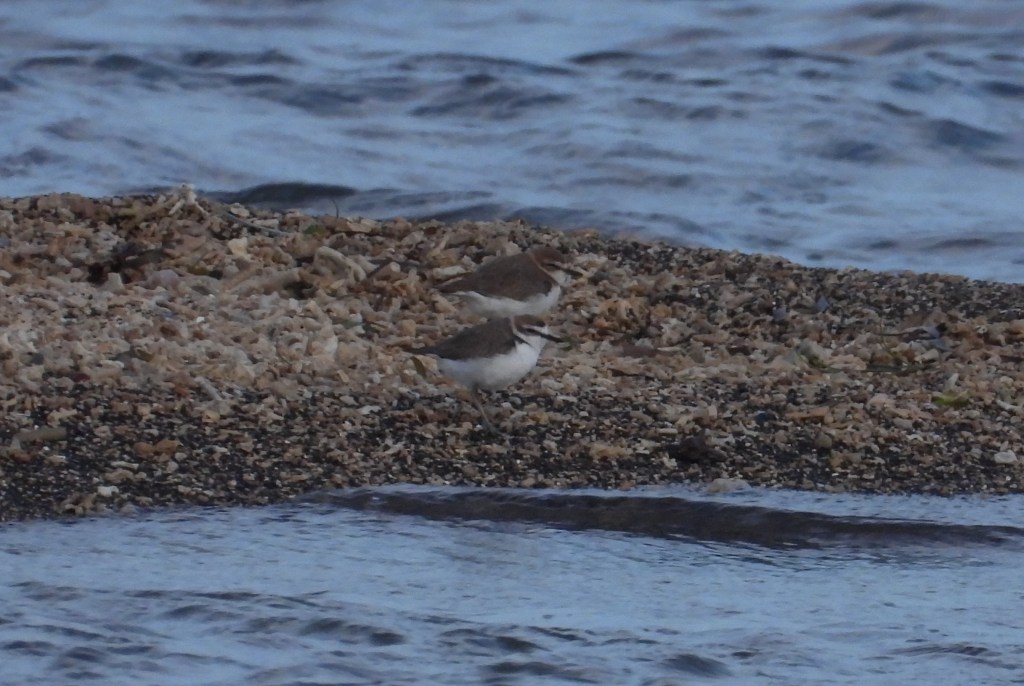
We also spotted some shorebirds after the boat ride, including Javan Plovers and Gray-tailed Tattlers.

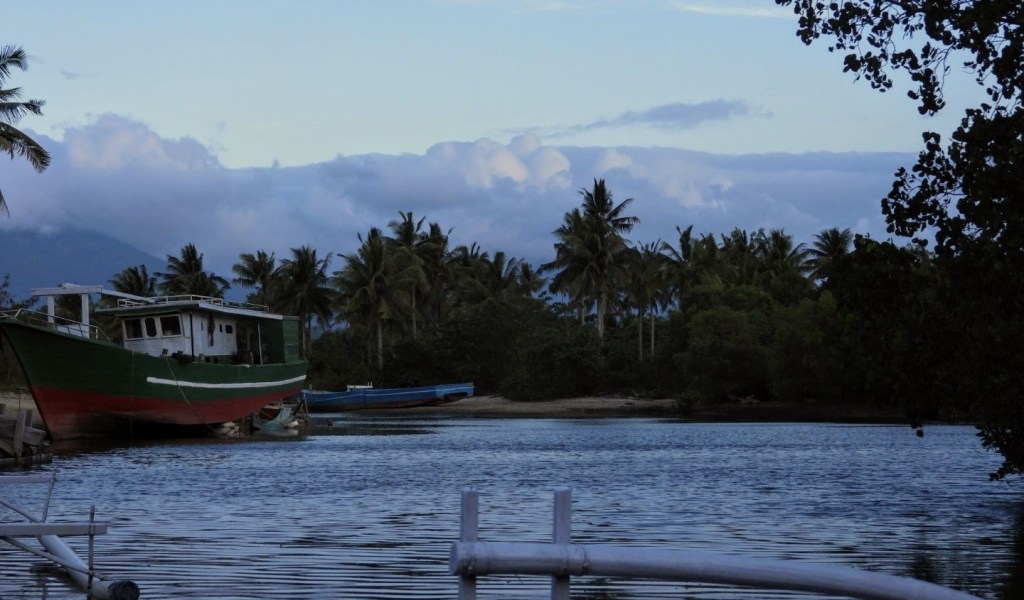
The scenery in the area was also beautiful and had the classic tropical island look thanks to the sandy beaches and elegant palm trees. Many people who visit Sulawesi do so to dive and enjoy the beaches.
Our next destination was Halmahera, home to the first of the Birds of Paradise we would see on the tour.
 Peace Country Naturalist