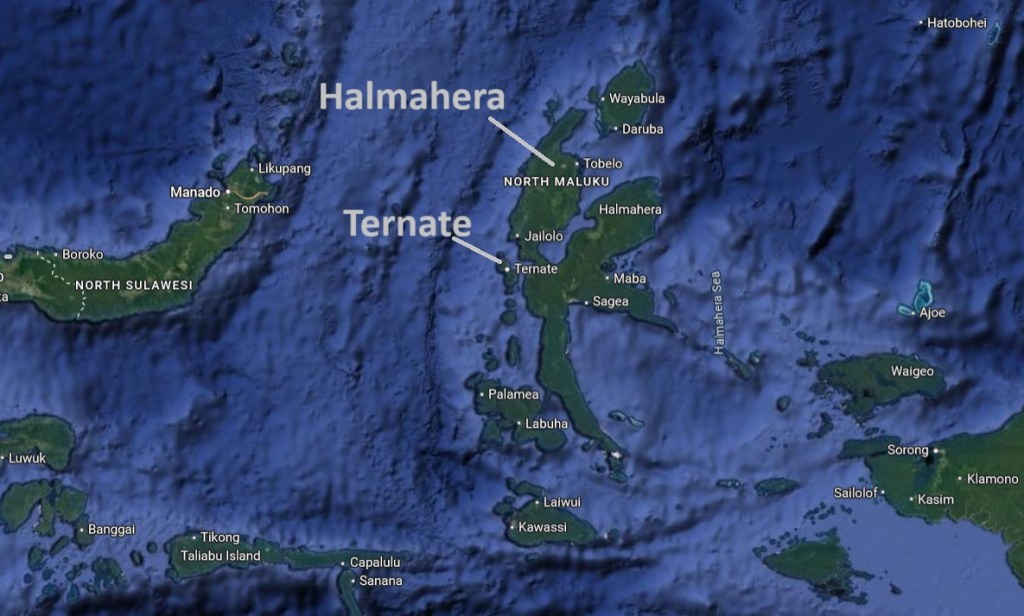
The next stop on the tour was the island of Halmahera, which was formerly called Gilolo.
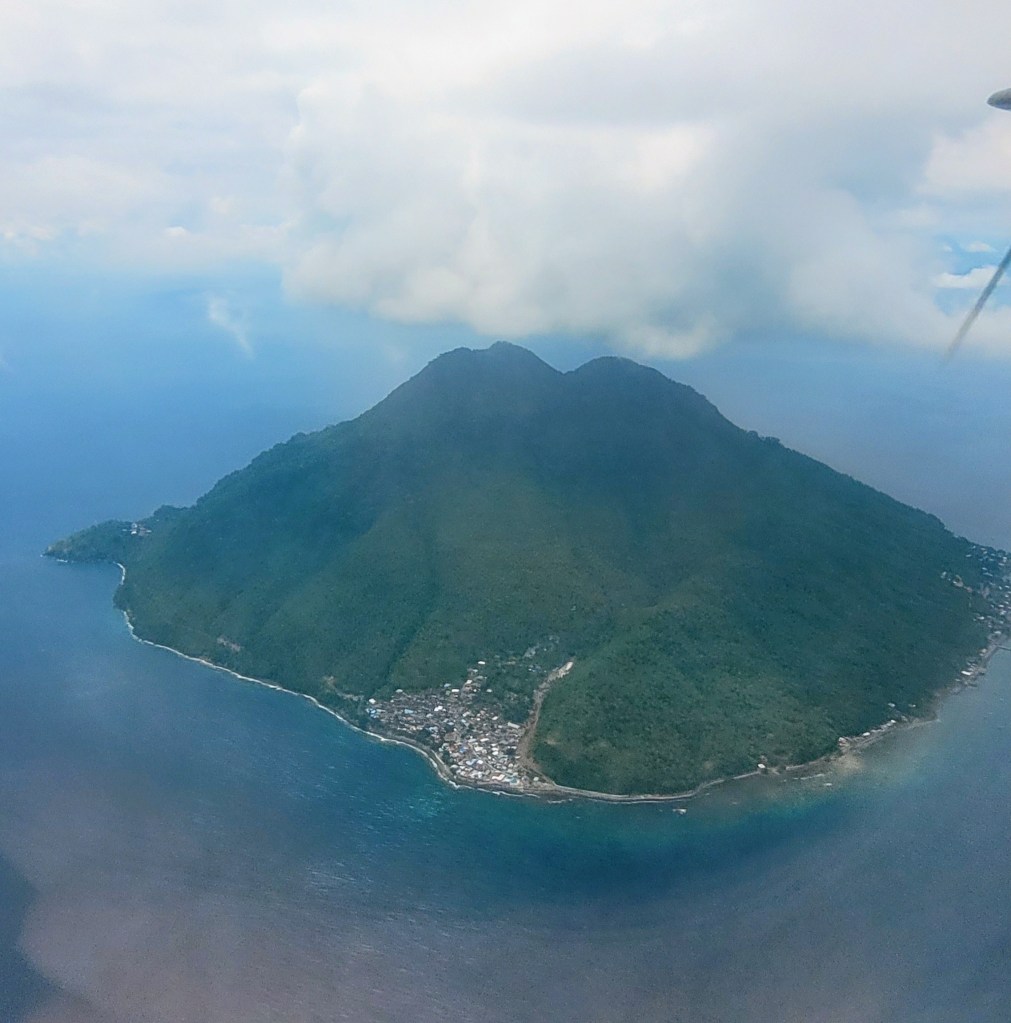
Getting to Halmahera is a bit of a process. There aren’t any major airports on the island itself, so first you have to fly to the city of Ternate, on the island of the same name. Ternate is a volcanic island and has the classic volcano cone shape with a crater at the top. It’s surrounded by other volcanic islands that you can see while flying in. I’d highly recommend that anyone flying to or from Ternate try to get a window seat. The view is incredible!
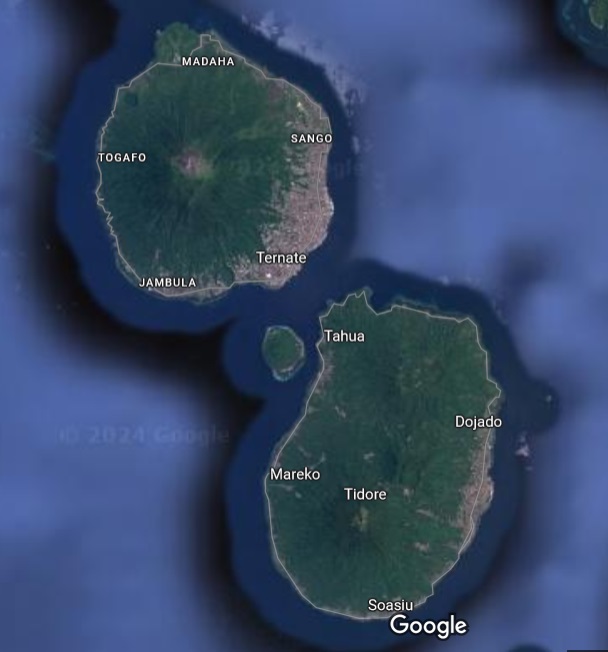
Alfred Wallace had spent a lot of time on Ternate and one building that is claimed to be the house he stayed in is now a pet shop. While in Ternate, he became very ill, likely with malaria. While bedridden with malaria, legend has it that his thoughts turned to Malthus’ essay on human population growth. Wallace came to the realization that Malthus’ logic could be applied even more so to populations of wild animals. From there, he worked out his theory of evolution by natural selection. He wrote an essay about his ideas and sent it to Charles Darwin, who he had met previously at a museum. That ultimately pushed Darwin to publish his seminal work on evolution.
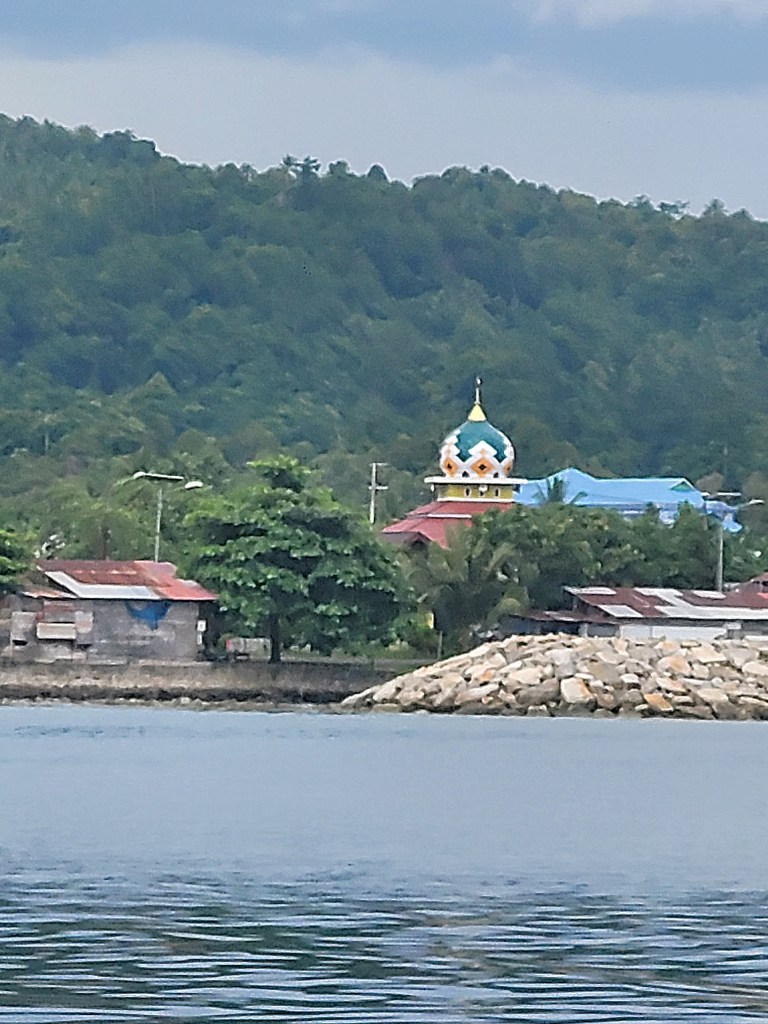
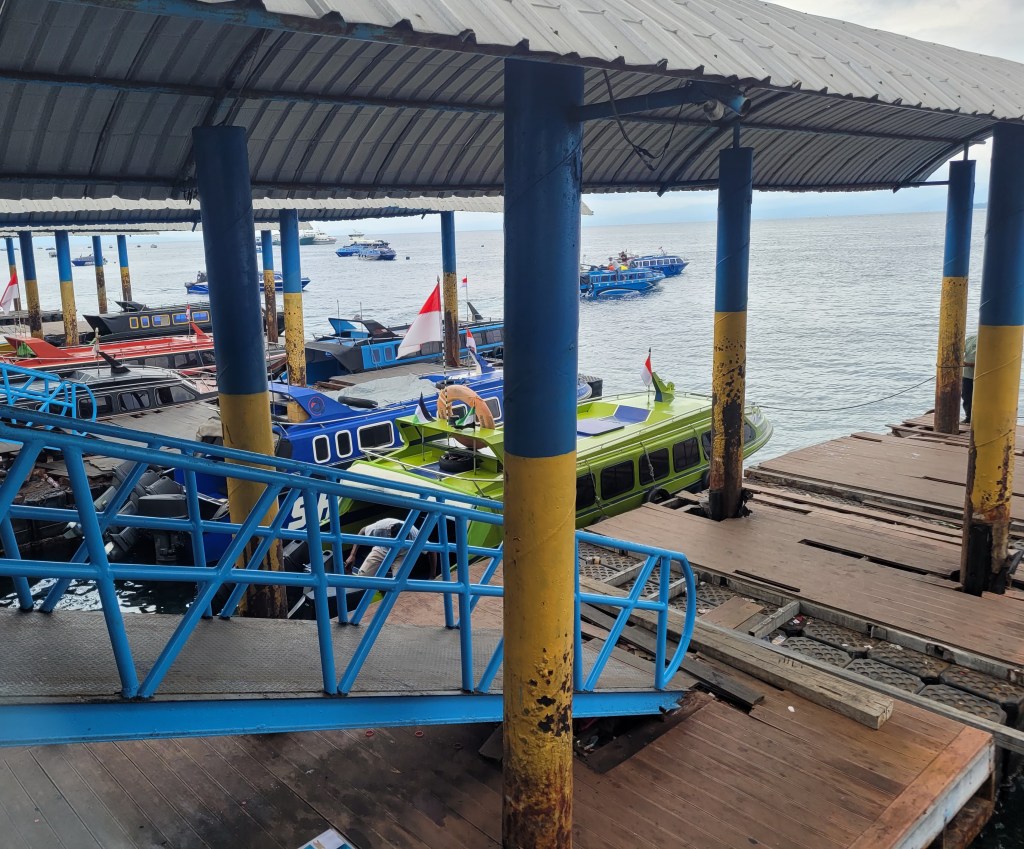
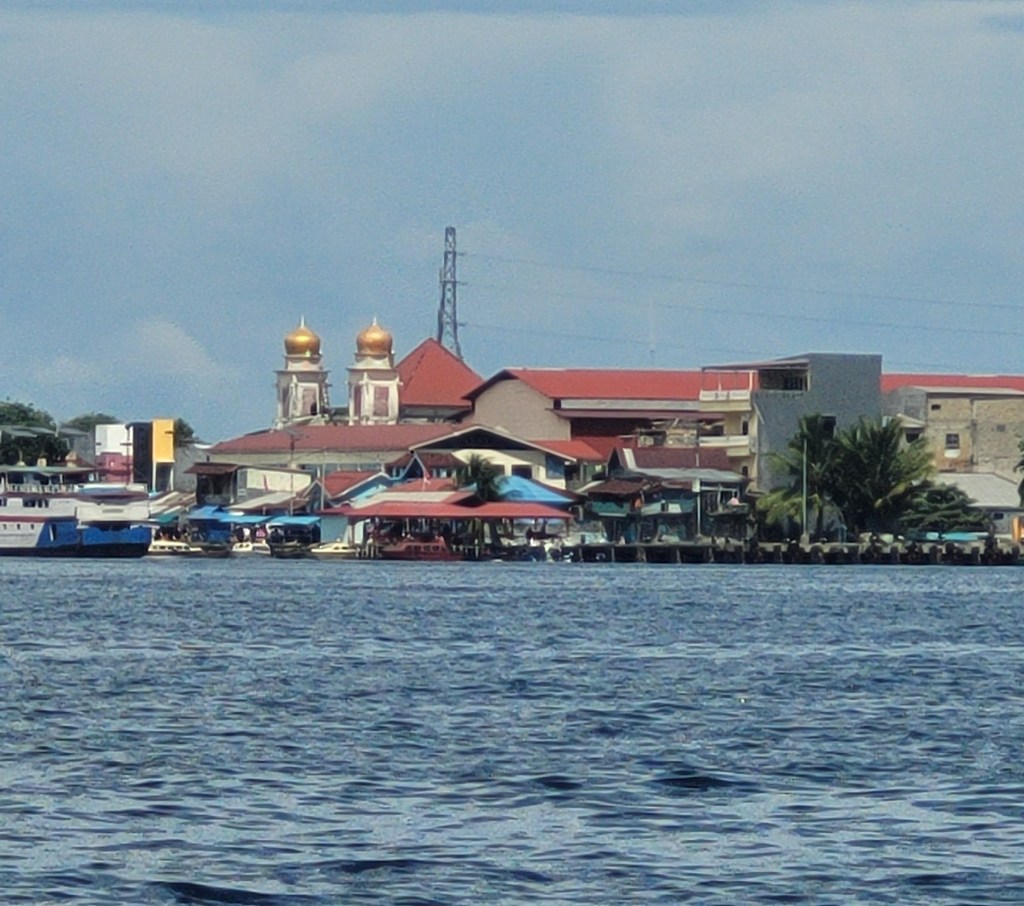
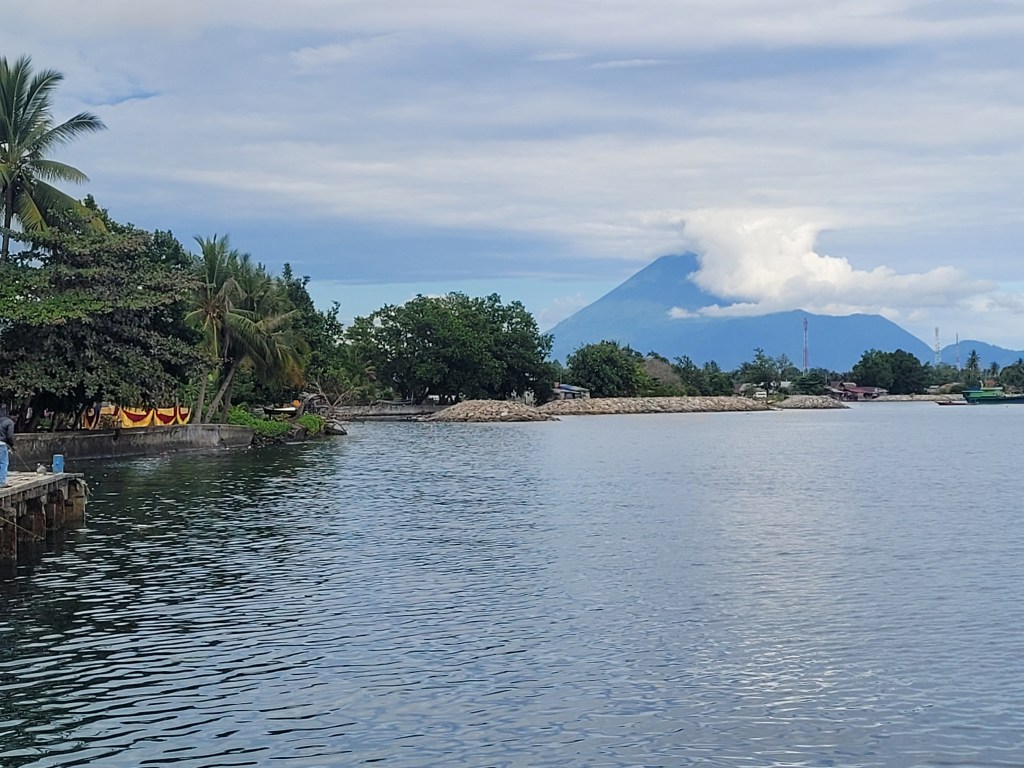
The group I was with had lunch at a busy restaurant on Ternate and then headed to the docks to take a speedboat ride to Sofifi, a town on Halmahera. Ternate itself is a very colorful city with a lot of beautiful buildings, so I tried to get a lot of photos of it from the boat but the ride was bumpy so that was a bit difficult. I loved the colorful domes that topped many of the mosques.

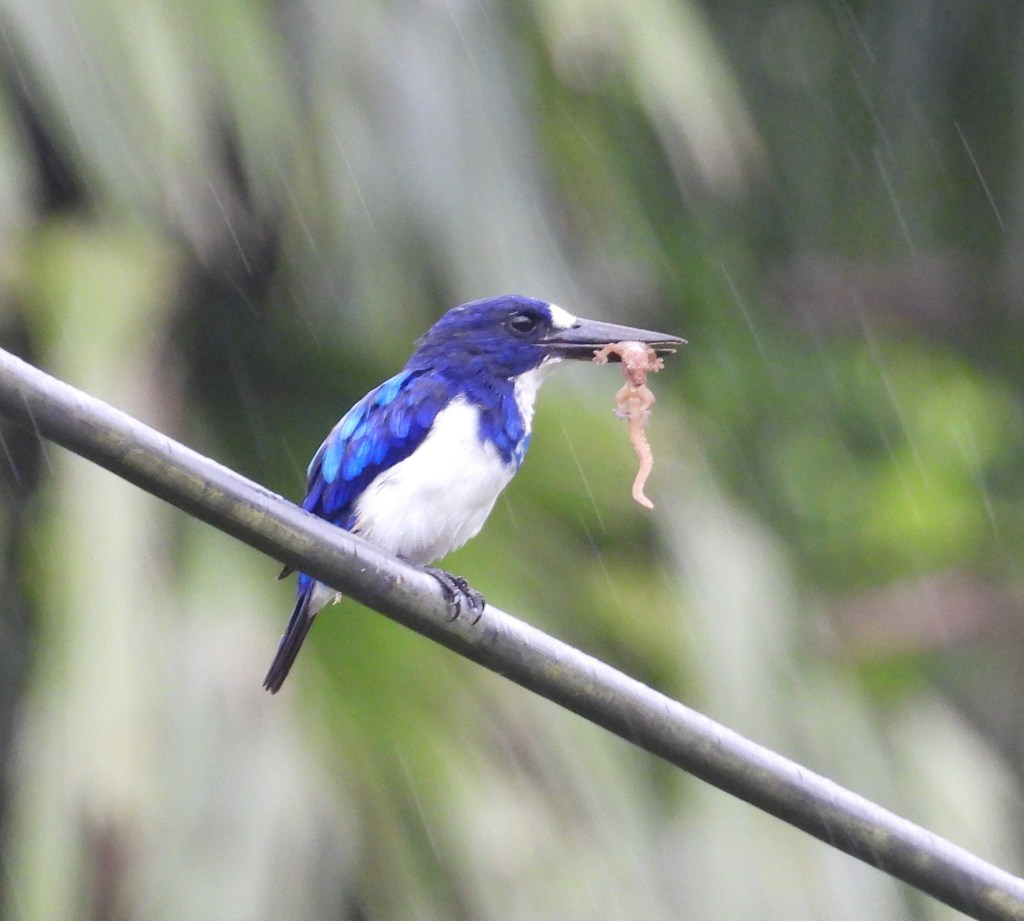
After our speedboat arrived on Sofifi, we were driven to the Subaim area. This was, again, a wild ride. People drive very fast on Halmahera! It was a four-hour drive to Subaim so we didn’t have too much time for birding but we did stop to view a beautiful Blue-and-White Kingfisher that was perched on a wire.
The next day, we had to get up very early (3:30 AM) to arrive at the Standardwing lek site in time to view the birds. They were there when we arrived but were difficult to see because they display above the canopy, which is very high off the ground. I don’t have any photos of them, but I scanned the below painting of Standardwings, which is from the annotated version of the Malay Archipelago, which was published in 2015 by the University`of Singapore. The painting is by Dutch bird illustrator Johannes Keulemans.
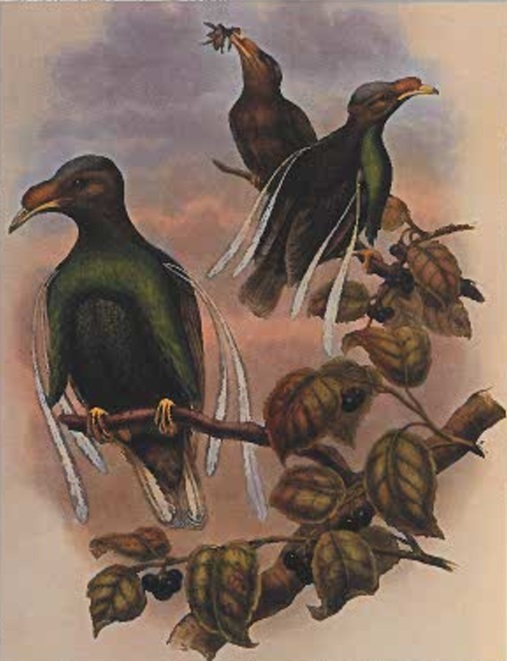
Wallace is often credited with discovering the Standardwing, but it would be more accurate to say that he first described it in a western scientific publication. His assistant, Ali, first found and shot a specimen, which he then brought to Walace. Wallace did recognize the bird as being something quite special. As he wrote in The Malay Archipelago:
I now saw that I had got a great prize, no less than a completely new form of the Bird of Paradise, differing most remarkably from every other known bird. The general plumage is very sober, being a pure ashy olive, with a purplish tinge on the back; the crown of the head is beautifully glossed with pale metallic violet, and the feathers of the front extend as much over the beak as in most of the family. The neck and breast are scaled with fine metallic green, and the feathers on the lower part are elongated on each side, so as to form a two-pointed gorget, which can be folded beneath the wings, or partially erected and spread out in the same way as the side plumes of most of the birds of paradise. The four long white plumes which give the bird its altogether unique character, spring from little tubercules close to the upper edge of the shoulder or bend of the wing.
As can be deduced from Wallace’s description, the Standardwing is a very striking bird and differs greatly in appearance from the other Birds of Paradise. During their aerial displays, they will fly upwards and then parachute back down to earth, with their green breast shields spread out and their white plumes streaming behind them. It’s an incredible sight to see.
We ran into a neat bonus animal on the hike out of the Standardwing area: a Batjan Frog-eating Snake. This is a non-venomous species.

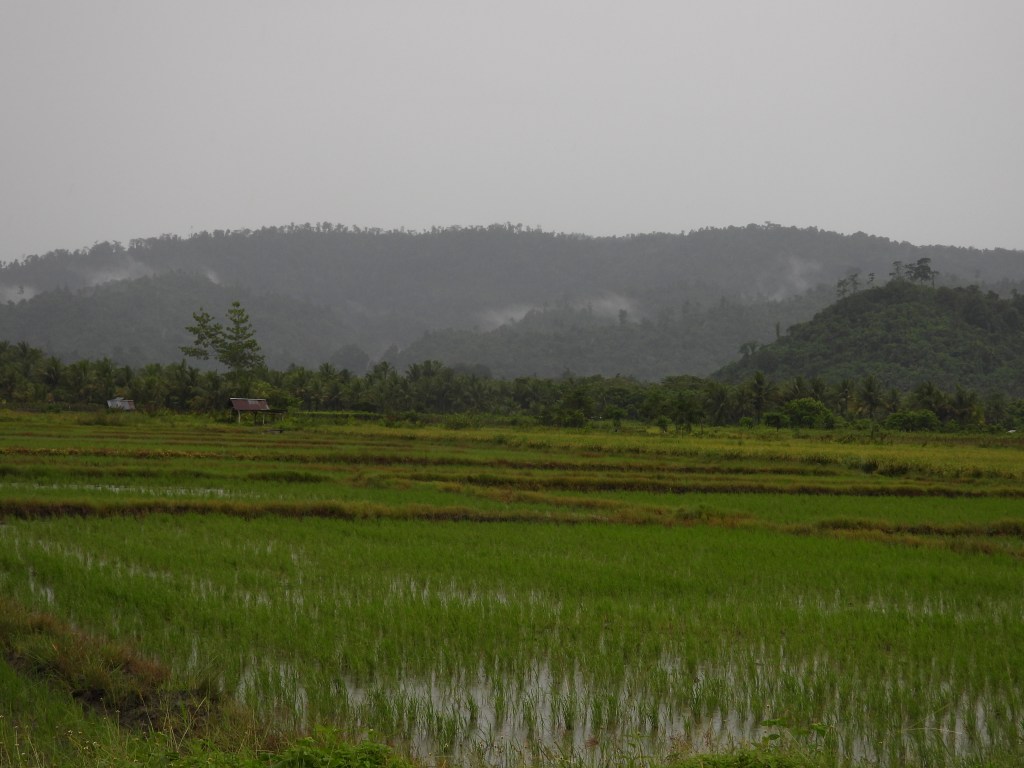
There was a lot of rain for the next day or so which put a damper on bird activity in the forests. We did spend time at a rice field, which was home to quite a few birds and some nice scenery. Such damp field fields often attract rails and shorebirds.
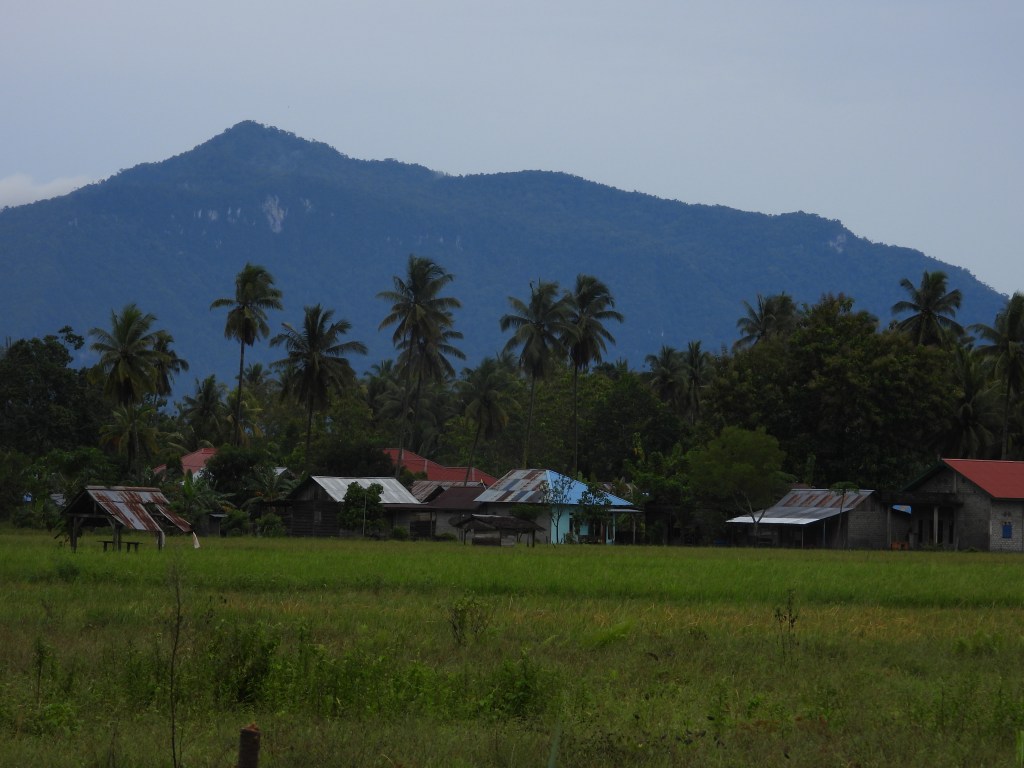
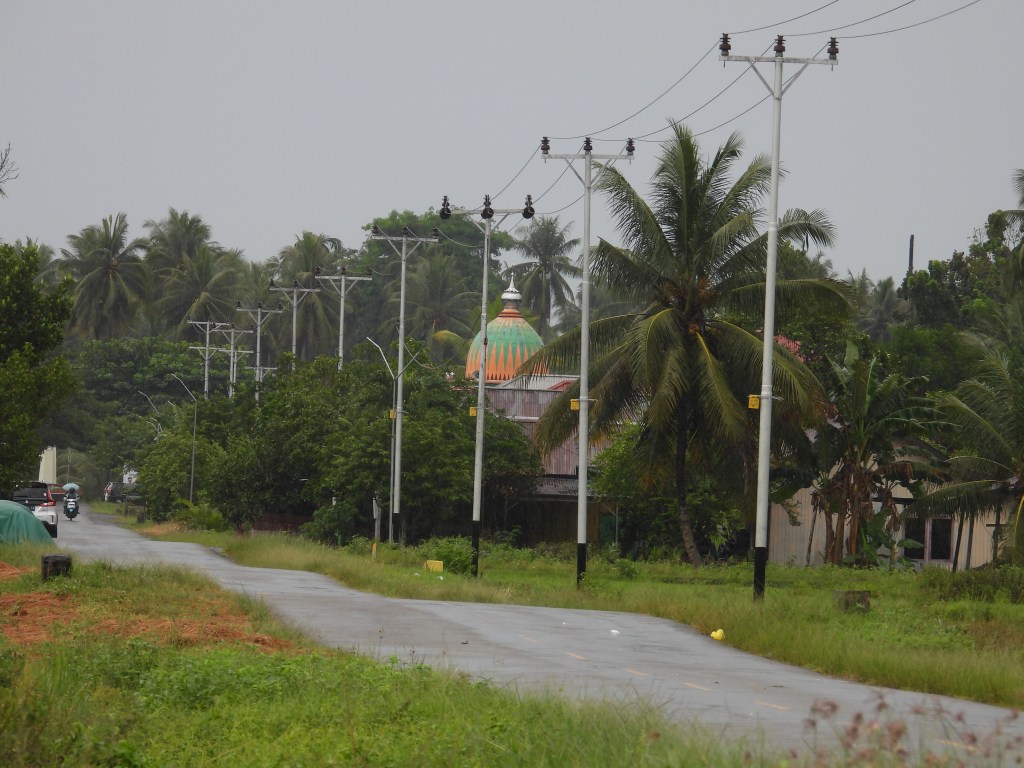
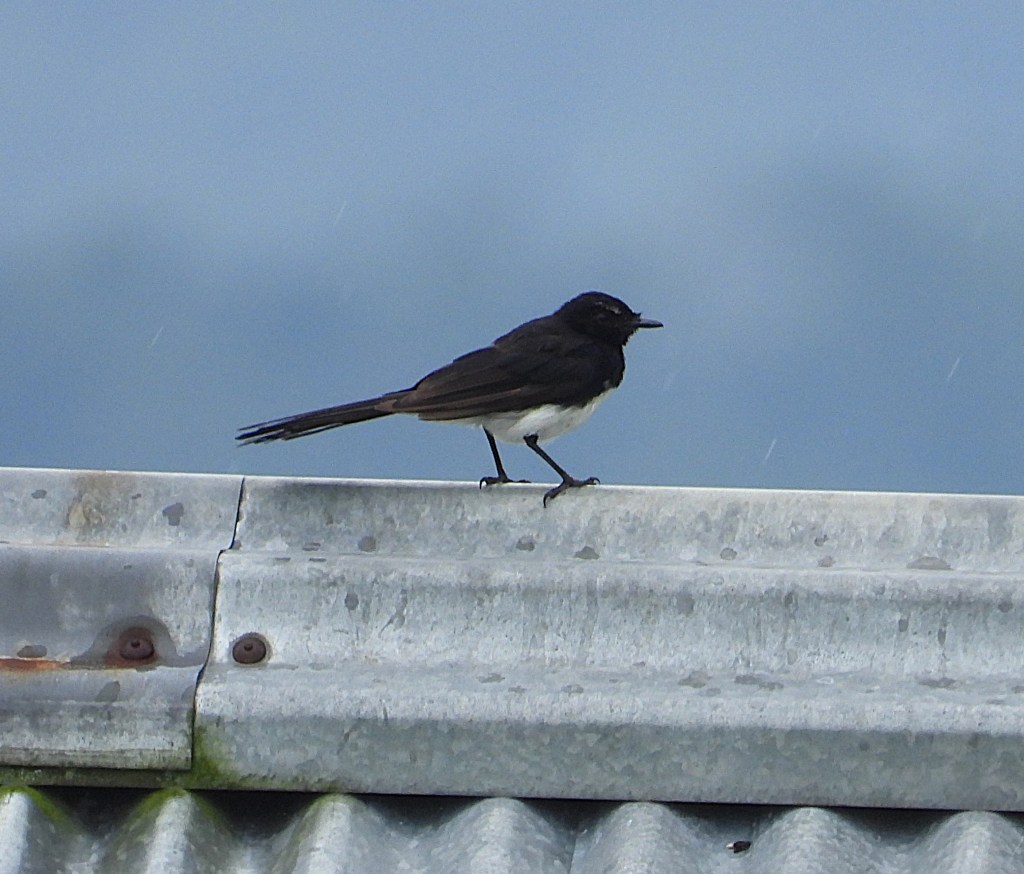
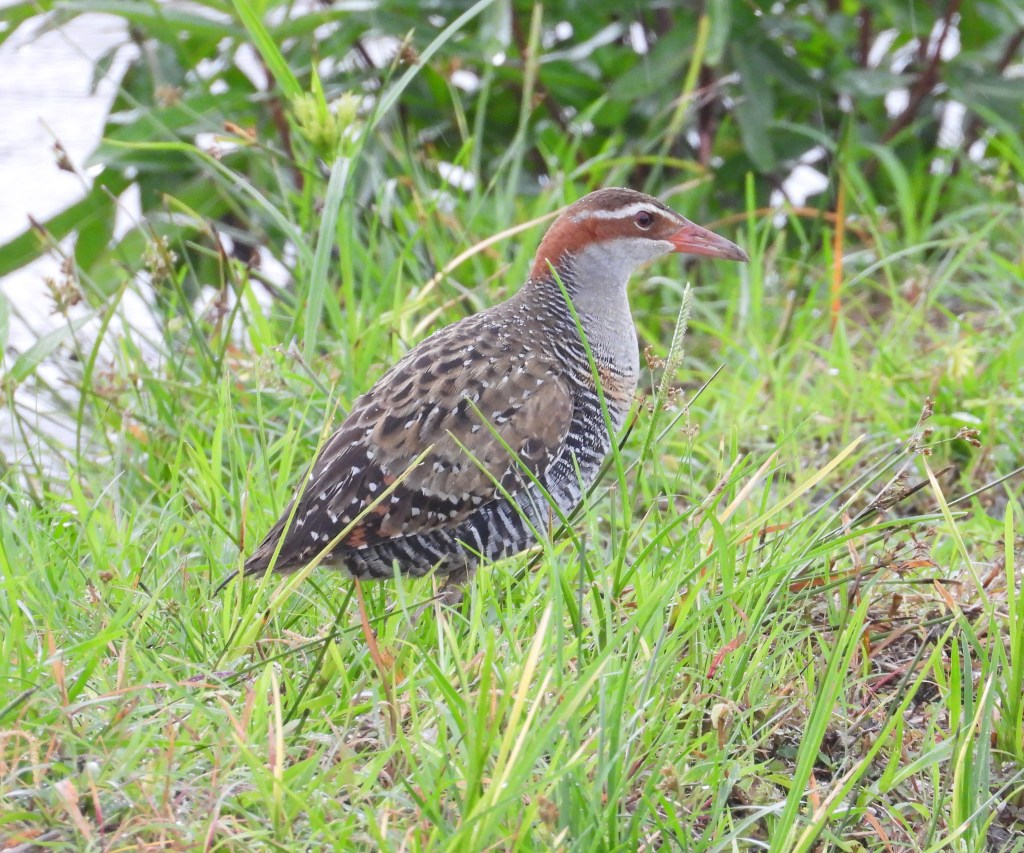
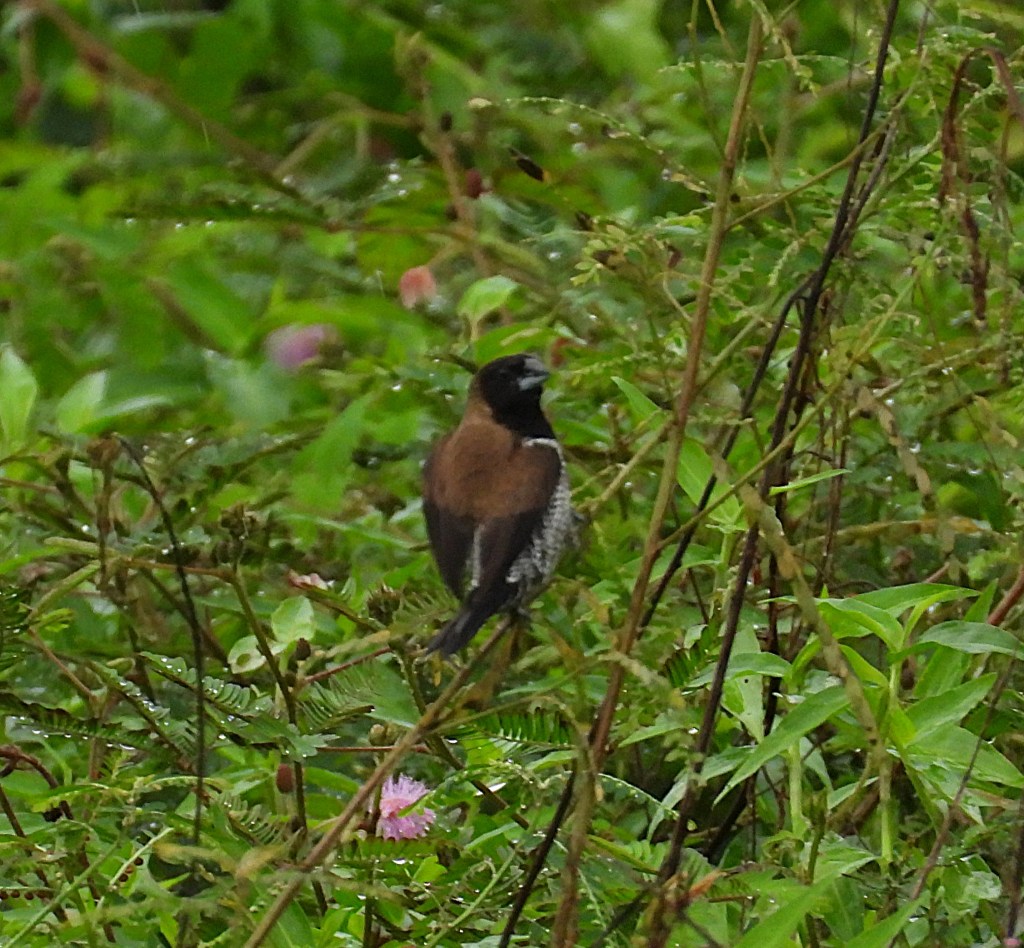


When the rain stopped, we were able to do some more forest birding. I don’t have too many pictures of the birds we saw as they were often far away, but I did capture the below pictures of Blyth’s Hornbills.
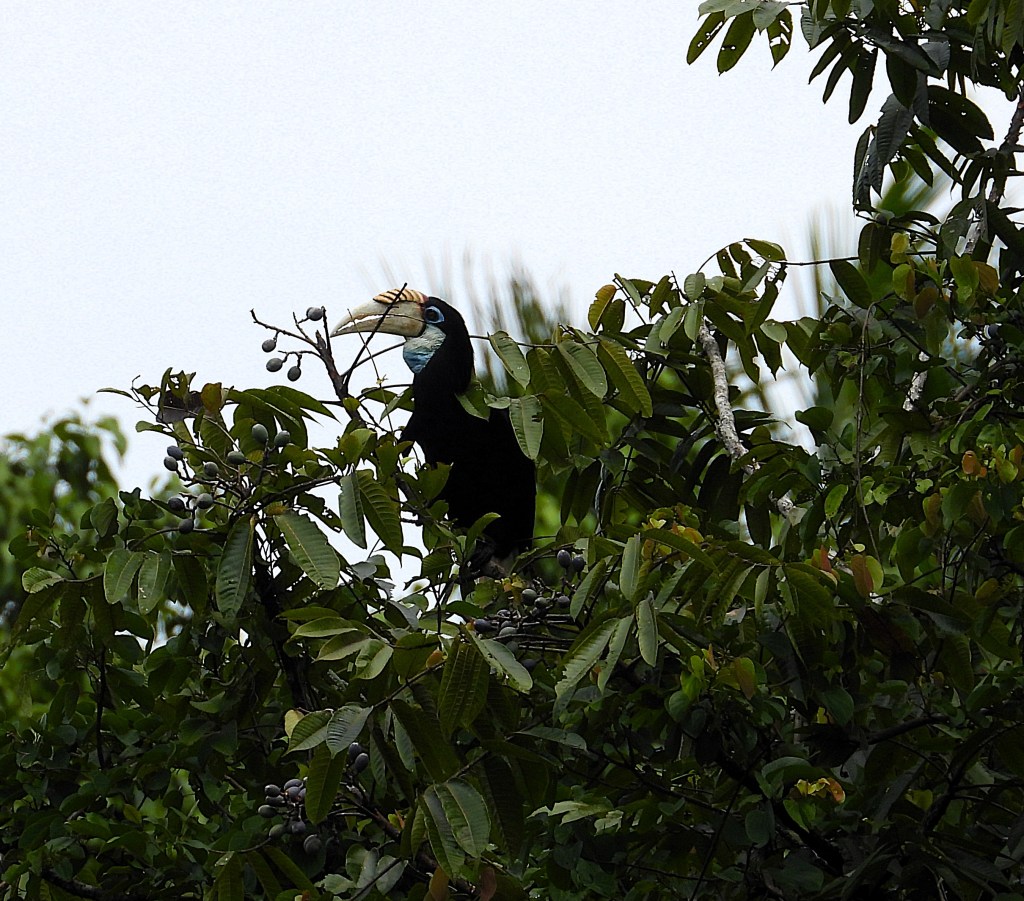
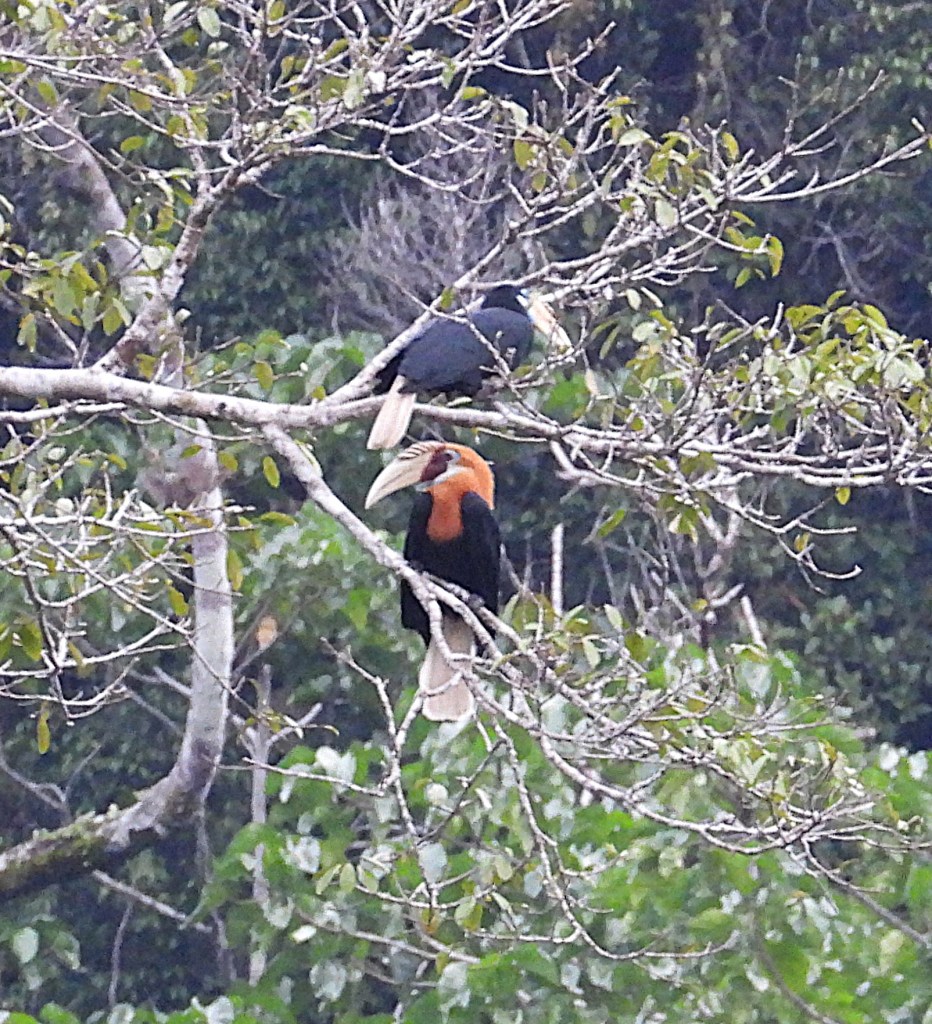
More birds and other animals:

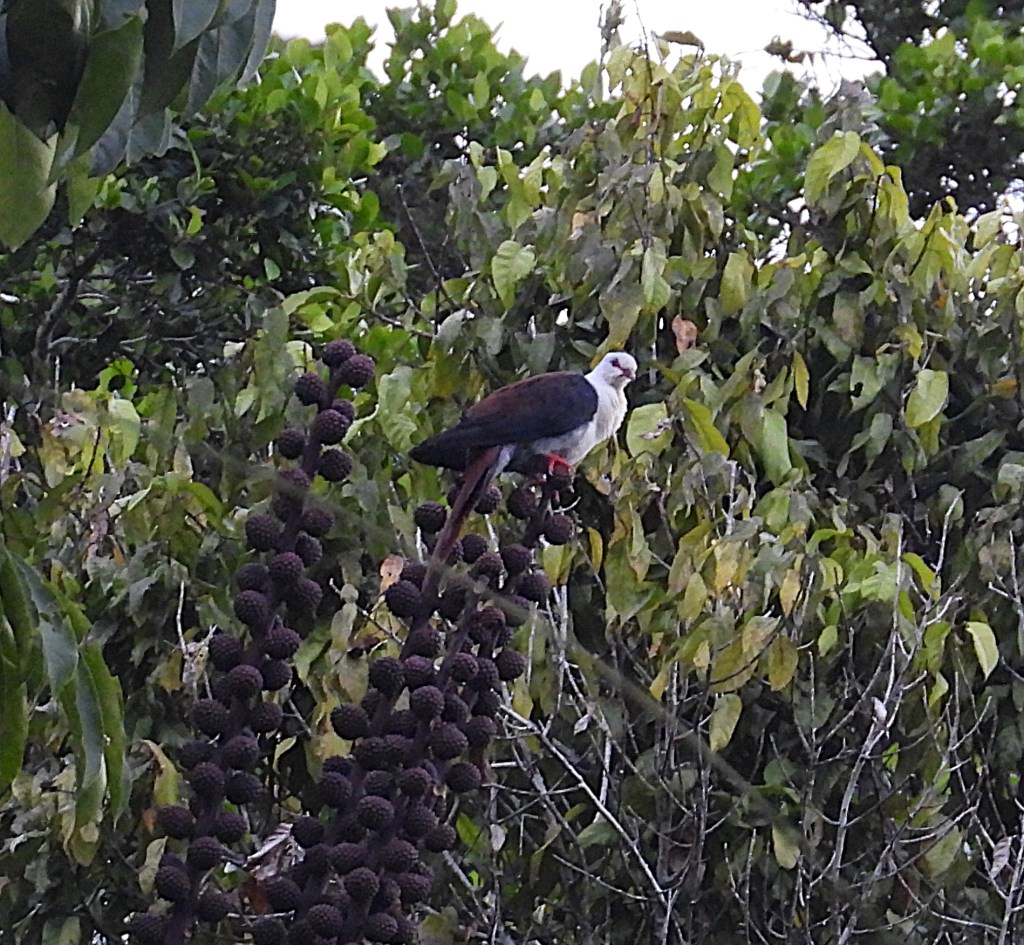
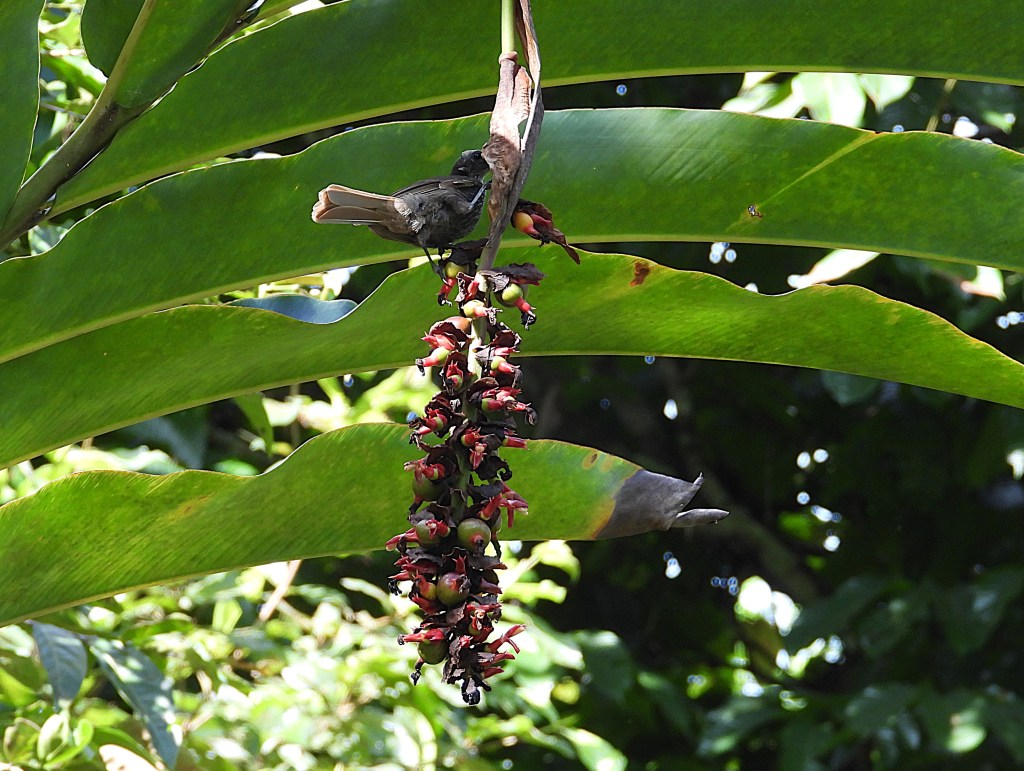
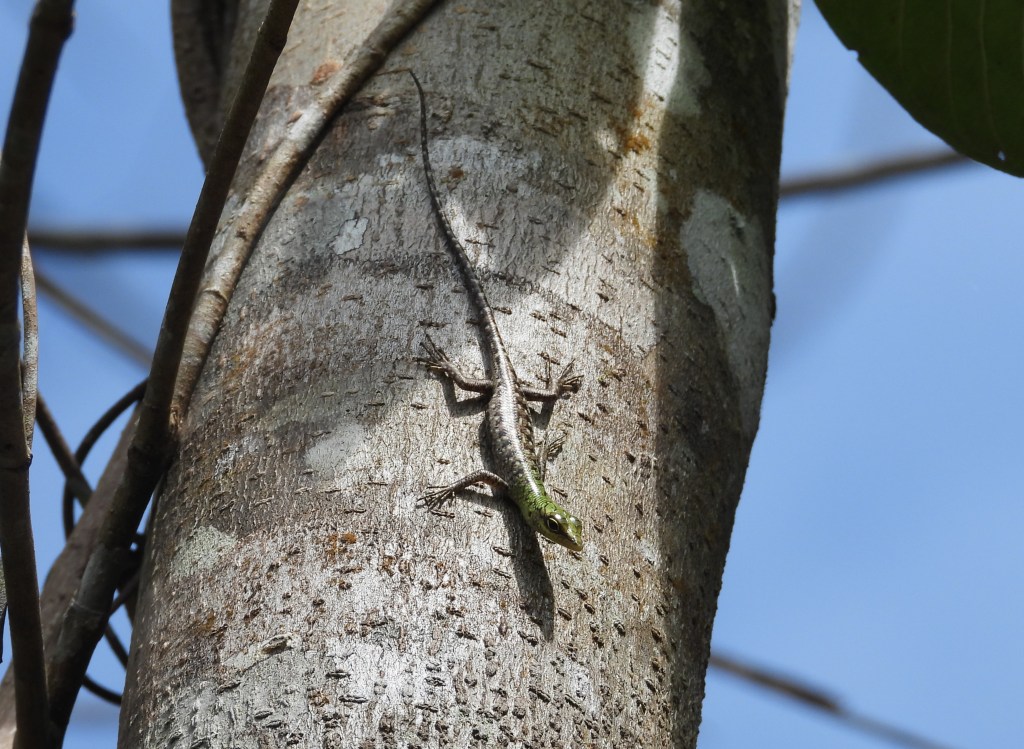

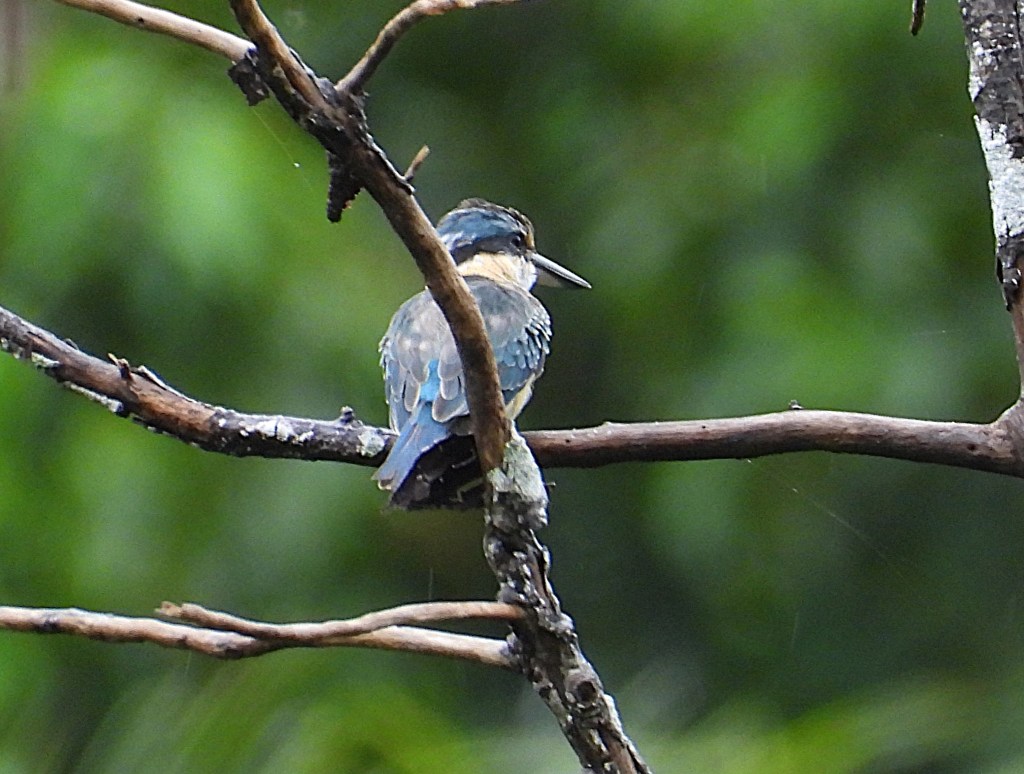
We ran into a group of Taiwanese birders along the road and some Indonesian teens on motorbikes who stopped to take selfies with us.
On the way back to Ternate, we stopped at a park (Aketajawe-Lolobata National Park) to seek out the Ivory-breasted Pitta. Park rangers had a blind set up at a clearing in the forest that these birds frequent. The guides also put out some chopped up Earth worms to attract a bird. After a bit of a wait, a pitta made an appearance:
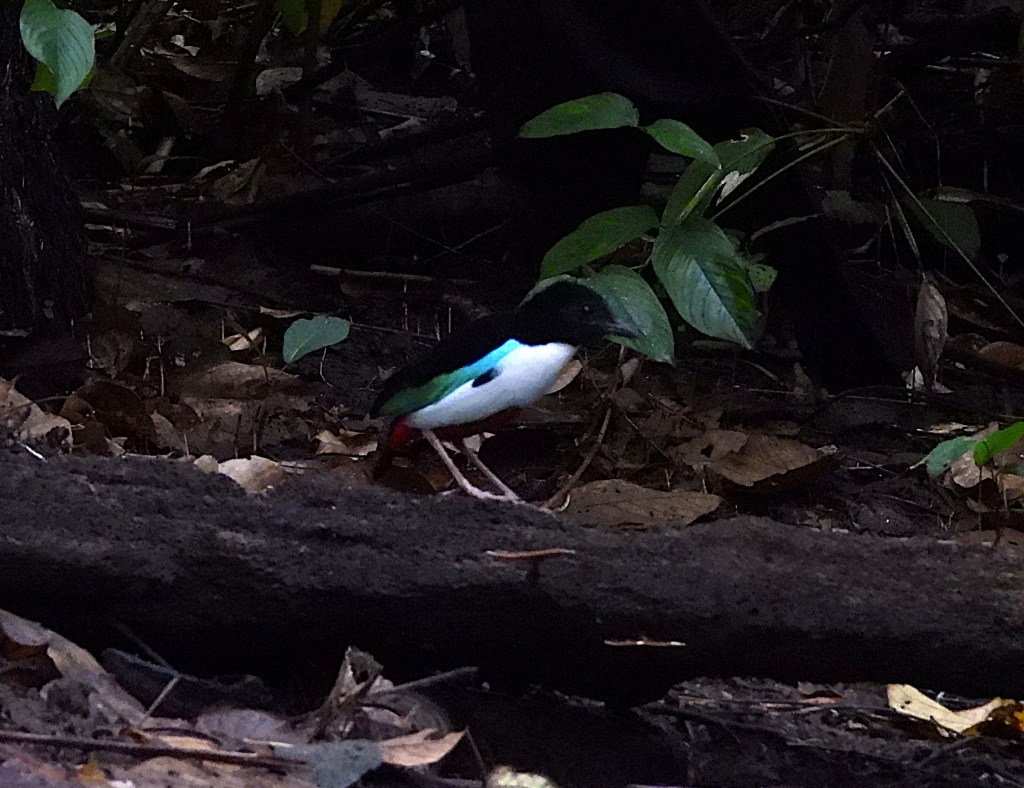
Seeing the pitta was a special experience because these birds are shy and live on the ground in dark, dense forests. Therefore, they are not easy to find. However, they are incredibly striking when they do show up, as their bright colors really stand out against the dark backdrops of the environments they live in.
There were a lot of other spectacular birds flying about the area, including an Umbrella Cockatoo, but they were difficult to photograph. I wouldn’t have minded spending more time in this area, but I suppose the tour was already quite long.
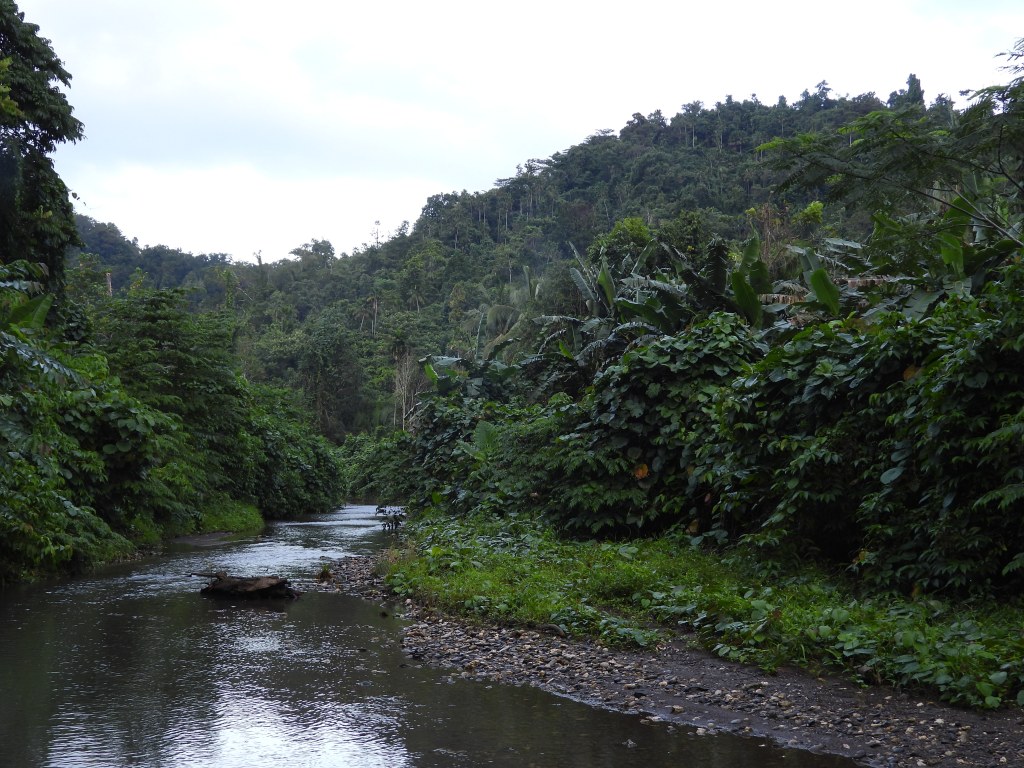
Next up we headed to the West Papua region!
 Peace Country Naturalist