My primary reason for heading to eastern Indonesia was to have the opportunity to view species in the family Paradisaeidae – i.e, the Birds of Paradise. These birds have always had a near-mythical status to me. I have studied and admired them from books and videos but actually seeing one has long seemed out of reach, given where they occur.
However, it eventually seemed like traveling to Indonesia/New Guinea was something I could make happen. It’s not a place I’d travel around in completely alone but there are a few companies that offer tours. So, I signed up for a tour.
The first few Birds of Paradise we saw included the Standardwing, Twelve-wired, King, and Magnificent Birds of Paradise. I had also seen the Magnificent Riflebird on a previous trip to northern Australia. But the best were left for last – the Red and Wilson’s Bird of Paradise on Waigeo. The views we got of these birds were absolutely incredible and we saw both male and female birds.
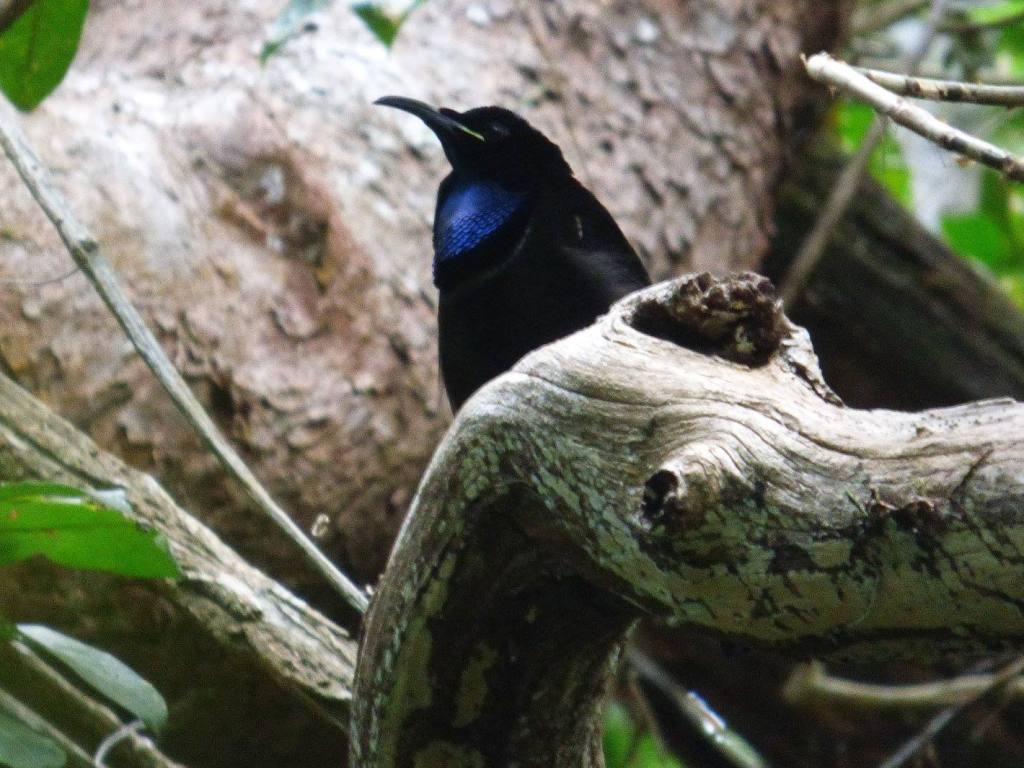
On Waigeo, we got up very early to hike up to a double-storied blind to view the Red Birds of Paradise. I have to commend the people who built that blind where they did – they would have had to haul a lot of wood up a steep and sometimes muddy trail.
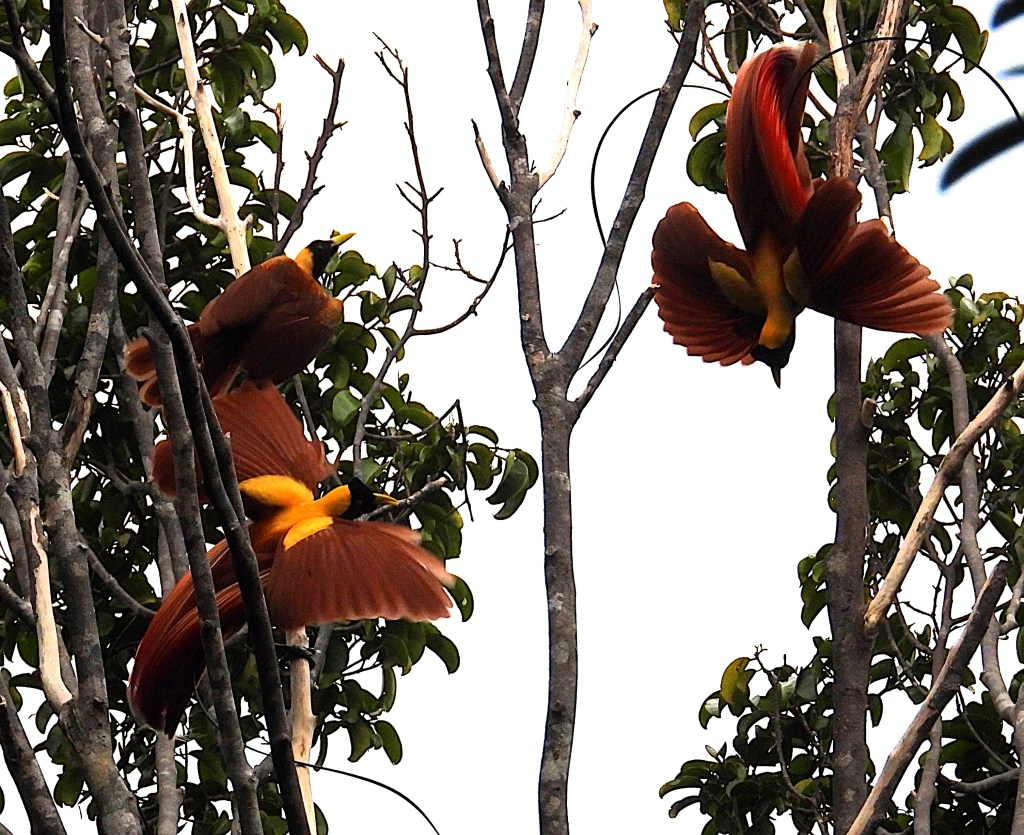
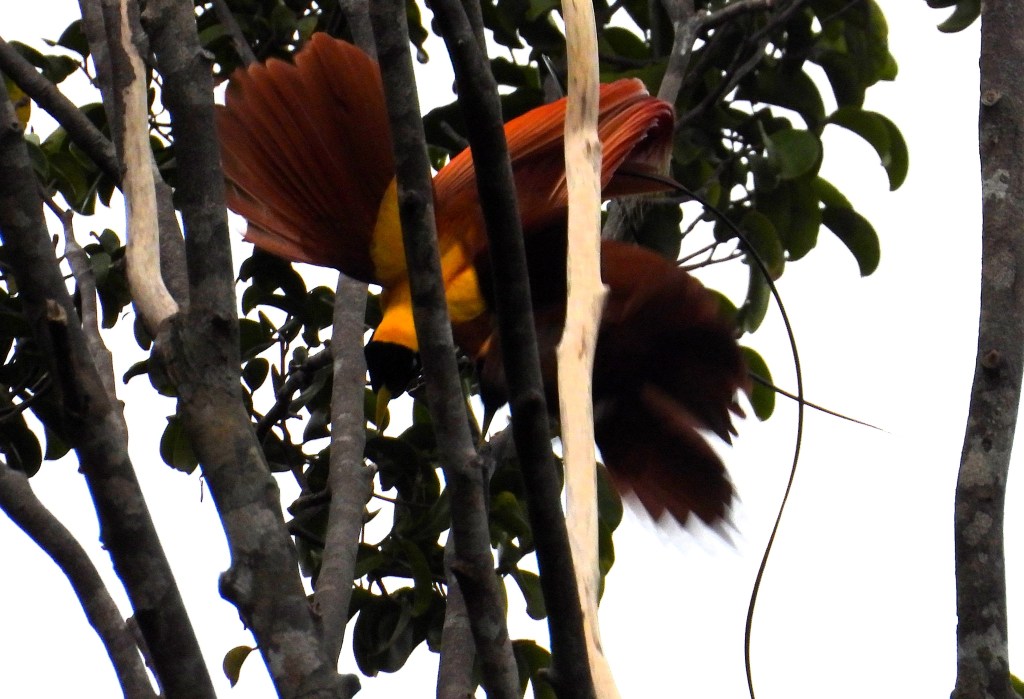
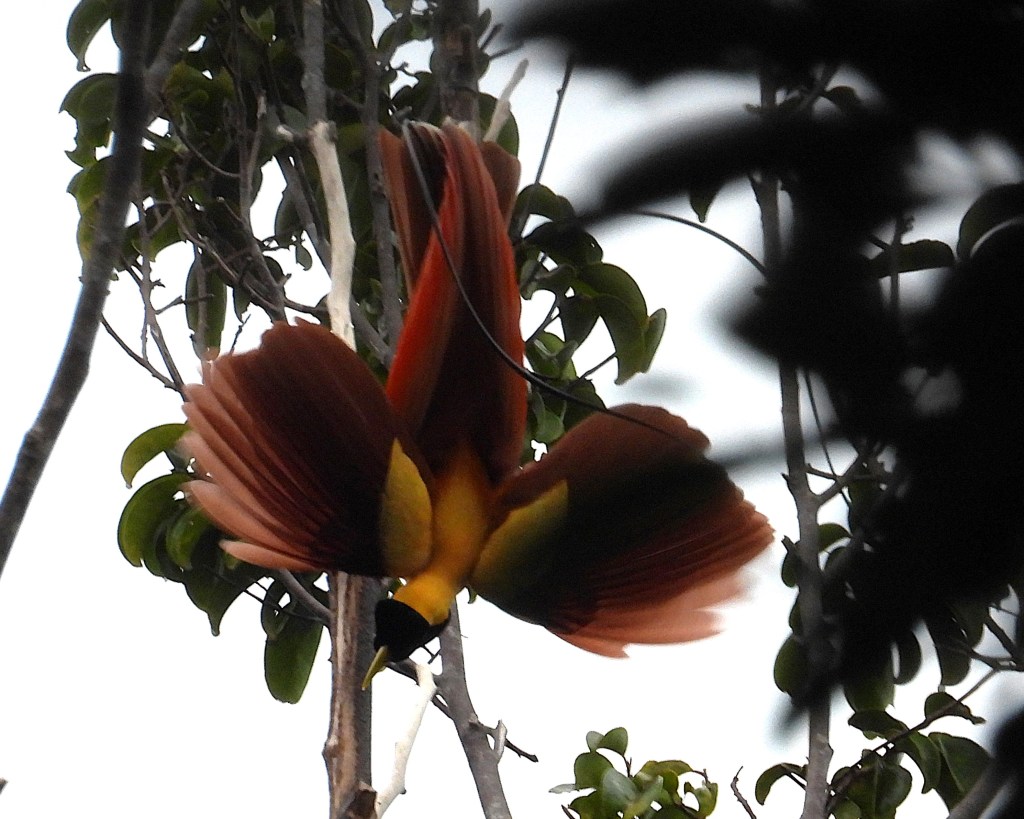
The view from the top story of the blind just stunned me. As we arrived, several male birds were already there, displaying their resplendent red finery to the visiting females. Right away, I could see two males dancing on a snag right in front of me. As I watched that spectacle in awe, I was told to look out the other blind slit. There, I saw a larger group of males courting a few females. It was incredible. Below is some of the footage I got with my camera.
Wow! I know they are ‘just’ birds, but their attitude and energy suggest that they know they are incredibly beautiful.
As can be seen in the video, the Red Birds of Paradise gather in noisy groups to display to visiting females. This is called a “lek” mating system. It has many advantages for the females in particular. When they are ready to mate, they can visit the sites where the males gather so they can be courted by many males at once. They can then make their mate selection there. They do not have to travel throughout the forest to seek out many individual males before selecting one.
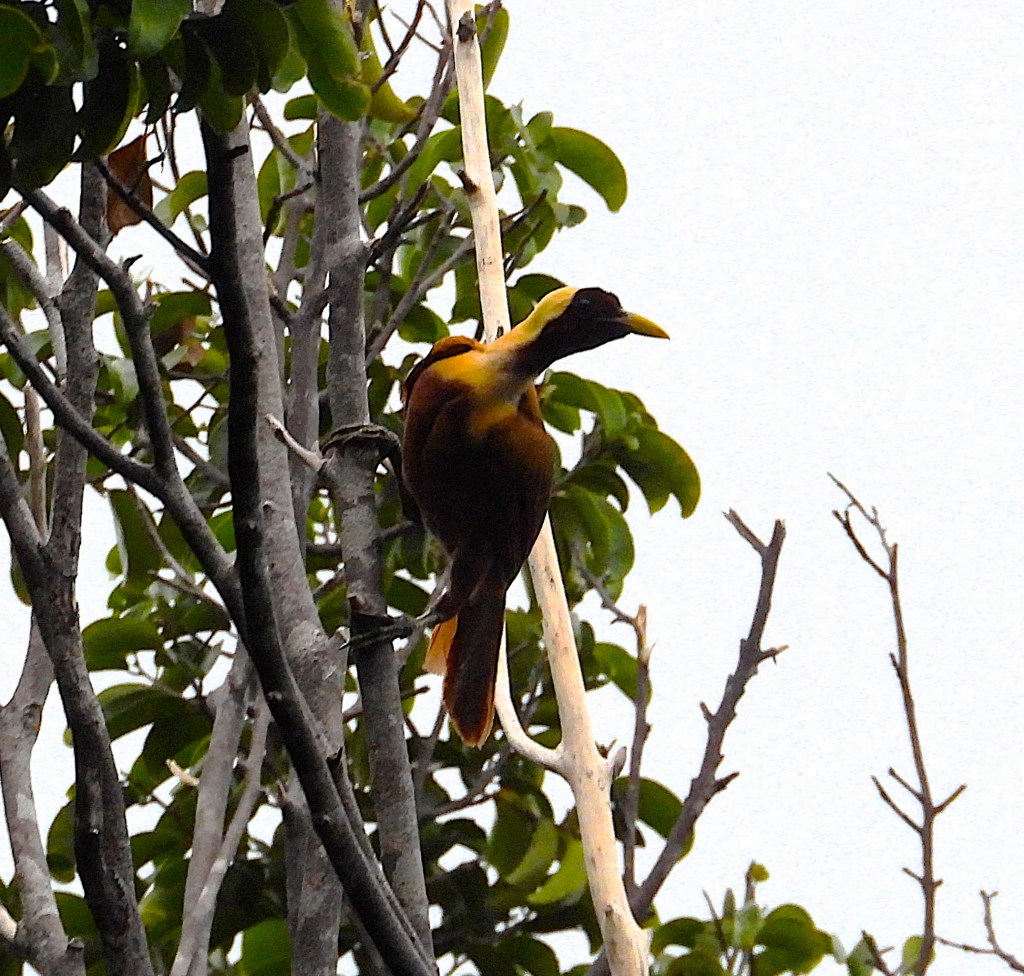
At leks, it’s quite typical for one male to receive the majority of matings. So, why do the unsuccessful males even bother showing up at the lek? In lek-breeding species, females will not mate with lone males – they have to be present in groups. So, the only way a male can ever mate is to participate in a lek. The most successful birds in a lek tend to be the older, experienced ones. When they die, the younger birds can move up in the rankings, so to speak, and get their chance to become successful. It can take a long time for a male bird of paradise to get a chance to mate. Young males initially look like females and, in some species, it may take up to seven years for one to become fully mature.
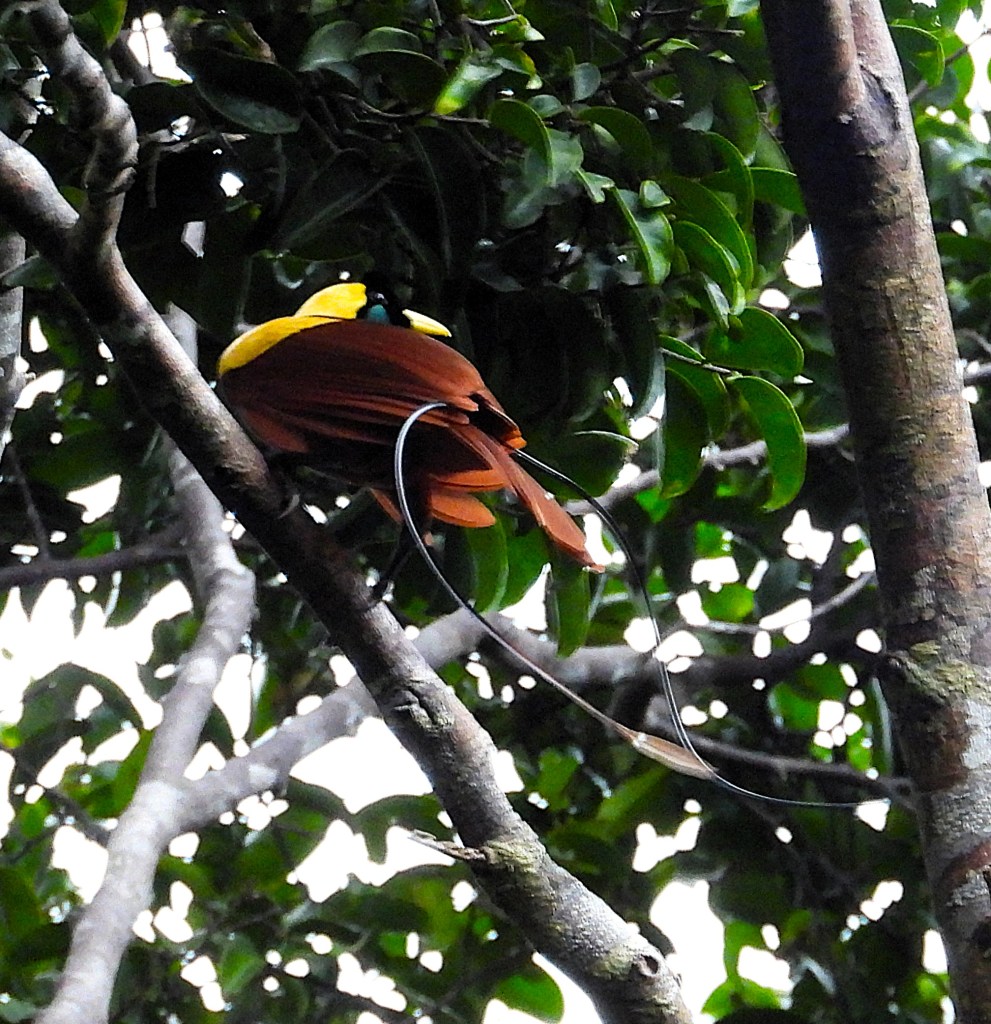
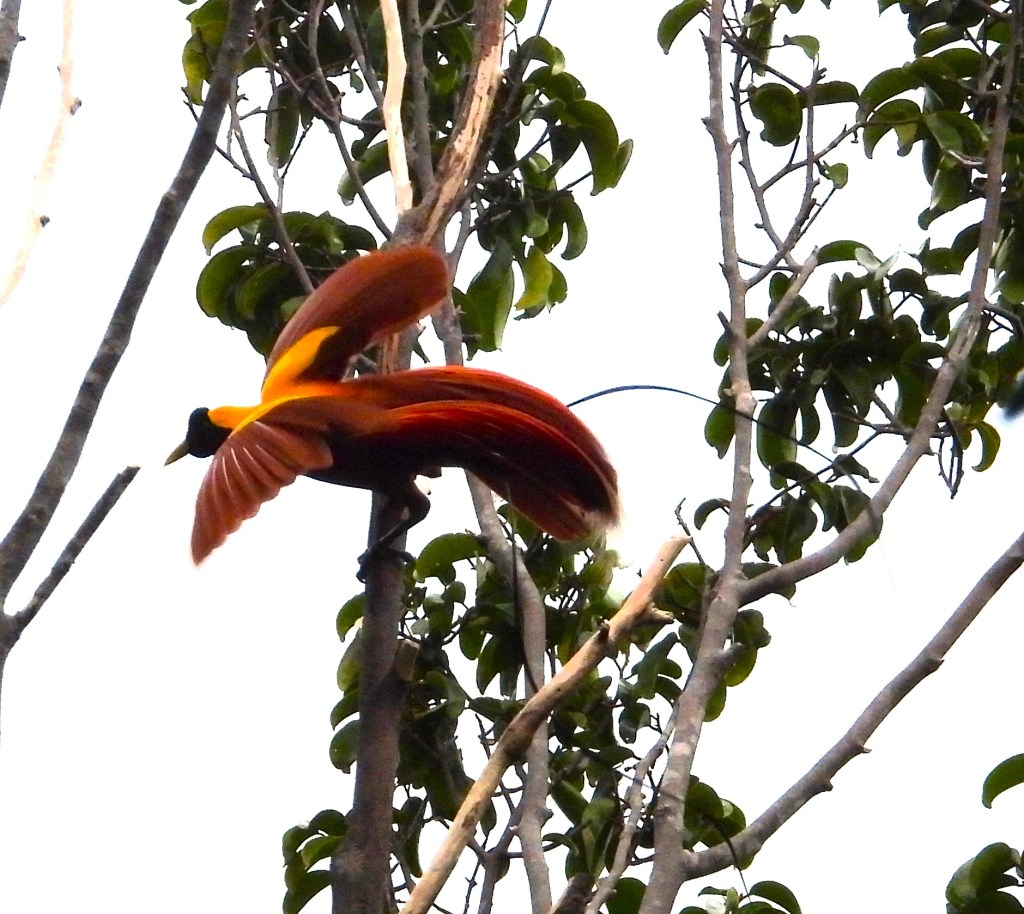
Here are some more photos of these incredible birds:
After viewing the wonderful Red Birds of Paradise, we hiked over to a different blind to view the courtship arena of a Wilson’s Bird of Paradise. The Wilson’s Bird of Paradise is not a lekking species. Rather, individual males will clear themselves a courtship display area on the forest floor, where they wait for females to visit. They will keep this area clear of leaves and other debris, and the area will contain a vertical sapling the male can perch on.
Here, we were extremely lucky. The male was there when we showed up and a female showed up! Below is some footage I got of their courtship display:
Below are more pictures:
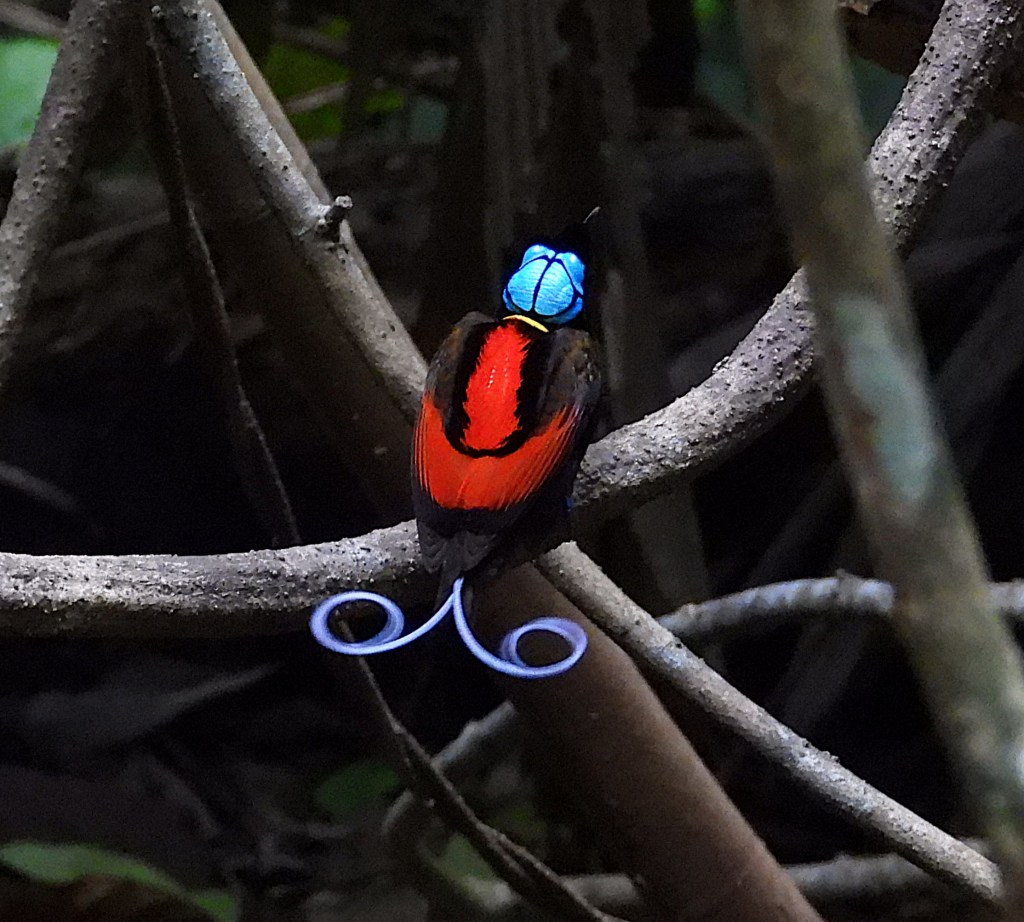
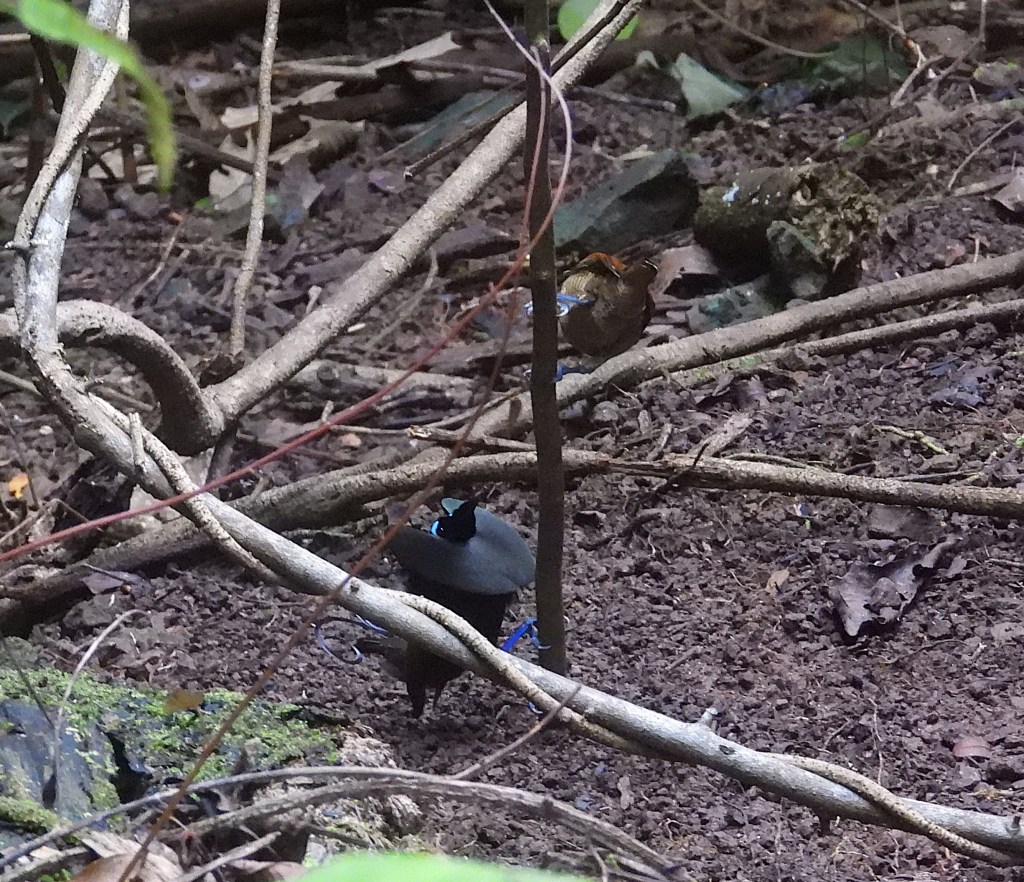
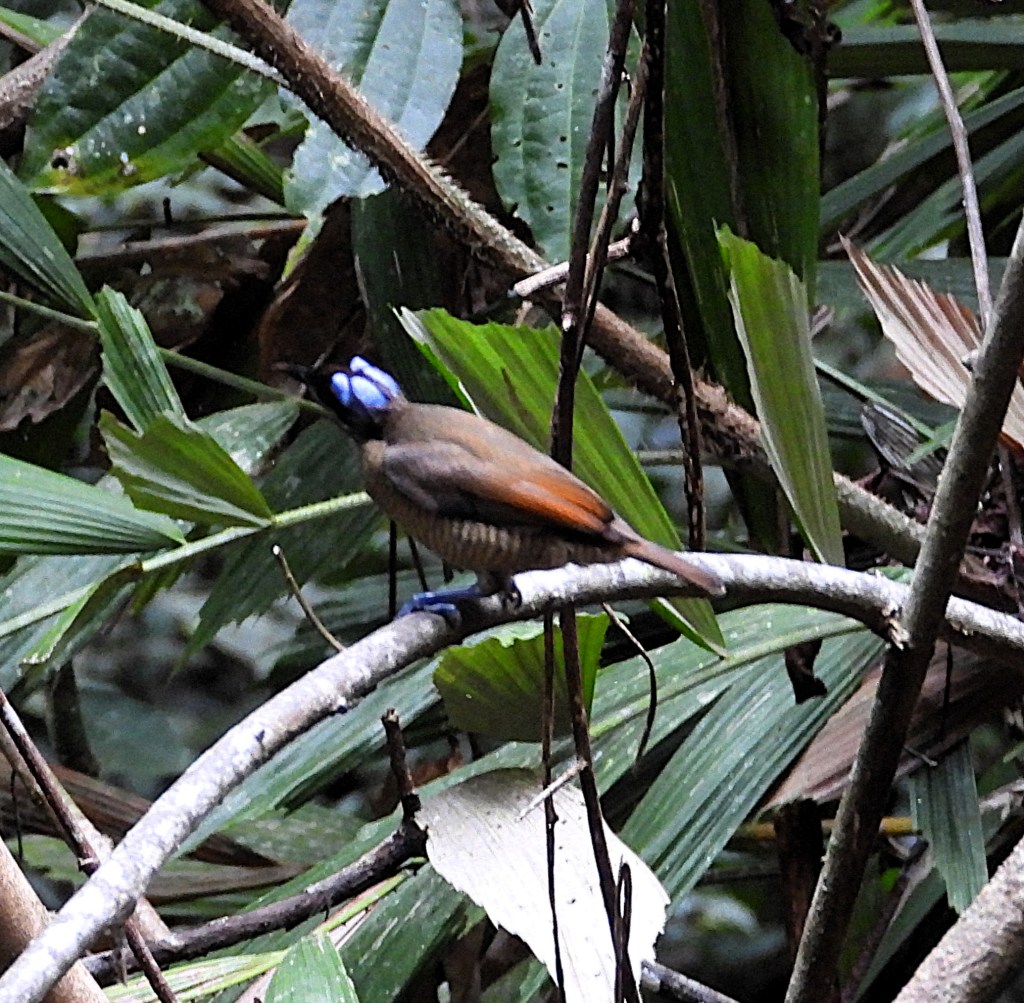
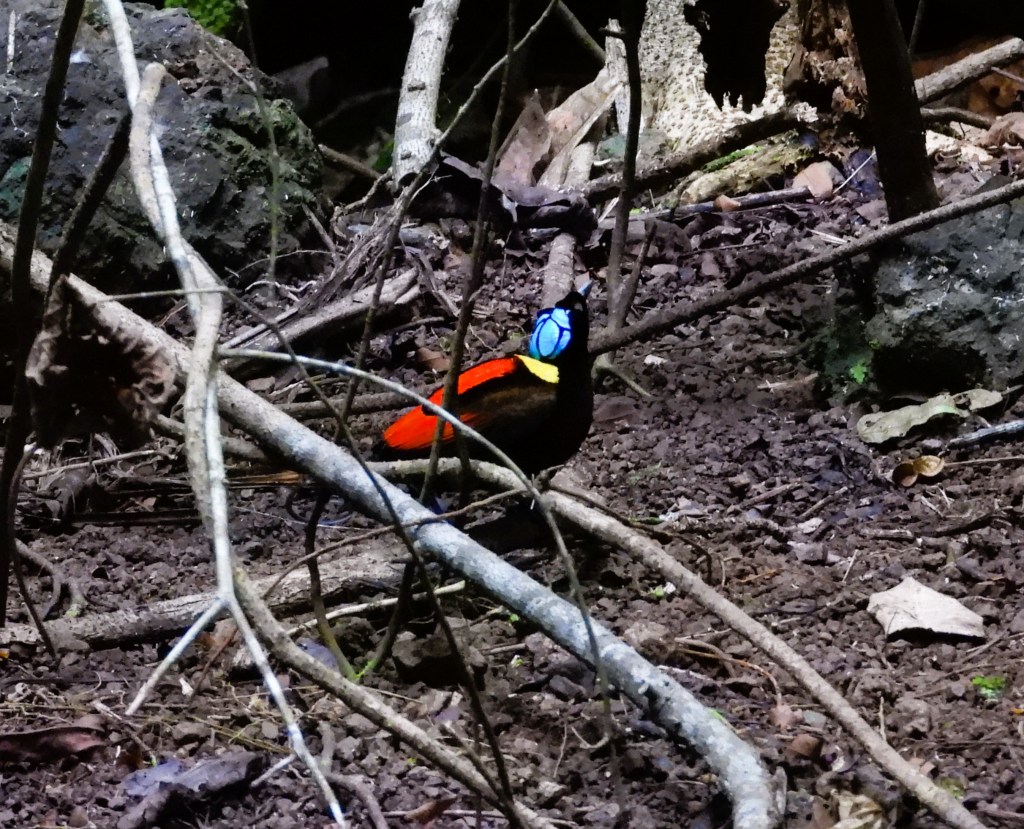
Even though the male looks very bright in the photos, he looked even brighter in real life. The red, yellow and blue on his head and plumage looked like they were glowing. He did not look real.
These birds, of course, had no idea that they were being watched by a bunch of humans. Their plumage and courtship displays are for them, not for us. I want to end this with some quotes from Alfred Wallace, who also visited West Papua (including Waigeo) and was able to view these wonderful birds:
[Regarding a King Bird-of-Paradise]
“I thought of the long ages of the past, during which the successive generations of this little creature had run their course-year by year of being born, and living and dying amid these dark and gloomy woods, with no intelligent eye to gaze upon their loveliness-to all appearance such a wanton waste of beauty. Such ideas excite a feeling of melancholy. It seems sad that on the one hand such exquisite creatures should live out their lives and exhibit their charms only in these wild inhospitable regions, doomed for ages yet to come to hopeless barbarism; while on the other hand, should civilized man ever reach these distant lands, and bring moral, intellectual, and physical light into the recesses of these virgin forests, we may be sure that he will so disturb the nicely-balanced relations of organic and inorganic nature as to cause the disappearance, and finally the extinction, of these very beings whose wonderful structure and beauty he alone is fitted to appreciate and enjoy. This consideration must surely tell us that all living things were not made for man. Many of them have no relation to him. The cycle of their existence has gone on independently of his, and is disturbed or broken by every advance in man’s intellectual development; and their happiness and enjoyment, their loves and hates, their struggles for existence, their vigorous life and early death, would seem to be immediately related to their own well-being and perpetuation alone, limited only by the equal well-being and perpetuation of the numberless other organisms with which each is more or less intimately connected.“
I wouldn’t say that the natives of Waigeo and West Papua are uncivilized, but this was written in 1869. I wonder if his comment on what would happen when “civilized” man reaches the forests wasn’t quite prescient. Indeed, foreign companies are rapidly deforesting parts of West Papua, which is a threat not only to the birds of the forests but to also the people who live there, many of whom are increasingly being forced off of their lands.
Waigeo, at the very least, is well protected, so hopefully the Red and Wilson’s Birds of Paradise can live on in their remote island home.
 Peace Country Naturalist